How to grow camellias? A complete analysis of cultivation methods and techniques
Camellias have always been a favorite flower among many, with very vivid blooms, so do you know how to grow camellias?
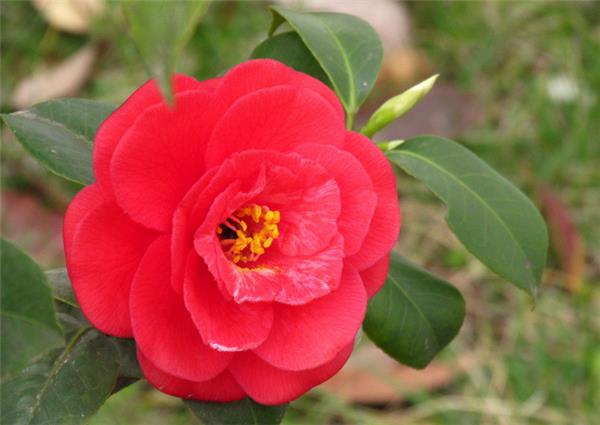
How to grow camellias
1. Placement: Camellias prefer partial shade and dislike blazing sun, and are best placed in a warm, humid spot with ventilation and light. When growing camellias, they need plenty of light in spring, while in summer you should provide shade and avoid direct sunlight; if you put a camellia on a balcony, it can easily be scorched to death if you are not careful. During storage and transport, camellias must be protected from high temperatures and dry air, otherwise the buds and flowers easily drop off, affecting quality.
2. Temperature: Camellias by nature like a warm climate, with an optimum growing temperature between 18 and 25°C, and a starting bloom temperature of 2°C; they are slightly cold-tolerant, with common varieties able to withstand low temperatures of -10°C, and they can also tolerate summer heat, but temperatures above 36°C will inhibit their growth. Cultivating camellias requires a certain temperature difference, and the best environmental humidity is above 60%; in areas south of the Huaihe River they can generally overwinter naturally, while the Yuncha variety of camellia is slightly less cold-tolerant.
3. Watering: Potted camellia cultivation should keep the soil moist but not waterlogged, so as to avoid alternating dry and wet conditions that affect growth. Generally, in spring you can water a little more, which helps with budding and new shoot growth; in summer, water morning and evening, and it is best to spray the leaf surfaces so the leaves are thoroughly wet; do not water with hot water, and avoid watering around midday when temperatures are high; in autumn, water moderately; in winter, it is best to water around midday, and spraying once every two or three days is enough.
4. Fertilizing: Camellias like fertilizer; when potting, be sure to put a layer of base fertilizer in the potting soil, mainly phosphorus and potassium fertilizer. The best fertilizer is a mixture of decomposed bone meal, hair, chicken feathers, rice husk ash, poultry manure and superphosphate. Normally, do not fertilize too much; generally apply dilute fertilizer water 2 to 3 times between April and May after flowering, and apply one slightly stronger liquid fertilizer in November in autumn. When fertilizing camellias, note that the proportion of phosphorus fertilizer should be slightly higher, to promote abundant flowers and vivid color.
5. Pruning: Camellias grow relatively slowly and should not be pruned excessively; generally it is enough to cut off leggy branches as well as diseased, pest-infested and weak branches. If there are too many flower buds on each branch, you can thin the flowers, keeping only 1 to 2 and maintaining a certain distance, while the rest should be removed early to avoid consuming too many nutrients. In addition, promptly remove flowers that are about to fade, which can also reduce nutrient consumption and help the camellia grow robustly and form new flower buds.
6. Repotting: For potted camellias, it is best to repot once every 1 to 2 years, and the new pot must be one size larger than the old one, which helps the camellia's root system spread and develop. The best time to repot camellias is in April in spring, though it can also be done in autumn. When repotting, combine it with changing the soil by appropriately removing part of the compacted old soil, replacing it with fertile, loose, breathable new potting soil, and first placing a layer of base fertilizer.
7. Pest and disease control: Common camellia diseases mainly include black mold and anthracnose, which can be controlled by spraying 0.5-degree Bordeaux mixture; normally you should strengthen management and careful maintenance to enhance the plant's disease resistance and reduce the chance of infection. If camellias are grown with poor ventilation, they are highly prone to pests such as red spiders, tea tip moths and scale insects. The control method for such pests is to prune off infested tips, preferably from April to June, or you can spray 40% omethoate emulsifiable concentrate at 1000 times dilution for control, or wash them clean.
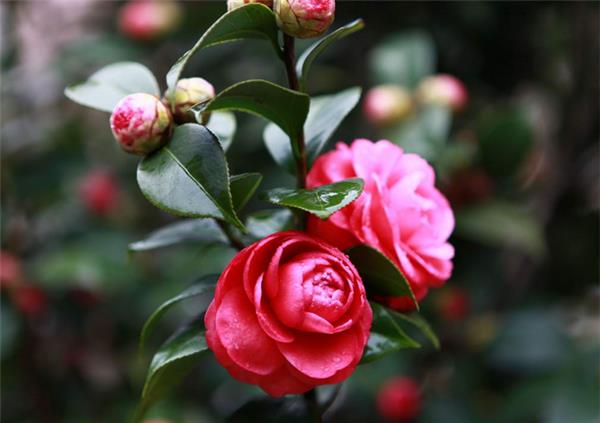
Precautions for growing camellias
Camellias should not be heavily pruned; their flowers, leaves and buds take a long time to develop, and the canopy forms relatively evenly. Basically no special pruning is needed; just cut off diseased, pest-infested, overly dense and weak branches and shorten leggy branches.
Camellias are a multi-flowered species, especially on weak-growing plants; if the flower buds are dense, they will consume too many nutrients, which is unfavorable to plant growth. Therefore, bud thinning is an important part of cultivation management, and it is best to keep 1 to 2 buds per branch, at most only 3, and maintain a certain distance. The thinned buds can be used medicinally.
Camellias have a long flowering period, with the entire flowering period lasting as long as half a year. Therefore, promptly removing flowers that are close to withering is greatly beneficial for reducing nutrient consumption and strengthening the tree's vigor.