What to do when the leaves of Alocasia macrorrhizos turn yellow? These methods help you solve it
Reasons why the leaves of Alocasia macrorrhizos turn yellow
What is Alocasia macrorrhizos
Alocasia macrorrhizos, originally called taro, is toxic and has medicinal value. It likes water, should not be exposed to strong wind or strong light, and likes a moist environment, so it should be watered often. In addition, for this plant, the larger the pot, the larger the leaves grow, so decide according to your own preference. Water more in April-May, water immediately once the potting soil dries in summer, water more around September, keep it drier in winter and water less, and sprinkle water on the leaf surface frequently. This is how it should be grown in the northern climate.
Alocasia macrorrhizos is an indoor foliage plant. Foliage plants have relatively large leaves, so transpiration is also relatively strong; with a large transpiration volume, more water is released into the air. Dry weather leaves everything in a state of water shortage, so in this season, keeping a pot of Alocasia macrorrhizos at home means you can breathe moist air when you get home. However, its sap is toxic, so prevent it from dripping into the eyes or being swallowed by mistake, which can cause throat swelling or eye inflammation.
The suitable growth temperature for Alocasia macrorrhizos is 20-25°C. It likes warm, humid and semi-shaded environments, so during the growing season place it in a shaded spot on a balcony or in a courtyard (avoid direct sunlight in summer), keep the potting soil moist at all times, and apply a dilute liquid fertilizer mainly of nitrogen fertilizer mixed with phosphorus and potassium fertilizer 1-2 times a month (stop fertilizing in winter and control watering).
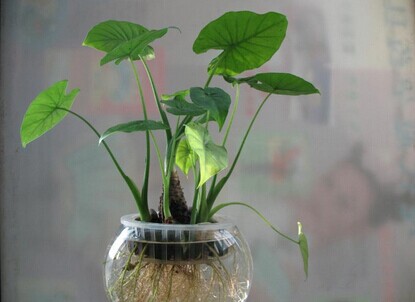
Alocasia macrorrhizos likes plenty of water and plenty of fertilizer, likes loose leaf mold or sandy loam, and likes sufficient light. Apart from appropriate shading in the hot midsummer, it is best to give it all-day light in other seasons. In addition, Alocasia macrorrhizos especially likes a high-temperature and high-humidity climate. In midsummer, spray water on the leaves every noon to increase air humidity; only in this way can the leaves of Alocasia macrorrhizos be large and thick. If it is too shady, the leaves will grow larger but become thinner, and the petioles will also be brittle; long petioles that break are due to lack of light. Alocasia macrorrhizos should be placed in a bright indoor spot, such as by a window, and needs at least 3 to 5 hours of light every day. Bright light is good, but it cannot be exposed to harsh sun. Alocasia macrorrhizos likes water; if the leaves become soft, it should be watered. Regularly watering in a little ferrous sulfate can make the leaves greener, larger and thicker.
So, although it is toxic, it is still useful for purifying the air. When placed indoors, do not let children touch it, and just be careful yourself.
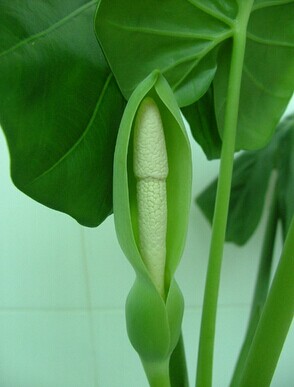
Alocasia macrorrhizos is a very common home-grown green potted plant, but because it is a tropical plant, it generally does not bloom in the north. However, if the temperature and other conditions at home are suitable, it will also bloom.
It has low requirements for soil, but grows best in well-drained sandy loam or humus loam containing organic matter. Because Alocasia macrorrhizos by nature likes warm, humid and semi-shaded environments and is not cold-tolerant, during the growing season you must keep the potting soil moist.
If summer arrives, place the flowerpot in a semi-shaded, ventilated spot, and frequently spray water around it and on the leaf surface to increase air humidity, lower leaf temperature and keep the leaves clean.
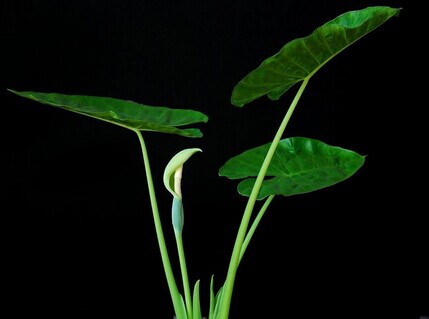
What are the reasons why the leaves of Alocasia macrorrhizos turn yellow
Because Alocasia macrorrhizos grows very fast, fertilization during growth must be moderate. Applying a thin fertilizer of nitrogen, phosphorus and potassium 1-2 times a month is enough; otherwise it is easy to cause the lower part of the Alocasia macrorrhizos stem to become bare, affecting its ornamental value.
The reasons why the leaves of taro (Alocasia macrorrhizos) turn yellow or droop are roughly these:
1. Watering with "half water", that is, not watering thoroughly, without reaching the point where water seeps out from the bottom of the pot.
2. Being chilled in winter, with the root system already frostbitten.
3. After overwintering, being in a hurry to move it outdoors and placing it in a warm spot to bask in the sun, so it temporarily cannot adapt to the sudden climate change.
4. The potting soil being too wet or too dry for a long time, without following the rule of watering as soon as it dries. 5. Being placed for a long time in an environment with poor ventilation.
6. The leaf surface not being sprayed and cleaned for a long time, with dust accumulating and hindering photosynthesis.
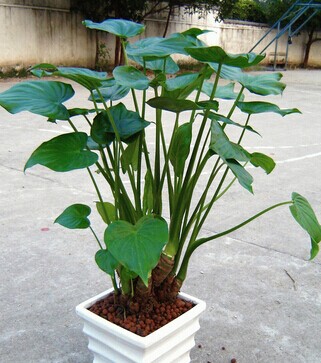
Solutions for the yellowing leaves of Alocasia macrorrhizos
1. Check a new plant: if it is a newly bought plant and the leaf color was normal when you first bought it, but yellowing occurs after you care for it for a few days, then dig into the potting soil and observe to see whether you ran into an unscrupulous seller who directly planted a plant that had not yet rooted into the pot and sold it to you. If that is the case, then you can only consider yourself unlucky.
2. Suitable soil: if it is a newly bought plant with a sound root system, and the leaf color turns yellow after being cared for for a period of time, then you need to consider whether you did not choose suitable soil. Although Alocasia macrorrhizos is not strict about potting soil, well-drained, fertile, slightly acidic potting soil is more suitable for its growth. Clay soil with poor air permeability easily accumulates water, and root and stem rot is very likely to occur.
3. Watering problems: Alocasia macrorrhizos likes a moist and warm environment. If the potting soil is too dry or too wet for a long time, and it is often watered with "half water", then it will also cause discomfort to the plant and produce drooping and yellowing leaves. The correct watering method is to water when dry and stop when wet; when the potting soil is dry two or three cm down, water promptly, and water thoroughly at one time. In addition, watering should also be flexibly controlled according to changes in season and temperature, and cannot be rigidly fixed. In hot and dry seasons, water more; when the temperature is low, water a little less.
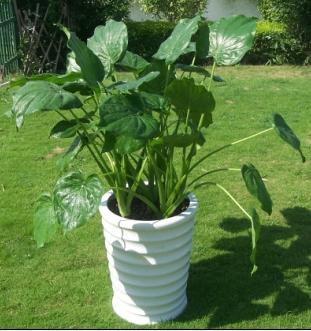
4. Environmental problems: Alocasia macrorrhizos is a shade-loving plant, but this does not mean it does not like sunlight. A place with sufficient scattered light and good ventilation is the growing environment it likes. If it is placed in a dark environment for a long time, its leaves will of course lack vitality because of reduced photosynthesis.
5. Suitable temperature: Alocasia macrorrhizos is native to Southeast Asia and the South Pacific region and is suited to a warm environment. If the indoor temperature is too low in winter, frost damage will occur. Households without heating supply in winter should pay attention to keeping warm to avoid frost damage.
6. Reasonable fertilization: Alocasia macrorrhizos quite likes fertilizer. Applying fertilizer water once a month and adding enough base fertilizer when repotting each year can provide a sufficient nutrient supply, making the leaves emerald green, spread out and glossy.
7. Leaf cleaning: the last issue, and one that is easily overlooked, is cleaning the leaves. We all know that plant leaves have a respiratory function. If the leaves are not cleaned for a long time, dust will clog the stomata and hinder normal photosynthesis, which will also cause leaf health problems and produce drooping and yellowing.
4. Environmental problems: Alocasia macrorrhizos is a shade-loving plant, but this does not mean it does not like sunlight. A place with sufficient scattered light and good ventilation is the growing environment it likes. If it is placed in a dark environment for a long time, its leaves will of course lack vitality because of reduced photosynthesis.
5. Suitable temperature: Alocasia macrorrhizos is native to Southeast Asia and the South Pacific region and is suited to a warm environment. If the indoor temperature is too low in winter, frost damage will occur. Households without heating supply in winter should pay attention to keeping warm to avoid frost damage.
6. Reasonable fertilization: Alocasia macrorrhizos quite likes fertilizer. Applying fertilizer water once a month and adding enough base fertilizer when repotting each year can provide a sufficient nutrient supply, making the leaves emerald green, spread out and glossy.
7. Leaf cleaning: the last issue, and one that is easily overlooked, is cleaning the leaves. We all know that plant leaves have a respiratory function. If the leaves are not cleaned for a long time, dust will clog the stomata and hinder normal photosynthesis, which will also cause leaf health problems and produce drooping and yellowing.