Snake Plant Care Methods and Tips for Making It Grow Taller
Snake Plant Care Methods
At a time when growing plants at home has become widely popular, the snake plant (Sansevieria) has secured its place thanks to its strong adaptability, decorative value and usefulness, and more and more people have come to love it. However, because the snake plant is still not widely known enough, many people do not know enough about how to care for it, which leads to many problems during the growing process. Today I will focus on explaining the care methods for the snake plant and other related matters to readers who love snake plants.
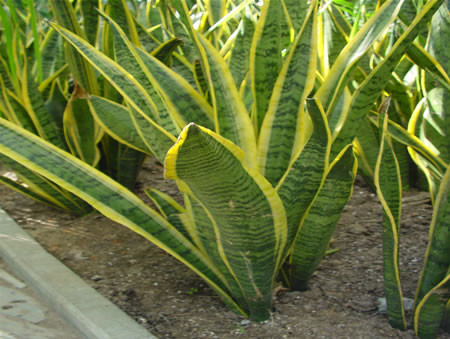
The snake plant is a perennial herbaceous foliage plant with creeping rhizomes and linear lanceolate leaves. It has strong adaptability and does not make strict demands on its growing environment, making it very suitable for decorating living rooms, studies and similar places. Besides providing ornamental value, its biggest feature is that it can purify the air. According to experts, the snake plant can absorb more than 80% of harmful gases indoors, and it is especially powerful against formaldehyde, which is particularly obvious in newly renovated houses. The snake plant can also protect against radiation. Based on these characteristics, we can roughly summarize the care methods for the snake plant:
First, the choice of soil
The snake plant needs loose soil and requires breathability, so when mixing soil for the snake plant, be sure to use 2/3 leaf mold plus 1/3 garden soil. Remember that the soil must be loose and breathable, otherwise water will not evaporate easily, causing the rhizomes to rot.
Second, sunlight requirements
The snake plant likes light, so be sure to let it come into contact with sunlight often. It is best to place it somewhere it can be directly exposed to light. If conditions do not allow this, then place it somewhere close to sunlight. Being placed in a dark place for a long time will cause the leaves to turn yellow.
Third, temperature
The snake plant has fairly high temperature requirements. Its suitable growing temperature is 20-30°C, and in winter it should not be lower than 10°C, so be sure to pay attention, especially in northern regions.
Fourth, watering
The snake plant also has fairly high water requirements. Generally speaking, if the soil is relatively loose, it needs watering twice a week, while in winter, due to climatic factors, only once is needed.
Fifth, pruning
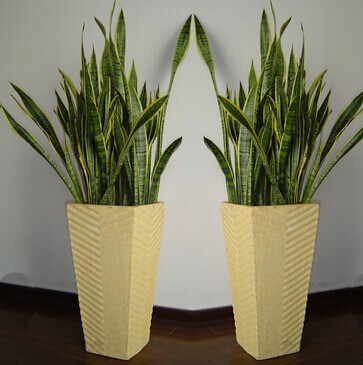
Compared with other home-grown green plants, the snake plant grows relatively fast. Therefore, when the pot becomes full, manual pruning is needed, mainly by cutting away old leaves and overly dense areas to ensure sunlight and growing space.
Sixth, repotting
The snake plant is a perennial plant. Generally speaking, it should be repotted once every two years. When repotting, be sure to add nutrients to the new soil so as to ensure its nutrient supply.
Seventh, planting method
The snake plant is a rhizome-propagated plant. Generally speaking, you only need to plant a few plants, and after a year you can harvest a full pot. When planting, first place part of the soil at the bottom of the pot, then start planting from one side of the pot and plant evenly inside the pot.
Eighth, fertilizing
The snake plant does not have high fertilizer requirements. It only needs fertilizing twice a month during the growing season. Be careful to apply dilute fertilizer solution so as to ensure lush growth.
Ninth, the threat of diseases and pests
The common diseases of the snake plant mainly include leaf spot and anthracnose. In these cases, 50% carbendazim can be sprayed for treatment; a common pest is damage by weevils, and in this case 50% fenitrothion emulsifiable concentrate diluted 1000 times can be sprayed to kill them.
Propagation of the snake plant
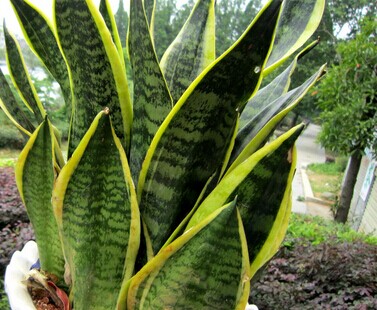
There are two common propagation methods for the snake plant: cuttings and division
First, cuttings
Cuttings for the snake plant are generally taken in May-June. The main method is: cut the leaves into small sections 5-6 cm long, then insert them directly into sandy soil, and they will take root in about one month. However, this method is not suitable for some special varieties of snake plant, such as the golden-edged snake plant, in which case division must be used.
Second, division
The division method is also very simple and is also one of the most commonly used methods. It is generally carried out in spring when repotting. The main step is to cut overly dense leaf clusters into several clusters. Each cut cluster should have not only leaves but also a section of rhizome and suckers, and then they can be planted separately in pots.
Analysis of why the snake plant does not grow tall
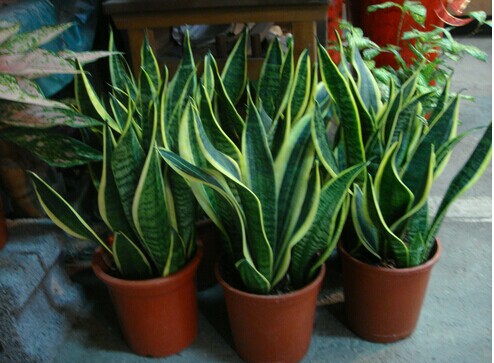
First, look at the variety. Some varieties simply cannot grow very tall; for example, some dwarf varieties reach only 20 cm at most. If it is not a variety issue, then you need to look for reasons in its daily care. The main ones are:
First, the temperature is too low or too high. If it is kept below 10°C or above 30°C for a long time, it cannot grow very well, and naturally it will not grow tall.
Second, root rot. This is mainly caused by improper watering. If there is too much standing water, the roots will rot, which naturally also affects growth.
Third, unreasonable light. Some people never let their plants see the sun, which is very unfavorable for the growth of the snake plant, and naturally it will not grow tall.
Fourth, insufficient fertilizer. This is a common problem. It will not do without enough fertilizer, and the fertilizer should mainly be nitrogen-based.
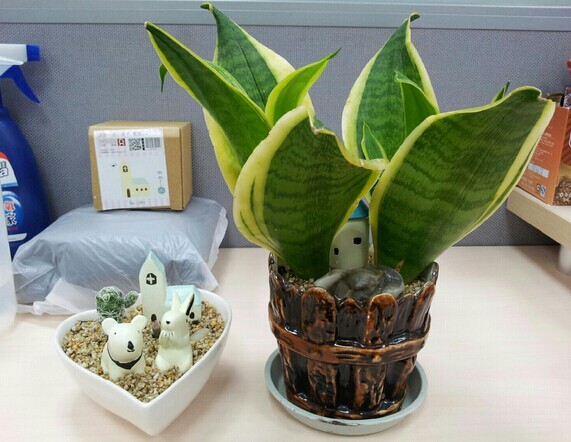
In one sentence, as long as the snake plant has suitable light, moderate watering, reasonable fertilizing and a suitable temperature, it can be grown very well.
If it is not a variety issue, then you need to look for reasons in its daily care. The main ones are:First, the temperature is too low or too high. If it is kept below 10°C or above 30°C for a long time, it cannot grow very well, and naturally it will not grow tall.
Second, root rot. This is mainly caused by improper watering. If there is too much standing water, the roots will rot, which naturally also affects growth.
Third, unreasonable light. Some people never let their plants see the sun, which is very unfavorable for the growth of the snake plant, and naturally it will not grow tall.
Fourth, insufficient fertilizer. This is a common problem. It will not do without enough fertilizer, and the fertilizer should mainly be nitrogen-based.
In one sentence, as long as the snake plant has suitable light, moderate watering, reasonable fertilizing and a suitable temperature, it can be grown very well.