The Benefits of Pothos and an Introduction to Its Suitable Growing Locations
What are the benefits of pothos? Many offices grow this kind of plant, and many people think pothos is just pretty, but beyond that, pothos also has air-purifying benefits, among others. Below, let's share the benefits of pothos and the suitable growing locations for pothos.
A Brief Introduction to Pothos
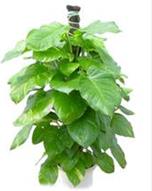
Pothos, also known as golden pothos and devil's ivy, originates from tropical rainforest regions. It is an evergreen climbing plant of the Araceae family. It prefers warm, humid environments and requires loose, fertile, well-drained soil. It has a strong twining habit and well-developed aerial roots, so it can either be allowed to climb on a cylinder made of coir and placed in an entrance hall or hotel, or be trained into a trailing form and placed in a study or on a windowsill. It is a flowering plant quite suitable for indoor placement.
The Morphological Characteristics of Pothos

Pothos is a large evergreen herbaceous climbing plant, often climbing and growing on rocks and tree trunks. It can grow up to 20 m tall at most, with a vine diameter of 4 cm, and when grown indoors it can reach a height of about 2 m. The stems and vines of pothos are thick and strong, the vines can reach several meters long, and the trailing stems can reach more than ten meters, with aerial roots at the stem nodes.
As the plant ages, the stems thicken and the leaves also grow larger and larger. Young branches are whip-like, slender and long, with the lower leaves relatively large, papery, broadly ovate, shortly acuminate, and heart-shaped at the base.
On mature branches, the petioles are thick and strong, and the leaves are thinly leathery, emerald green, with irregular pure yellow patches, entire margins, and an unequal-sided ovate or ovate-oblong shape, with an acuminate apex and a deeply heart-shaped base. The largest leaves can reach 100 cm long and 45 cm wide (young plants are generally under 20 cm). Young leaves are ovate-heart-shaped. Newly propagated seedlings have smaller and paler leaves, while mature leaves are long-ovate, about 30 cm long and about 10 cm wide. The deep green leaf surface is inlaid with irregular yellow-white spots or stripes.
The Benefits of Pothos
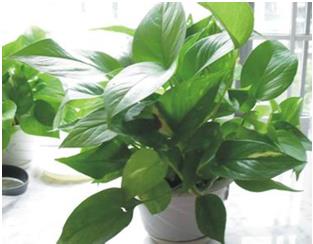
The benefits of pothos: 1. Decorative and ornamental
It has a strong twining habit and well-developed aerial roots, so it can either be allowed to climb on a cylinder made of coir and placed in an entrance hall or hotel, or be trained into a trailing form and placed in a study or on a windowsill. It is a flowering plant quite suitable for indoor placement. This not only makes full use of space and purifies the air, but also adds a lively-lined, brightly colored green decoration to an otherwise dull cabinet surface, full of vitality and adding a warm touch of charm to the room. Its flower language, "watching over happiness," also increases its ornamental appeal.
The benefits of pothos: 2. Purifying the air
Pothos is a large evergreen climbing plant, and like spider plants and ivy, it has a very strong ability to purify the air. Pothos can absorb benzene, trichloroethylene, formaldehyde and other substances from the air, so placing pothos in a newly renovated home is more than suitable. According to environmental scientists' research, one pot of pothos in a room of 8-10 sq m is equivalent to an air purifier. This shows that pothos has quite a strong air-purifying ability.
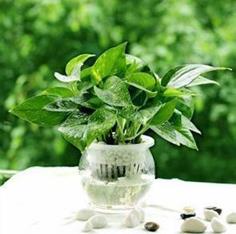
The benefits of pothos: 3. Absorbing odors
Pothos has the ability to absorb kitchen odors. Placing pothos in the kitchen can effectively absorb some of the cooking-oil fumes produced by stir-frying and cooking, remove some other kitchen odors, and keep our kitchen's air fresh.
The benefits of pothos: 4. Medicinal value
The pothos plant has ornamental value, and its leaves can beautify the environment and purify the air, so what are the benefits of pothos flowers? In fact, pothos flowers are also a kind of medicine beneficial to the body. Pothos flowers have significant therapeutic effects on diabetes, coronary heart disease, high blood pressure, high blood lipids and various vascular inflammations. Pothos flowers can lower blood sugar and blood lipids, and mainly have a good auxiliary therapeutic effect on diabetes, fatty liver, coronary heart disease, obesity, high blood lipids and various vascular inflammations. In addition, they also have a good health-care effect on the eyes and liver.
The Flower Language of Pothos
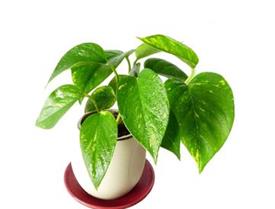
The flower language of pothos is: resilience and kindness, watching over happiness.
Pothos comes to life as soon as it meets water. Because of its tenacious vitality, it is called the "flower of life." Its spreading green branches and leaves are very easily satisfied, and even just drinking water makes it feel happy.
Suitable Growing Locations for Pothos
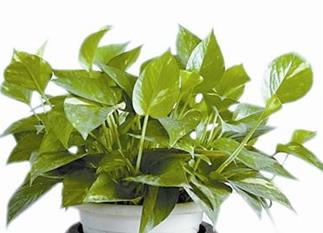
Pothos is a shade-loving plant, averse to direct sunlight, fond of scattered light, and relatively shade-tolerant. When cultivated indoors, it can be placed beside a window, but direct sunlight should be avoided. Too strong sunlight will scorch the leaves of pothos, while too much shade will cause the beautiful patterns on the leaf surface to disappear. Generally, pothos grows and develops best when it receives four hours of scattered light.
It prefers warm, humid environments and requires loose, fertile, well-drained soil. Potted pothos should use fertile, loose, well-drained leaf mold, preferably slightly acidic. Pothos is extremely shade-tolerant and can be placed year-round in a sunny spot indoors; in a dimly lit room, it should be moved every half month to a brighter environment to recover for a period, otherwise the internodes tend to lengthen and the leaves become smaller. Pothos likes hot and humid environments, and its overwintering temperature should not be lower than 15°C. The pot soil should be kept moist, and water should often be sprayed on the leaf surface to increase air humidity, so as to favor the growth of aerial roots. During the vigorous growth period, a liquid fertilizer can be applied once a month. For plants kept indoors for ornamental viewing over a long period, the leaves at the base of the stems tend to fall off, reducing ornamental value. In May and June, when the temperature turns warmer, pruning and renewal can be carried out together with cuttings to encourage new buds to sprout from the base stems.
The above is the related content that the editor has brought to you about the benefits of pothos and its suitable growing locations.
Suitable Growing Locations for Pothos
Pothos is a shade-loving plant, averse to direct sunlight, fond of scattered light, and relatively shade-tolerant. When cultivated indoors, it can be placed beside a window, but direct sunlight should be avoided. Too strong sunlight will scorch the leaves of pothos, while too much shade will cause the beautiful patterns on the leaf surface to disappear. Generally, pothos grows and develops best when it receives four hours of scattered light.
It prefers warm, humid environments and requires loose, fertile, well-drained soil. Potted pothos should use fertile, loose, well-drained leaf mold, preferably slightly acidic. Pothos is extremely shade-tolerant and can be placed year-round in a sunny spot indoors; in a dimly lit room, it should be moved every half month to a brighter environment to recover for a period, otherwise the internodes tend to lengthen and the leaves become smaller. Pothos likes hot and humid environments, and its overwintering temperature should not be lower than 15°C. The pot soil should be kept moist, and water should often be sprayed on the leaf surface to increase air humidity, so as to favor the growth of aerial roots. During the vigorous growth period, a liquid fertilizer can be applied once a month. For plants kept indoors for ornamental viewing over a long period, the leaves at the base of the stems tend to fall off, reducing ornamental value. In May and June, when the temperature turns warmer, pruning and renewal can be carried out together with cuttings to encourage new buds to sprout from the base stems.
The above is the related content that the editor has brought to you about the benefits of pothos and its suitable growing locations.