How to Grow Pothos in Water: Cultivation Methods and Precautions
As people's living standards rise, more and more people are growing and loving flowers. In recent years, people have developed a strong interest in pothos (Epipremnum aureum), because it can purify the air and beautify the environment. Pothos can be placed in the entrance hall, study, or living room, where it helps absorb odors and can absorb benzene, formaldehyde, and other substances from the air. It also has the effect of drawing in wind and improving ventilation. In short, pothos has many benefits, but many people always fail to grow it well in terms of care and daily management. It looked fine when first bought, but after being home for a while, the leaves develop spots or stop looking nice, wilting and listless. So how exactly should it be grown and managed? Below I will share some knowledge about pothos with everyone.
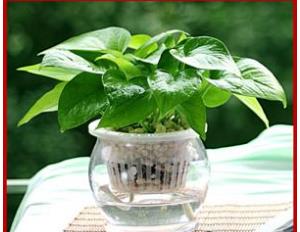
First, water-grown pothos:
Water-grown pothos is a green plant with very high ornamental value. Pothos has an emerald-green, graceful appearance with very long branches and leaves that can hang downward like a gauze curtain, looking very beautiful. It not only adds greenery to the interior but also a soft tenderness, making it a very popular ornamental plant.
Water-grown pothos grows in tropical regions and prefers a warm, humid climate. It has relatively high temperature requirements and cannot be too cold in winter. It has relatively high demands for rainwater and moisture and likes damp environments. Water-grown pothos is suitable for growing in fertile, moist soil with good drainage.
Second, cultivation methods for water-grown pothos:
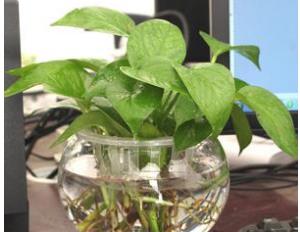
1. Water more. Pothos likes to live in a moist environment, so watering more is best. In summer, when the weather is hot and water evaporates quickly, besides watering more, you should also mist the leaves. How much to water depends on the potting soil; larger pothos plants should be watered more.
2. Avoid exposure to strong sun. Pothos grows in the shaded places under large trees, so it is a shade-loving plant and cannot be exposed to direct sunlight, otherwise newly sprouted leaves will lose water and become smaller, with dull color, and the leaf edges are easily scorched. It is enough to provide just the sunlight needed for photosynthesis.
3. Appropriate temperature. Although pothos does not like harsh sun, it is still quite sensitive to temperature. If the temperature is too low, it is easily frostbitten. A room temperature of around 20 degrees is fine. If heating equipment is turned on, the pothos leaves must not be too close to it. Keeping the indoor temperature above 10 degrees allows pothos to pass through winter safely.
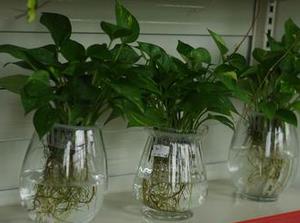
4. Fertilizing. Because it is grown indoors, pothos does not absorb nutrients as abundantly as it would outdoors. It is recommended to apply fertilizer once every half month. You can buy fertilizer specially made for pothos on the market, or ask the flower shop owner to help choose fertilizer.
5. Maintain air humidity. Pothos grows faster in environments with higher air humidity. It is recommended to maintain indoor humidity, and you can use a humidifier to increase air humidity. A specific method is to spray water around the pothos.
Third, precautions during the growing period:
The precautions are hard to describe, because the most important precautions are the most basic ones. Here is a brief summary:
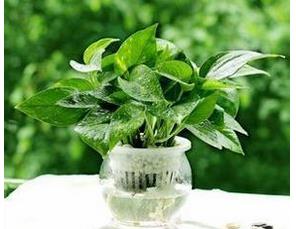
1) The soil is best if it has good air permeability; do not use garden soil dug up from outside.
2) Light: pothos avoids direct sunlight, so it can be placed in shade, but not under the sun.
3) Watering: soil growers can visually check or feel the soil with their hands, and water again if it is dry. Also, you should understand your own soil and see whether it tends to hold water or drains well; this matters for watering.
4) Fertilizing: fertilizing can make plants grow vigorously, but pothos is generally grown in small pots, so when fertilizing, be sure to use light fertilizer and apply it more often.
5) Communication: in fact, the most important thing in growing flowers is not to keep to yourself, but to constantly exchange ideas with other flower growers, so that you can keep improving. Flower growers can go to the Yuhuagu forum to communicate with other flower growers.
Fourth, the feng shui theory of water-grown pothos:
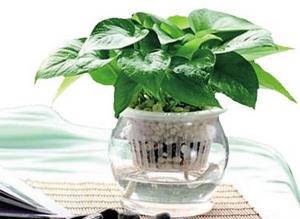
In online discussions, some people may say that pothos is not a feng shui treasure and has no feng shui effect, but that is not actually the case. Take a look.
1. It eliminates many harms for us and gives home life a good start. When we have just moved into a new house, the smell inside may be very strong, to the point that we cannot live in it. Many people choose to place several or even more pothos plants indoors right after renovation is completed, letting them absorb harmful gases inside, and then move in after a period of time. From this perspective, pothos has actually shielded us from many toxic harms, and its role has far exceeded a purely feng shui function.
2. Pothos can draw in wind and make the indoor air ventilated and breathable. Why say this? Plants themselves also breathe, absorbing carbon dioxide and releasing oxygen. Pothos is generally placed by the window. When there is too much wind outside, it blocks some of it. If there is no wind, it itself also releases new oxygen. The oxygen enters our living space, making us more energetic and making the indoor air fresher.
On the surface, there appear to be only two major feng shui effects, but in reality, some plants have many small feng shui effects yet cannot help much, while pothos has a very large influence.
Fifth, what to do when pothos leaves turn yellow
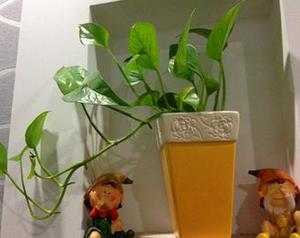
1. Reasons why pothos leaves turn yellow:
1. Improper watering: excessive watering or no watering can both cause pothos leaves to turn yellow. If the leaves are dull and lack luster, it may be due to overwatering; if the leaf tips or edges are dry and parched, it is due to insufficient watering.
2. Sunlight exposure: pothos likes to grow in cool, shady places. Exposure to strong sun or intense light can cause the leaf tips and leaf edges of the plant to wither, and yellow spots will appear on the leaves. Conversely, if placed in a dim environment for a long time, the leaves cannot carry out photosynthesis, which can also cause the leaves to turn yellow. It is best to place it under appropriate light, such as incandescent light.
3. Fertilizer yellowing: excessive fertilizing, too high concentration, or a lack of fertilizer can all cause pothos leaves to turn yellow. When too much fertilizer is applied, the pothos leaf surface becomes thick and lacks luster, and the leaves look unrelaxed and unattractive; older leaves turn yellow and fall off. This can be reduced by flushing with water. When fertilizer is insufficient, the leaf color becomes lighter, appearing pale green or yellow. Fertilizer should be added promptly, and in severe cases the potting soil should be replaced.
2. Solutions for pothos leaves turning yellow
The treatment measures for pothos leaves turning yellow are very simple. First, find the reason for the yellowing. Pothos can be propagated by cuttings. Each node on its stems has a leaf bud, and simply taking one section for planting allows it to grow. When pothos leaves turn yellow, remove the rotted roots, pick off the yellow leaves, and replant from cuttings. If it is water-grown pothos, you only need to change the water. When newly planted from cuttings, it must not be exposed to direct strong light; it can be placed in a location with weaker light. After about 20 days, the newly planted pothos will take root and grow.
In online discussions, some people may say that pothos is not a feng shui treasure and has no feng shui effect, but that is not actually the case. Take a look.
1. It eliminates many harms for us and gives home life a good start. When we have just moved into a new house, the smell inside may be very strong, to the point that we cannot live in it. Many people choose to place several or even more pothos plants indoors right after renovation is completed, letting them absorb harmful gases inside, and then move in after a period of time. From this perspective, pothos has actually shielded us from many toxic harms, and its role has far exceeded a purely feng shui function.
2. Pothos can draw in wind and make the indoor air ventilated and breathable. Why say this? Plants themselves also breathe, absorbing carbon dioxide and releasing oxygen. Pothos is generally placed by the window. When there is too much wind outside, it blocks some of it. If there is no wind, it itself also releases new oxygen. The oxygen enters our living space, making us more energetic and making the indoor air fresher.
On the surface, there appear to be only two major feng shui effects, but in reality, some plants have many small feng shui effects yet cannot help much, while pothos has a very large influence.
Fifth, what to do when pothos leaves turn yellow
1. Reasons why pothos leaves turn yellow:
1. Improper watering: excessive watering or no watering can both cause pothos leaves to turn yellow. If the leaves are dull and lack luster, it may be due to overwatering; if the leaf tips or edges are dry and parched, it is due to insufficient watering.
2. Sunlight exposure: pothos likes to grow in cool, shady places. Exposure to strong sun or intense light can cause the leaf tips and leaf edges of the plant to wither, and yellow spots will appear on the leaves. Conversely, if placed in a dim environment for a long time, the leaves cannot carry out photosynthesis, which can also cause the leaves to turn yellow. It is best to place it under appropriate light, such as incandescent light.
3. Fertilizer yellowing: excessive fertilizing, too high concentration, or a lack of fertilizer can all cause pothos leaves to turn yellow. When too much fertilizer is applied, the pothos leaf surface becomes thick and lacks luster, and the leaves look unrelaxed and unattractive; older leaves turn yellow and fall off. This can be reduced by flushing with water. When fertilizer is insufficient, the leaf color becomes lighter, appearing pale green or yellow. Fertilizer should be added promptly, and in severe cases the potting soil should be replaced.
2. Solutions for pothos leaves turning yellow
The treatment measures for pothos leaves turning yellow are very simple. First, find the reason for the yellowing. Pothos can be propagated by cuttings. Each node on its stems has a leaf bud, and simply taking one section for planting allows it to grow. When pothos leaves turn yellow, remove the rotted roots, pick off the yellow leaves, and replant from cuttings. If it is water-grown pothos, you only need to change the water. When newly planted from cuttings, it must not be exposed to direct strong light; it can be placed in a location with weaker light. After about 20 days, the newly planted pothos will take root and grow.