Identification and Control Methods for Common Gerbera Diseases
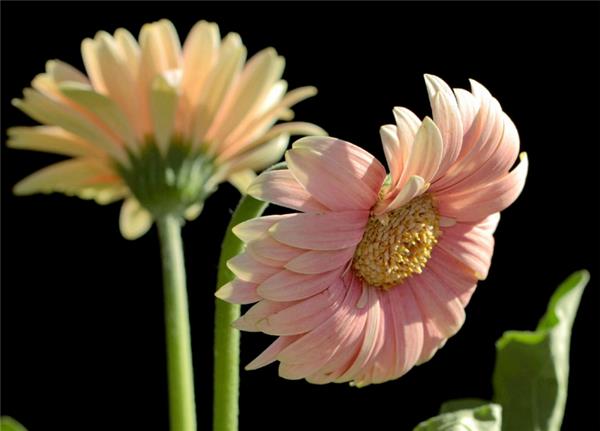
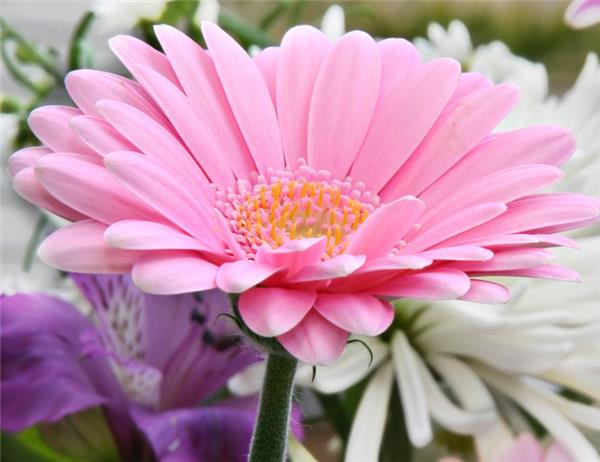
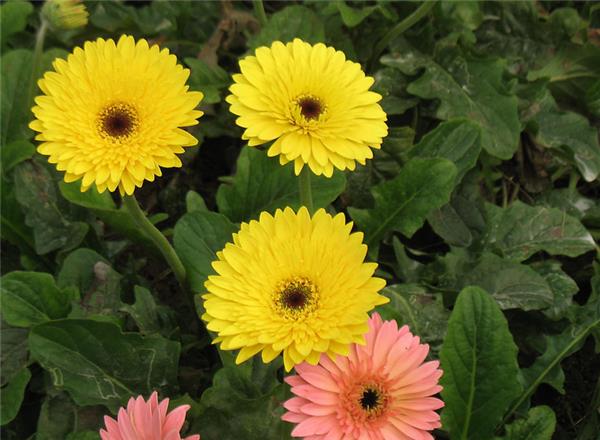
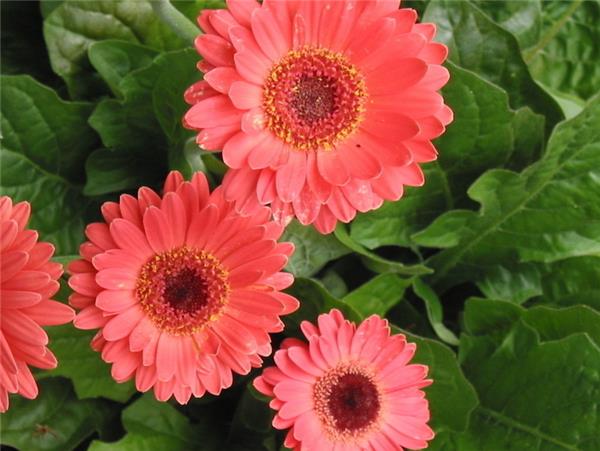
Because gerberas have large flower heads, diverse blooms and brilliant colors, many people grow them as indoor potted plants. However, any plant can develop diseases. Today we will share with you gerbera diseases and their control methods.
Gerbera Diseases and Control Methods
1. Stem rot
If the root crown of the gerbera is kept wet for a long time and ventilation is poor, the stem is prone to rotting. Once it occurs, it spreads very quickly, and if not controlled in time it may cause devastating damage.
Control methods: Clear the drainage ditches to lower the groundwater level, remove old leaves, diseased plants and diseased plant debris in time, and burn or bury them deep; disinfect the soil at the site of infection or replace the soil.
During the growing period, sulfur powder can be spread regularly on the soil surface to inhibit the growth of pathogens; using raised-bed cultivation and drip irrigation can effectively prevent the spread of stem rot; prevention should be the main approach, with regular spraying of fungicides; regularly spray 60% zineb wettable powder at 600 times dilution, or 50% procymidone wettable powder at 1500 times dilution, or mix 500 g of dexon plus 200 g of thiophanate-methyl with 100 kg of medium-coarse sand and spread it evenly around the root crown for control. During treatment, moisture must be strictly controlled; if necessary, apply once a week for 2~3 consecutive times.
2. Cottony rot
It mainly attacks the underground parts of the gerbera. The affected parts rot and gradually disappear, and the root crown dies back dark brown. This disease is prone to occur when the environment is very humid. The pathogens are oospores and chlamydospores, which overwinter in affected plants or in the soil.
Control methods: Remove infected plants in time and destroy them; drench with copper-mercury preparations.
3. Sclerotinia rot
In spring it attacks the lower part of the gerbera plant, causing it to turn grayish white and dry up or the epidermis to rot. White mycelium is produced on the affected parts, and later black sclerotia resembling mouse droppings can be seen inside and outside the stems. The pathogen overwinters as sclerotia. In spring the spores spread and infect, and the optimum temperature for pathogen development is 16~25°C.
Control methods: Choose well-drained, loose soil for planting gerberas; do not plant too densely so as to allow ventilation and light penetration; avoid rotation with cruciferous crops; diseased plants should be removed immediately and burned; drench with mercury preparations; spray with 25% triadimefon wettable powder at 2500 times dilution, or 50% vinclozolin wettable powder at 1000 times dilution, or 70% thiophanate-methyl wettable powder at 800~1000 times dilution.
4. Anthracnose
It first appears at the leaf tips and leaf margins of old gerbera leaves, then spreads to the middle of the leaves, and in severe cases the young leaves and stems are also infected.
Control methods: Remove and destroy diseased plants in time; spray with 70% thiophanate-methyl wettable powder at 800 times dilution for 2~3 consecutive times.
5. Viral disease
After the gerbera is infected, the tissue between the leaf veins loses green color or the whole leaf turns yellow, forming indistinct yellow-green patches, and new leaves become narrower. The mottling is not obvious during hot periods. Infected plants grow weakly, the number of flowers decreases, quality declines, and in severe cases the plants die back.
Control methods: Remove and destroy diseased plants in time; prevent mechanical transmission caused by hands, tools, etc.; promptly remove aphids and scale insects that transmit the virus.
6. Southern blight
After the gerbera is infected with this disease, the part at ground level first becomes dark green, water-soaked and softened, then gradually turns brown and dies back. White mycelium and brown sclerotia the size of millet grains are produced on the surface of the root crown. The pathogen overwinters in the soil as sclerotia, and the following year mycelium develops and causes infection. The optimum temperature for its development is 32~33°C.
Control methods: Pull out and burn diseased plants in time; replace the growing soil; drench with lime sulfur mixture at 20 times dilution.
7. Downy mildew
Infected gerberas first show blackening of the petioles and leaf veins, and later the leaves blacken and rot. It is prone to occur when air humidity is high and ventilation is poor.
Control methods: Usually pay attention to ventilation and light penetration for the plants; when the disease occurs, spray with metalaxyl wettable powder at 800 times dilution for control, twice a week for 3 consecutive weeks.
8. Leaf spot
It is one of the common diseases of gerbera and mainly occurs on the leaves. Infected leaves first develop purplish-brown spots, which then gradually expand into round or nearly round lesions 1~7 mm in diameter, with a dark gray center and purplish-brown edges. Small black dots form on the lesions, and sometimes the lesion tissue cracks to form holes. The pathogens are fungi such as Cercospora chrysanthemi, Phyllosticta chrysanthemi and Septoria sp. Because the pathogens differ, the symptoms vary slightly. In leaf spot caused by Cercospora chrysanthemi, there are slightly raised light brown lines at the edges of the lesions and indistinct dark green mold spots on both sides of the lesions. In lesions caused by Phyllosticta chrysanthemi, there are concentric rings bearing small black dots. Generally, the disease is severe under conditions of shade and dampness, insufficient sunlight, heavy clay soil and poor drainage, and excessive use of nitrogen fertilizer also easily causes this disease. The disease mostly begins in late May and is severe from July to September.
Control methods: Potted gerberas should be placed in an environment with ample sunlight and air circulation, and farmyard manure should be used appropriately, or phosphorus and potassium fertilizers should be added to strengthen the disease resistance of the plants; in the early stage of the disease, diseased leaves should be removed in time and destroyed together to control the spread and expansion of the disease; spray with 50% carbendazim at 500~600 times dilution, or 70% thiophanate wettable powder at 800~1000 times dilution. It is best to spray after removing diseased leaves to improve the control effect.
Because the pathogens differ, the symptoms vary slightly. In leaf spot caused by Cercospora chrysanthemi, there are slightly raised light brown lines at the edges of the lesions and indistinct dark green mold spots on both sides of the lesions. In lesions caused by Phyllosticta chrysanthemi, there are concentric rings bearing small black dots. Generally, the disease is severe under conditions of shade and dampness, insufficient sunlight, heavy clay soil and poor drainage, and excessive use of nitrogen fertilizer also easily causes this disease. The disease mostly begins in late May and is severe from July to September.Control methods: Potted gerberas should be placed in an environment with ample sunlight and air circulation, and farmyard manure should be used appropriately, or phosphorus and potassium fertilizers should be added to strengthen the disease resistance of the plants; in the early stage of the disease, diseased leaves should be removed in time and destroyed together to control the spread and expansion of the disease; spray with 50% carbendazim at 500~600 times dilution, or 70% thiophanate wettable powder at 800~1000 times dilution. It is best to spray after removing diseased leaves to improve the control effect.