Detailed Explanation of the Key Points of Soilless Cultivation Techniques for Gerbera
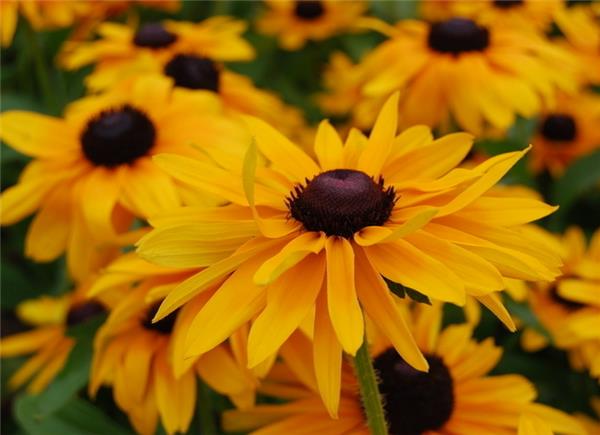
The gerbera is a flower full of poetry. Gerbera, also known as the Barberton daisy, symbolizes mutual respect and mutual love, perseverance, and fearlessness of hardship. Today we are going to introduce the soilless cultivation techniques for gerbera. Let's take a look!
Soilless Cultivation Techniques for Gerbera
1. Variety Selection
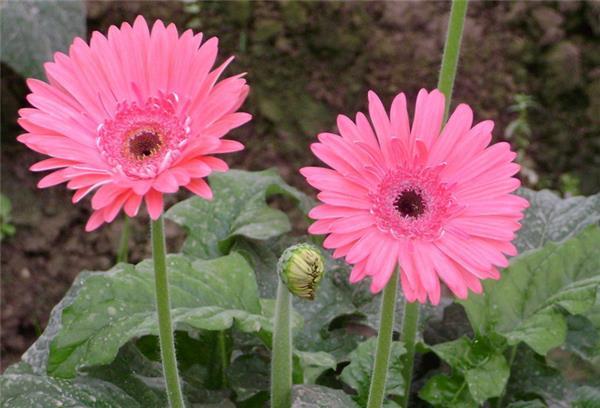
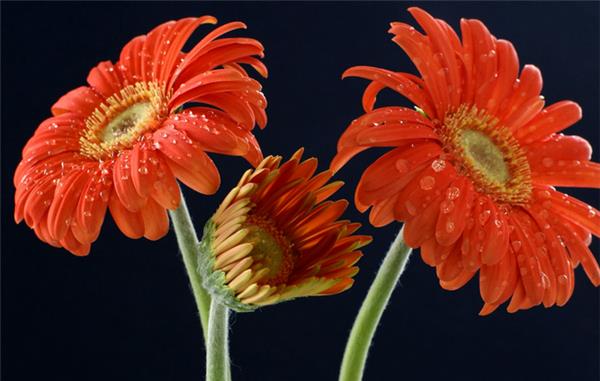
Gerbera varieties are abundant. By cultivation method, they can be divided into cut flower varieties and potted varieties; by flower color, they can be divided into red series, pink series, yellow series, white series, orange series and other varieties; in cut flower cultivation, they are often divided by petal width into narrow-petal type, wide-petal type, double-petal type and anemone type. At present, most domestic cultivated varieties are introduced from the Netherlands, and many varieties are from the Terra series of Terranigra in the Netherlands. Common varieties include the red series Terra-visa, Terra-maxima, Terra-mor, Terra-monza, Terra-cerise, etc.; the pink series Terra-pastel, Terra-metro, Terra-florida, Terra-queen, Terra-royal, etc.; the yellow series Terra-mix, Terra-olympic, Terra-sun, Terra-fame, Terra-pmva, etc.; the white series Terra-mint, Terra-nivalis, Terra-calypso, etc.; and the orange series Terra-corso, Terra-nutans, Terra-kim, etc.
2. Cultivation Method and Planting
Soilless cultivation of gerbera can use rock wool cultivation, or other substrates through cultivation beds or pot cultivation. The cultivation substrate usually uses ceramsite, peat, vermiculite, rice husk, perlite, river sand, sawdust, furnace slag, etc. The cultivation bed is 100-120 cm wide and 25-30 cm high, built with bricks.
The planting density of gerbera should vary according to variety, cultivation mode, etc. The general planting density is 8-12 plants per sq m, and the plant and row spacing is mostly around 25 cm x 35 cm. The best planting time is spring and autumn, when the climate is suitable and it is easy for the seedlings to recover. Because after planting in spring, flowers can be produced in the peak production and sales season of autumn and winter of the same year, so spring planting is more common in production. The planting depth of gerbera should be such that the plant does not fall over, and it should be planted as shallowly as possible. Generally, the root crown is required to be exposed more than 1.0-1.5 cm above the substrate surface. If planted too deeply, the root crown and growing point of the young seedling are very prone to rotting, leading to seedling death. Even if it survives, because the growing point is buried in the substrate, growth and development are easily hindered, and the flower production rate decreases. If watering and fertilizing are improper, it can also cause the plant to rot and die.
3. Environmental Regulation
(1) Temperature: At the initial stage of planting, a higher temperature can promote plant growth. The more suitable temperature is about 24°C during the day and about 21°C at night. After about 3 weeks, a daytime temperature of 18-25°C and a nighttime temperature of 12-16°C can ensure growth and flowering. In autumn and winter, due to the short photoperiod, excessively high temperatures will lead to poor flower quality. Generally, the daytime temperature should be at least 15°C, and the nighttime temperature should not be lower than 12°C, so that plant growth and flowering can be maintained. In winter, a low temperature of about 5°C can keep the plant alive, but growth is slow and it may even enter dormancy or semi-dormancy. In short, if the winter night temperature can be maintained above 12-15°C and the summer daytime temperature does not exceed 30°C, it can flower all year round. Temperature regulation can be achieved by heating, ventilation, shading and other means, but at the same time attention should be paid to changes in humidity.
(2) Humidity: Gerbera prefers a moist substrate and relatively dry air humidity, and water should be fully supplied during the growing period. However, when watering, care should be taken not to let water fall into the center of the leaf rosette, otherwise the flower buds are prone to rotting, especially in hot and stuffy summer weather or when growth is slow at low temperatures in winter. Therefore, gerbera should be cultivated with rain protection, and if conditions permit, it is best to use drip irrigation facilities to supply water and fertilizer. An air humidity not exceeding 70%-80% is more suitable. If it is too high, it will cause flower malformation and increase the occurrence of diseases. In summer, due to high temperature and strong light, the transpiration of the plant is often increased, leading to dry soil and water shortage in the plant, so water should be replenished in time, and shading should also be provided. In autumn, the temperature drops and plant transpiration decreases, but growth is vigorous, and there is still a relatively large water demand at this time. In winter, plant growth is slow and may even enter dormancy or semi-dormancy, so attention should be paid to reducing watering and lowering air humidity. Watering in winter is best done in the morning to ensure that air humidity is kept low when the temperature is low at night.
4. Nutrient Solution and Its Management
The supply of nutrient solution and water mostly uses drip irrigation. Because gerbera prefers a relatively dry air environment, sprinkler irrigation is less used for water. The concentration and supply amount of the nutrient solution should be determined according to specific conditions. At the initial stage of planting, the concentration is low and the amount is small; during the vigorous growth period, the concentration is high and the amount is large. Liquid is supplied 4-6 times per day, with an average daily supply of 400-600 ml per plant.
The pH and EC of the substrate should be measured regularly, and the nutrient solution should be adjusted according to the measurement results. At the initial stage of planting, the EC of the nutrient solution is about 1.5 mS/cm; as the plant grows, it can gradually be increased to 2.0-2.5 mS/cm; at high temperatures in summer, due to the large amount of water evaporation, the nutrient solution concentration should be appropriately reduced, with EC not exceeding 2.0 mS/cm. In addition, the pH of the nutrient solution should be adjusted to around 5.5-6.5.
In addition, combined with pest and disease control, foliar topdressing can be carried out by spraying 0.1%-0.5% urea, monopotassium phosphate or low-concentration boric acid, etc.
5. Plant Management
(1) Leaf removal: In gerbera cut flower production, in order to balance the relationship between vegetative growth and reproductive growth, avoid the situation of few flowers and decreased flower quality caused by excessive vegetative growth, and also to improve the ventilation and light transmission conditions of the population, leaf removal is often needed. When removing leaves, attention should be paid to the following aspects: ① First remove diseased leaves and yellowed, aged leaves. ② The remaining leaves should be evenly distributed to avoid overlapping and crossing of leaves. Usually, a mature plant retains 3-4 branches, with 4-5 functional leaves per branch. ③ If too many densely growing small leaves appear in the middle of the plant while there are few functional leaves, some small leaves should be appropriately removed to control vegetative growth, allow the flower buds to receive sufficient light, and promote flower bud development.
(2) Bud thinning: The purpose of bud thinning is to control reproductive growth and improve cut flower quality. First, at the seedling stage, in order to ensure plant growth and cultivate the vegetative body, so as to facilitate flowering of mature plants later, all flower buds should be removed until the plant has more than 5 functional leaves. Second, during the flowering period of mature plants, in order to ensure cut flower quality, some flower buds should also be removed.
6. Pest and Disease Control
Common diseases of gerbera include viral disease, phytophthora disease, powdery mildew and brown spot; common insect pests include red spider mite, leaf miner, whitefly, thrips, etc. Among them, viral disease and red spider mite are the most serious.
(1) Viral disease: Chlorotic ring spots appear on the leaves, some chlorotic spots are oak-leaf shaped, and a few lesions are necrotic. In severe cases, the leaves become smaller, shrunken and brittle. Some varieties also show flower petal color breaking, flower malformation, and dull flower color, and diseased plants are shorter than healthy plants. The pathogen is tobacco rattle virus. The virus is transmitted by insects and often occurs in patches. Control methods: ① At the early stage of disease onset, promptly remove diseased leaves or pull out diseased plants and take them out of the field for deep burial or burning, so as to eliminate the source of infection. ② Pay attention to the control of aphids and nematodes to control the spread and expansion of the disease.
(2) Red spider mite: Most red spider mites damage plants by sucking sap as adults or nymphs on the backs of tender leaves and on young buds. The leaf margins of damaged tender leaves curl upward, the gloss increases, the leaf flesh becomes brittle, and damaged petals turn brown, shrink and deform, losing ornamental value. The peak occurrence of red spider mite is mostly in May or from July to September, when the temperature is high and the climate is dry. When the temperature is low and humidity is high, the damage is significantly reduced. Control methods: ① Promptly remove damaged leaves and flower buds and burn them in a centralized manner. ② Select acaricides for spray control. Red spider mites easily develop resistance, so pesticides should be used alternately.
② The remaining leaves should be evenly distributed to avoid overlapping and crossing of leaves. Usually, a mature plant retains 3-4 branches, with 4-5 functional leaves per branch. ③ If too many densely growing small leaves appear in the middle of the plant while there are few functional leaves, some small leaves should be appropriately removed to control vegetative growth, allow the flower buds to receive sufficient light, and promote flower bud development.(2) Bud thinning: The purpose of bud thinning is to control reproductive growth and improve cut flower quality. First, at the seedling stage, in order to ensure plant growth and cultivate the vegetative body, so as to facilitate flowering of mature plants later, all flower buds should be removed until the plant has more than 5 functional leaves. Second, during the flowering period of mature plants, in order to ensure cut flower quality, some flower buds should also be removed.
6. Pest and Disease Control
Common diseases of gerbera include viral disease, phytophthora disease, powdery mildew and brown spot; common insect pests include red spider mite, leaf miner, whitefly, thrips, etc. Among them, viral disease and red spider mite are the most serious.
(1) Viral disease: Chlorotic ring spots appear on the leaves, some chlorotic spots are oak-leaf shaped, and a few lesions are necrotic. In severe cases, the leaves become smaller, shrunken and brittle. Some varieties also show flower petal color breaking, flower malformation, and dull flower color, and diseased plants are shorter than healthy plants. The pathogen is tobacco rattle virus. The virus is transmitted by insects and often occurs in patches. Control methods: ① At the early stage of disease onset, promptly remove diseased leaves or pull out diseased plants and take them out of the field for deep burial or burning, so as to eliminate the source of infection. ② Pay attention to the control of aphids and nematodes to control the spread and expansion of the disease.
(2) Red spider mite: Most red spider mites damage plants by sucking sap as adults or nymphs on the backs of tender leaves and on young buds. The leaf margins of damaged tender leaves curl upward, the gloss increases, the leaf flesh becomes brittle, and damaged petals turn brown, shrink and deform, losing ornamental value. The peak occurrence of red spider mite is mostly in May or from July to September, when the temperature is high and the climate is dry. When the temperature is low and humidity is high, the damage is significantly reduced. Control methods: ① Promptly remove damaged leaves and flower buds and burn them in a centralized manner. ② Select acaricides for spray control. Red spider mites easily develop resistance, so pesticides should be used alternately.