A Detailed Guide to Tomato Planting Methods and Management Techniques
Everyone is surely familiar with tomatoes; they are delicious whether eaten raw or cooked, and they are especially popular with girls because they contain vitamin C. In cities, many families like to grow some tomatoes in flower pots, so let us take a look at how to grow potted tomatoes.
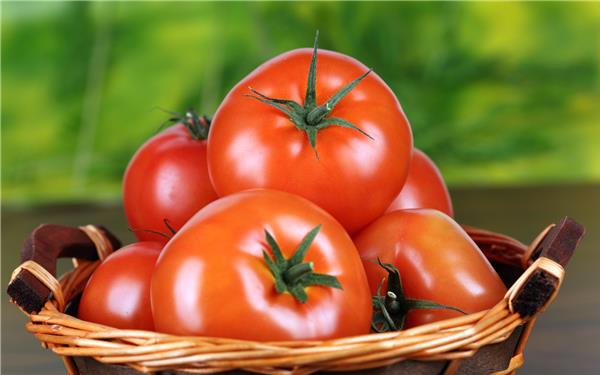
How to grow tomatoes.
1. Seedling raising time: generally sow and raise seedlings from late December to early January.
2. Seed disinfection: generally use 30-50 grams of seed per mu. Before sowing, sun the seeds for 2 days to increase the germination rate. Scald the seeds with 55°C warm water for 15 minutes, keep the temperature and stir in one direction, then add cold water to lower it to 35°C and soak the seeds for 6-8 hours. To prevent the occurrence of viral disease, you can then soak them in a 10% trisodium phosphate solution for 40-50 minutes, then rinse with clean water to remove the mucilage on the seed coat, drain the water, and sow after drying.
3. Seedbed establishment: each mu requires 10 sq m of seedbed, apply 100 kg of fully decomposed organic fertilizer, 500 g of Yongzhuang fertilizer, and 100 g of Keshande Sanqian, spread evenly and shallowly till 12 cm, level the seedbed, and water thoroughly. For seedbed soil disinfection, use Suzaining (58% metalaxyl-mancozeb) or Xiduosheng (70% propineb) mixed 1:1 with 70% Xingnong Zhenglu (thiophanate-methyl), mix 10 g of the chemical per square meter with 5 kg of sieved fine soil evenly, when sowing use 2/3 of the nutrient soil to level the seedbed as a base layer, then sow the seeds evenly, and after sowing, cover the seeds with 1/3 of the soil to a thickness of 0.8-1 cm. To promote early emergence, cover the seedbed with plastic film, maintain a daytime temperature of about 30°C, with a maximum of 32°C; when 1/3 of the seedlings have emerged, remove the plastic film, and after full emergence lower the temperature to about 25°C to prevent leggy growth.
4. Seedling transplanting: when the seedlings grow to two true leaves and one heart leaf, it is the key period for transplanting. Prepare the nutrient soil in advance; for 1 cubic meter of nutrient soil, use 60% field topsoil (remove the top 5 cm of soil to avoid herbicide residue), 40% decomposed organic fertilizer, 10 kg of Haizhuangyuan biological bacterial fertilizer, 90 g of Xiduosheng (70% propineb), and 500 g of Yongzhuang, mix thoroughly and fill into pots. Before transplanting, dip the tomato seedling roots in 1000-fold Haijingling. Within 3 days after transplanting, manage the temperature at 28°C-30°C, and after the seedlings recover, manage the temperature at 22°C-25°C. Note: spray once with 750-fold Mianlaolu (72.2% propamocarb hydrochloride) before transplanting to prevent damping-off disease; after the seedlings recover, use 500-fold Yongzhuang solution + 500-fold Teyougen solution for root drenching, to control rhizoctonia rot while stimulating the tomato seedlings to grow more roots.
5. Promoting flower bud differentiation: tomato flower bud differentiation begins from the third true leaf and ends at the ninth true leaf; basically by the seventh true leaf, the first three trusses of fruit have already differentiated. If flower bud differentiation is poor, deformed flowers and deformed fruits will appear later, so the quality of flower bud differentiation during the seedling stage directly determines early yield. To promote flower bud differentiation, spray 25 g of Huaguoduo + 8 g of Haijingling at the 3-5 true leaf stage to promote flower bud differentiation.
6. Seedling-stage pests and diseases: for insect pests, focus on controlling whiteflies, aphids, and leafminers, using 5 g of 70% imidacloprid plus 10 g of 40% Wanling mixed with 15 kg of water for spraying. The main seedling-stage diseases are viral disease and stem base rot. To control viral disease, at the 3-4 true leaf stage use 25 ml of 4% Ningnanmycin + 4 ml of Kangpu zinc + 15 ml of Longdeng Youduoboron + 8 g of Haijing + 100 ml of honey mixed with 15 kg of water for spraying.
7. Standards for planting seedlings: seedling age about 90 days, main stem half purple and half green, 70% bearing flower buds, stem diameter 0.6 cm, well-developed root system and free of pests and diseases.
Summer and autumn tomato cultivation techniques.
High-yield cultivation of summer and autumn tomatoes with virus prevention is a key measure in vegetable production. To promote the development of urban vegetable production, the technical points are as follows:
1. Prepare base fertilizer well; the fertilizer must be fully decomposed and fermented. Generally, for a yield of 10,000 jin of tomatoes per mu, pay attention to applying an additional 10,000 jin of high-quality barnyard manure (fresh chicken manure is also acceptable), or 1500-2000 jin of cake fertilizer. The fertilizer must be decomposed and fermented under high-temperature conditions, and before making ridges, wrap the fertilizer inside the ridge.
2. Select good varieties, carry out careful disinfection treatment, make ridges at the right time, sow and raise seedlings directly, and cover well with wheat chaff.
The best variety is Maofen 802. Before sowing, soak the seeds in 10% trisodium phosphate for twenty minutes, wash clean with water, and sow. Make ridges 15 cm high and 60 cm wide, sow directly in two rows per ridge, with a plant spacing of 37 cm, 8-10 seeds per hole, cover with 1 cm of soil, and after sowing cover with wheat chaff 2-3 cm thick to prevent drought and high temperature. After emergence, when the cotyledons unfold, thin the seedlings, removing plants without fuzz and keeping seedlings with more fuzz; when there are 1-2 true leaves, final thinning can be done.
3. Shade and protect from rain, prevent drought by watering lightly, and spray chlormequat.
After sowing, shade nets or sparse corn stalks and other coverings can be placed over the greenhouse film to provide shade, strictly preventing high temperature and drought. Pay attention to watering lightly and appropriately so that the soil moisture content is about 16-18%, and note to spray 1000 PPM chlormequat 3-4 times. Throughout the seedling stage, avoid contact between rainwater and the seedlings.
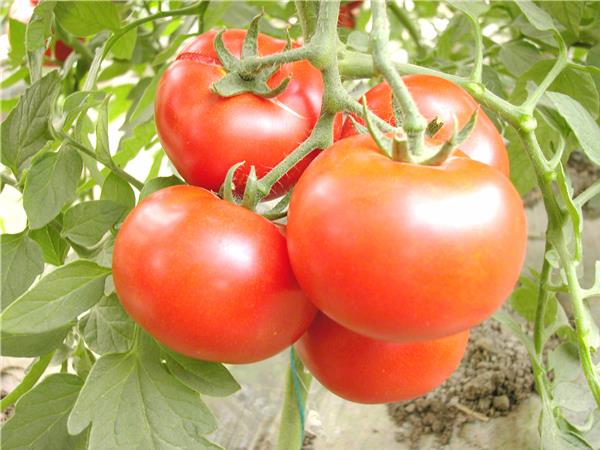
4. Train the branches well, keep enough fruit trusses, and do a good job of flower and fruit thinning. (Single-stem pruning, hanging vines with plastic rope.) Tomatoes tend to produce vegetative branches, so pay attention to removing them early. Keep 4-5 fruit trusses per plant, and keep 2-3 fruits per truss. Pay attention to appropriate 2,4-D flower dipping (dilute each unit with 0.8-1 jin of water), and prevent using too strong a concentration for flower dipping.
5. Chemical protection.
First, to control viral disease, use 500-fold Kangdu No. 1, Bingdu A, and Zhibingling alternately, once every 7-10 days. While spraying antiviral chemicals, pay attention to controlling whiteflies and aphids. Second, spray Balan nutritional protective liquid to prevent the occurrence of other diseases.
6. Mid-to-late stage management.
Pay attention to suitable soil temperature and air temperature. Soil temperature should not exceed 26°C, and air temperature should not exceed 30°C. If the temperature is too high, use shading, water spraying, ventilation, and other methods to cool it down; pay attention to timely topdressing and heavy watering. Topdressing and watering must not be done too early; be sure to note that when the first truss fruit is walnut-sized, the second truss fruit is round jujube-sized, and the third truss fruit has finished flowering, carry out topdressing and heavy watering. Before that, light watering is appropriate; in the early stage, to prevent drought, light watering can be done 1-2 times per month; Balan nutritional protective liquid mixed with chlorothalonil or carbendazim or thiophanate-methyl should be applied once every 10-15 days to prevent disease; in the late stage, pay attention to heat preservation and increasing carbon dioxide application. If the temperature is too low, late blight and cottony leak are likely to occur; be sure to keep the air temperature at 25-30°C, and avoid watering heavily too many times, which lowers soil temperature and causes low-temperature diseases. During this period, increase carbon dioxide application for two to three months, which is beneficial for increasing yield. During the fruit swelling period, pay attention to choosing Tianyuan liquid fertilizer, Hedele, Liguomei, Green Star, Pen shi bao, Xiangxiaren, K100, etc., spraying once every 7-10 days, 2-3 times. For the cultivation of delayed autumn tomatoes, in order to facilitate heat preservation in the later stage, in addition to the above points, also pay attention to making the arch shed length more than 40 m as much as possible, and use high-quality drip-free agricultural film.
Field management after planting.
1. Fertilization. In the early growth stage, tomato nutrient uptake is small; starting from fruit set on the first inflorescence, nutrient uptake increases rapidly, and by the full fruit stage nutrient uptake can account for 70-80% of total uptake. Tomato uptake of nitrogen, phosphorus, and potassium shows a straight-line upward trend, potassium uptake is nearly twice that of nitrogen, and calcium uptake is similar to nitrogen.
Base fertilizer: for open-field tomato cultivation, apply base fertilizer heavily, that is, on the basis of applying organic fertilizer, apply 35-40 kg of nitric phosphorus potassium fertilizer per mu as base fertilizer.
Topdressing: when the first fruit truss swells, apply 20 kg of phosphorus nitrate fertilizer per mu combined with watering; after the first fruit truss is harvested, apply 20 kg of nitric phosphate fertilizer per mu as full-fruit fertilizer; during the full fruit stage, use a mixed solution of 20% nitric phosphate fertilizer, 1% potassium dihydrogen phosphate, 0.1% zinc sulfate, and 0.25% boric acid, spraying once every 7-10 days, which can significantly increase yield and vitamin C content.
2. Watering. 3-5 days after planting, when the color of the plant's heart leaves changes from old green to tender green and the growing point begins to grow, generally irrigate once with recovery water, also called plant-establishing water. The recovery water should be heavy; if raising seedlings in nutrient blocks or nutrient bags, be sure to soak the blocks open to promote the roots to quickly grow out of the blocks and into the soil, so as to shorten the recovery period. After watering the recovery water, carry out intertillage. After recovery until the first flower truss sets fruit, if there is no particularly severe drought, generally do not water, and carry out seedling restraint. The length of seedling restraint should be flexibly controlled according to plant growth, variety characteristics, and environmental conditions. Generally, early-maturing varieties have weak plant growth, early flower organ differentiation, early flowering, and early fruiting, so their seedling restraint time should not be too long. Mid- and late-maturing varieties have vigorous plant growth; growth should be strictly controlled, and the seedling restraint time can be appropriately extended. In production, seedling restraint generally ends when the first inflorescence fruit is walnut-sized, the second inflorescence fruit is broad bean-sized, and the third inflorescence has just begun to flower.
When the tomato seedling restraint period ends, it enters the fruiting period, and the soil should be kept moist. In normal weather, generally irrigate once every 4-6 days, and the irrigation amount should gradually increase. When there is a lot of rain, appropriately reduce irrigation. Irrigation should be even, preventing alternating dryness and wetness. The main tomato irrigation methods are furrow irrigation, sprinkler irrigation, and drip irrigation, among which furrow irrigation is the main method. Tomato cultivation should not only value irrigation, but also pay attention to drainage and waterlogging prevention during the rainy season. In areas without irrigation conditions, tomato cultivation is best done with plastic film mulching.
3. Staking and vine tying. After tomato planting and before flowering, staking and vine tying must be carried out to prevent lodging. Especially in spring-drought and windy areas, staking and vine tying should be done immediately after planting. When tying vines, adjust the fruit trusses inside the frame and the stems and leaves outside the frame, to avoid fruit damage and prevent sunscald, and to improve plant ventilation and light penetration, which is beneficial to the growth of stems and leaves.
4. Tomato pruning and shoot removal. Early-maturing cultivation generally adopts the single-stem pruning method, that is, keeping the main stem of each plant and removing all branches; late-maturing over-summer cultivation can adopt the continuous pinching pruning method or the head-changing regeneration pruning method. Combined with pruning, carry out flower and fruit thinning, and remove old leaves and diseased leaves.
5. Flower and fruit preservation. The main measures for preserving flowers and fruits of spring open-field tomatoes are cultivating strong seedlings, and using fruit-setting hormones and vibration pollination during the flowering period. Except for saline-alkali land or particularly severe drought, irrigation should be controlled during the flowering period. To increase fruit yield, foliar fertilizer spraying should also be carried out.
Second, spray Balan nutritional protective liquid to prevent the occurrence of other diseases.6. Mid-to-late stage management.
Pay attention to suitable soil temperature and air temperature. Soil temperature should not exceed 26°C, and air temperature should not exceed 30°C. If the temperature is too high, use shading, water spraying, ventilation, and other methods to cool it down; pay attention to timely topdressing and heavy watering. Topdressing and watering must not be done too early; be sure to note that when the first truss fruit is walnut-sized, the second truss fruit is round jujube-sized, and the third truss fruit has finished flowering, carry out topdressing and heavy watering. Before that, light watering is appropriate; in the early stage, to prevent drought, light watering can be done 1-2 times per month; Balan nutritional protective liquid mixed with chlorothalonil or carbendazim or thiophanate-methyl should be applied once every 10-15 days to prevent disease; in the late stage, pay attention to heat preservation and increasing carbon dioxide application. If the temperature is too low, late blight and cottony leak are likely to occur; be sure to keep the air temperature at 25-30°C, and avoid watering heavily too many times, which lowers soil temperature and causes low-temperature diseases. During this period, increase carbon dioxide application for two to three months, which is beneficial for increasing yield. During the fruit swelling period, pay attention to choosing Tianyuan liquid fertilizer, Hedele, Liguomei, Green Star, Pen shi bao, Xiangxiaren, K100, etc., spraying once every 7-10 days, 2-3 times. For the cultivation of delayed autumn tomatoes, in order to facilitate heat preservation in the later stage, in addition to the above points, also pay attention to making the arch shed length more than 40 m as much as possible, and use high-quality drip-free agricultural film.
Field management after planting.
1. Fertilization. In the early growth stage, tomato nutrient uptake is small; starting from fruit set on the first inflorescence, nutrient uptake increases rapidly, and by the full fruit stage nutrient uptake can account for 70-80% of total uptake. Tomato uptake of nitrogen, phosphorus, and potassium shows a straight-line upward trend, potassium uptake is nearly twice that of nitrogen, and calcium uptake is similar to nitrogen.
Base fertilizer: for open-field tomato cultivation, apply base fertilizer heavily, that is, on the basis of applying organic fertilizer, apply 35-40 kg of nitric phosphorus potassium fertilizer per mu as base fertilizer.
Topdressing: when the first fruit truss swells, apply 20 kg of phosphorus nitrate fertilizer per mu combined with watering; after the first fruit truss is harvested, apply 20 kg of nitric phosphate fertilizer per mu as full-fruit fertilizer; during the full fruit stage, use a mixed solution of 20% nitric phosphate fertilizer, 1% potassium dihydrogen phosphate, 0.1% zinc sulfate, and 0.25% boric acid, spraying once every 7-10 days, which can significantly increase yield and vitamin C content.
2. Watering. 3-5 days after planting, when the color of the plant's heart leaves changes from old green to tender green and the growing point begins to grow, generally irrigate once with recovery water, also called plant-establishing water. The recovery water should be heavy; if raising seedlings in nutrient blocks or nutrient bags, be sure to soak the blocks open to promote the roots to quickly grow out of the blocks and into the soil, so as to shorten the recovery period. After watering the recovery water, carry out intertillage. After recovery until the first flower truss sets fruit, if there is no particularly severe drought, generally do not water, and carry out seedling restraint. The length of seedling restraint should be flexibly controlled according to plant growth, variety characteristics, and environmental conditions. Generally, early-maturing varieties have weak plant growth, early flower organ differentiation, early flowering, and early fruiting, so their seedling restraint time should not be too long. Mid- and late-maturing varieties have vigorous plant growth; growth should be strictly controlled, and the seedling restraint time can be appropriately extended. In production, seedling restraint generally ends when the first inflorescence fruit is walnut-sized, the second inflorescence fruit is broad bean-sized, and the third inflorescence has just begun to flower.
When the tomato seedling restraint period ends, it enters the fruiting period, and the soil should be kept moist. In normal weather, generally irrigate once every 4-6 days, and the irrigation amount should gradually increase. When there is a lot of rain, appropriately reduce irrigation. Irrigation should be even, preventing alternating dryness and wetness. The main tomato irrigation methods are furrow irrigation, sprinkler irrigation, and drip irrigation, among which furrow irrigation is the main method. Tomato cultivation should not only value irrigation, but also pay attention to drainage and waterlogging prevention during the rainy season. In areas without irrigation conditions, tomato cultivation is best done with plastic film mulching.
3. Staking and vine tying. After tomato planting and before flowering, staking and vine tying must be carried out to prevent lodging. Especially in spring-drought and windy areas, staking and vine tying should be done immediately after planting. When tying vines, adjust the fruit trusses inside the frame and the stems and leaves outside the frame, to avoid fruit damage and prevent sunscald, and to improve plant ventilation and light penetration, which is beneficial to the growth of stems and leaves.
4. Tomato pruning and shoot removal. Early-maturing cultivation generally adopts the single-stem pruning method, that is, keeping the main stem of each plant and removing all branches; late-maturing over-summer cultivation can adopt the continuous pinching pruning method or the head-changing regeneration pruning method. Combined with pruning, carry out flower and fruit thinning, and remove old leaves and diseased leaves.
5. Flower and fruit preservation. The main measures for preserving flowers and fruits of spring open-field tomatoes are cultivating strong seedlings, and using fruit-setting hormones and vibration pollination during the flowering period. Except for saline-alkali land or particularly severe drought, irrigation should be controlled during the flowering period. To increase fruit yield, foliar fertilizer spraying should also be carried out.