How to Grow Variegated Spider Plant? A Detailed Guide to Cultivation Methods
First, Variegated Spider Plant
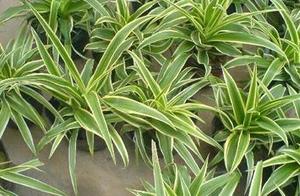 The variegated spider plant (Chlorophytum comosum 'Variegatum') belongs to the Liliaceae family and is a perennial evergreen herbaceous plant with thick, cylindrical fleshy roots. The leaves are broadly linear, tender green, and grow on short stems. The raceme is 30 to 60 cm long, curving and drooping, with small white flowers; it often produces several clusters of rooted plantlets formed from bulbils on the flower stems, which is quite interesting. It grows fast and is easy to cultivate, and can be grown and enjoyed year-round in a relatively bright room. This plant with grayish-white leaves likes to live in a constant-temperature environment. It can be placed in small spaces such as bathrooms and windowsills, and can be grown year-round in a bright room for enjoyment. It can be placed on top of a cabinet or on a flower stand, choosing a suitable position. Its slender, graceful branches and leaves can effectively absorb formaldehyde released from curtains and other items, and fully purify the air.
Common cultivated varieties include: variegated spider plant, with yellow longitudinal stripes in the center of the leaf; golden spider plant; spider plant; and the white-striped silver-heart spider plant, with white vertical stripes in the center of the leaf and silver edges. Temperature: it prefers a warm environment and has strong adaptability; the minimum winter temperature is around 10°C. Light: it prefers bright light, with about 50% shading; avoid direct sunlight in summer, and no shading is needed in winter.
 Second, How to Grow Variegated Spider Plant
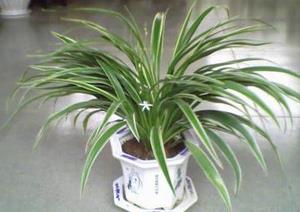
The variegated spider plant is a type of spider plant, and its planting method is the same as other spider plants. Generally speaking, the variegated spider plant has strong adaptability, grows luxuriantly, and is relatively easy to cultivate.
1. Temperature. When grown indoors in winter, the temperature must not be lower than 5°C.
2. Light. The variegated spider plant is extremely sensitive to light. Shading is required in summer and autumn, and direct sunlight should be avoided. In spring, 50% of sunlight can be shaded, or it can be placed in a semi-shady spot for cultivation; in autumn, it can receive appropriately more light depending on the situation. Through observation, it can be found that with insufficient light, the leaf color becomes pale and sometimes even yellow-green; with too strong light, the leaves turn yellow and withered.
3. Watering. Water appropriately more during the growing period to keep the potting soil moist. Control watering in winter. Usually pay attention to keeping the leaf surface clean, and frequently spray water on the leaf surface.
4. Fertilizing. During the growing season, apply diluted fertilizer about once every half month. For variegated varieties, nitrogen fertilizer should be controlled.
5. Placement. Spider plants can be hung, which gives a distinctive flavor. The height should be level with or slightly above eye level; if too high, watering becomes inconvenient. When fertilizing, take it down from the hanging basket, and after fertilizing, rinse the leaves with a fine spray.
 Third, Cultivation Methods for Variegated Spider Plant
I. Cultivation Methods
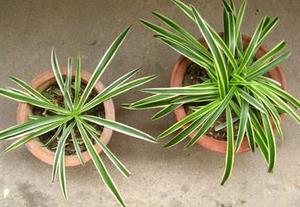
Cuttings and division propagation can be carried out at any time from spring to autumn. Spider plants have strong adaptability and a high survival rate, and are generally very easy to propagate. When taking cuttings, simply take a stolon 5 to 10 cm long with new buds and insert it into the soil; it will root in about one week, and after about 20 days it can be transplanted into a pot, watered thoroughly, and placed in a shady spot for care.
When dividing, the spider plant can be lifted out of the pot, old soil and decayed roots removed, and the old roots cut apart so that each divided plant retains three stems, then transplant and cultivate them separately. You can also cut off the clustered stems and leaves on the stolon of the spider plant, which is actually a young new plant with leaves above and aerial roots below, and directly plant it into a flower pot for cultivation.
Seed propagation of spider plants can be carried out every year in March. Because the seeds are not large, after sowing, the covering soil should not be thick; generally 1 cm is sufficient. At a temperature of 15°C, the seeds can sprout in about 2 weeks, and after the seedlings take shape, they can be transplanted for cultivation.
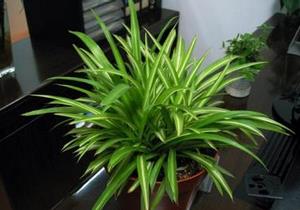 Spider plant is a perennial evergreen herbaceous flower with fleshy roots. It has diverse forms and is also highly shade-tolerant and easy to manage. It is often used as a hanging potted plant, for indoor decoration, or for garden landscaping.
1. Temperature regulation. Spider plant prefers a warm and humid climate and is not cold-tolerant. It grows fastest at 20 to 24°C, stops growing above 30°C, and the leaves tend to turn yellow with dry tips.
2. Light regulation. When grown outdoors in summer, attention should be paid to shading so that the light is not too strong; otherwise, sunburn is very likely to occur.
3. Water and fertilizer regulation. During the peak growing seasons of spring and autumn, watering should be sufficient, the potting soil should often remain moist, and the branches and leaves should frequently be sprayed with clean water close to room temperature to prevent dry tips, but there should be no water accumulation.
4. Pruning and repotting. As the plant grows, in order to maintain a good plant shape, the old leaves at the base should be pruned frequently.
5. Pest control. Because spider plant clumps are dense and poorly ventilated, they are susceptible to scale insect damage, so prevention should be the priority.
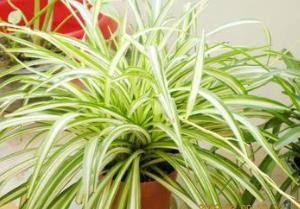 The cultivation methods for variegated spider plant are actually not difficult. The key is that we should also take careful care of them in daily life, caring for each pot of variegated spider plant as if caring for our own child, paying attention to frequently pruning branches and leaves, paying attention to pest control, and providing suitable temperature and humidity to ensure that the variegated spider plant has a good living environment.
II. Daily Care of Variegated Spider Plant
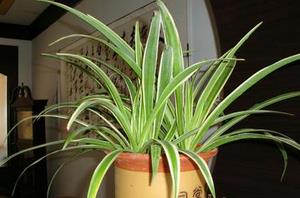 1. The variegated spider plant prefers a semi-shady environment. If exposed to direct sunlight, combined with dry air, it is most likely to cause scorched leaf tips. Therefore, spider plants must be placed in a relatively cool and ventilated place, and special attention should be paid to frequently spraying water on the leaf surface to increase environmental humidity.
2. Although the variegated spider plant likes moisture, if watered too much or if the potting soil drains poorly, root rot can also indirectly cause the leaves to wither and scorch. Improper watering and fertilizing can also cause the leaves to dry up.
3. The variegated spider plant likes fertilizer. If fertilizer and water are insufficient, the leaf color will fade and the leaf tips will scorch. However, fertilizing should not be excessive either.
4. In winter, be sure to watch out for frost damage. When the ambient temperature is below 4°C, it will suffer frost damage.
To maintain a good plant shape, the old leaves at the base should be pruned frequently.
5. Pest control. Because spider plant clumps are dense and poorly ventilated, they are susceptible to scale insect damage, so prevention should be the priority.
The cultivation methods for variegated spider plant are actually not difficult. The key is that we should also take careful care of them in daily life, caring for each pot of variegated spider plant as if caring for our own child, paying attention to frequently pruning branches and leaves, paying attention to pest control, and providing suitable temperature and humidity to ensure that the variegated spider plant has a good living environment.
II. Daily Care of Variegated Spider Plant
1. The variegated spider plant prefers a semi-shady environment. If exposed to direct sunlight, combined with dry air, it is most likely to cause scorched leaf tips. Therefore, spider plants must be placed in a relatively cool and ventilated place, and special attention should be paid to frequently spraying water on the leaf surface to increase environmental humidity.
2. Although the variegated spider plant likes moisture, if watered too much or if the potting soil drains poorly, root rot can also indirectly cause the leaves to wither and scorch. Improper watering and fertilizing can also cause the leaves to dry up.
3. The variegated spider plant likes fertilizer. If fertilizer and water are insufficient, the leaf color will fade and the leaf tips will scorch. However, fertilizing should not be excessive either.
4. In winter, be sure to watch out for frost damage. When the ambient temperature is below 4°C, it will suffer frost damage.