What to Do When a Bear's Paw Loses Leaves? Detailed Guide to the Correct Care Method
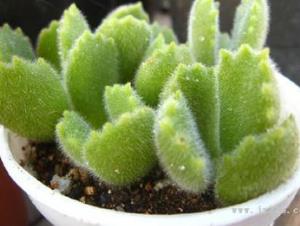
The Bear's Paw (Cotyledon tomentosa) is very popular among succulents because of its cute and beautiful appearance. It is an angiosperm succulent; the Bear's Paw has alternate leaves covered all over with short white hairs, and the leaf tips are jagged, like a little bear's paw, very cute, hence the name Bear's Paw. But do flower lovers know how to grow a Bear's Paw? Now let us introduce it to you in detail.
Family and genus: Crassulaceae, genus Cotyledon
Place of origin: native to Namibia in Africa
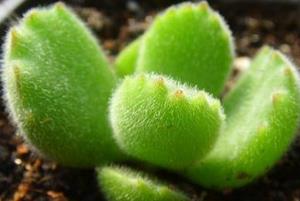
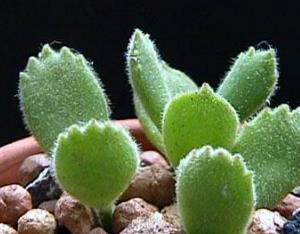
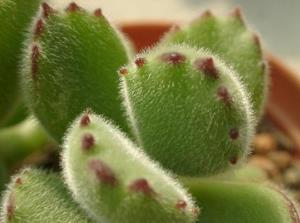
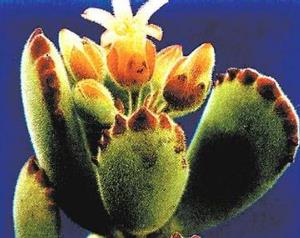
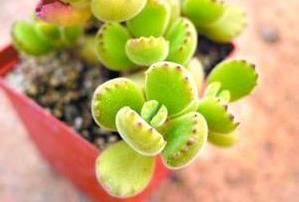
Morphological features: The Bear's Paw yellow-variegated form is a perennial succulent herbaceous plant; the plant is a low, multi-branched shrub, with old stems dark brown and young branches gray; the thick, fleshy leaves are opposite and decussate, ovate, 2 to 3 cm long and 1 to 2 cm wide, with notches on the leaf margin at the top. The leaf surface is densely covered with fine short white hairs, and the leaf tips have several small claws that turn purplish red under strong light, looking just like chubby bear paws. The Bear's Paw yellow-variegated form has racemose inflorescences, and the flowers are slightly pink.
Key cultivation points:
The Bear's Paw yellow-variegated form should be grown in a warm, dry environment with plenty of sunlight. During cultivation, avoid prolonged rain; on the contrary, you can often spray water on the plant, because the environment is very well ventilated, and spraying water can wash away dust and make the leaves cleaner. Be careful not to let water remain in the leaf center for long, otherwise the center will rot.
The Bear's Paw yellow-variegated form grows slightly faster than the white-variegated one. Repot once every 2 to 3 years, before the first watering in early spring. The soil mix is peat mixed with pumice and coal cinders; the ratio is not fixed, roughly 1 to 1 to 1, as long as the soil is breathable.
The Bear's Paw yellow-variegated form is not very large in plant shape but has many branches. You can cut side branches for cuttings, or propagate from leaves; this is a bit difficult, because leaves grown from cuttings easily revert, losing their variegation.
Leaf propagation: Lay the leaves flat on the slightly moist soil surface and place them in a cool, ventilated spot; you do not need to pay attention to them, and new leaves will slowly grow. Once roots grow, you can give water.
Stem cuttings: Insert healthy stems whose wounds have dried into slightly moist sandy soil. In a cool, ventilated place they will basically root in 15 to 20 days. Cuttings should be taken in spring and autumn; leaf propagation can be done at any time except winter.
One advantage of taking cuttings from variegated branches is that they do not easily revert. The Bear's Paw yellow-variegated form is a variety prone to reverting, so it needs careful care; only then will it grow more beautifully.
1. How to grow a Bear's Paw
1. Growth habits: The Bear's Paw is a perennial herbaceous plant that likes a warm, dry, well-lit, and well-ventilated growing environment. It can tolerate high temperatures of 30 degrees. In general home cultivation, to keep the Bear's Paw ornamental, when the temperature is above 35 degrees you should shade it appropriately to avoid the scorching sun burning the leaves and affecting its ornamental value.
2. Watering: In summer, the Bear's Paw should be watered thoroughly; in other seasons keep it in light and apply a dilute liquid fertilizer once a month. In winter, if there is insufficient sunlight, do not let the potting soil become too wet.
3. Propagation: The Bear's Paw is generally propagated by cuttings. Take branches with short stem nodes and thick leaves, let the cut dry slightly, then insert them into a sand bed; they will root in 20 days and can be transplanted in a month.
4. Management and care: The Bear's Paw should often be placed in a sunny place. Sufficient light can shorten the spacing between leaves and make the leaves thicker, enhancing its ornamental value. If it is too shady, the plant's leaves will become weak, the internodes will lengthen, and the hairs on the surface will lose their luster.
Most succulents are propagated by leaf cuttings, but the Bear's Paw is slightly different. Although the Bear's Paw will root from leaf cuttings, it is very difficult for it to grow sprouts, so this method is mostly not used. Cuttings of the Bear's Paw are best taken in spring and autumn.
Watering the Bear's Paw must be done in moderation; it must not be too dry or too wet. In spring and autumn, water only after the soil has dried completely, and when you water, water thoroughly. If the potting soil is wet for a long time, the leaves will rot; if it is too dry, they will shrivel. The Bear's Paw does not have a high demand for fertilizer; use fertile, loose sandy loam as potting soil, and apply little or no fertilizer. The Bear's Paw is not large in plant shape, small and exquisite, with peculiarly interesting leaf shapes; used to decorate a desk or windowsill, it is very distinctive.
Leaf drop and leaf rot in the Bear's Paw are probably due to too much watering. The Bear's Paw's growing season should be from mid-autumn to mid-spring; at this time the Bear's Paw's leaves are thick and plump. But when it reaches the dormant period, the Bear's Paw's leaves will shrink and drop, which is a normal phenomenon.
Because the Bear's Paw is a summer-dormant Crassulaceae plant, that is, in summer it enters a dormant state; many sedums are like this, though there are also robust sedums. During dormancy the roots also stop functioning, and at this time root rot easily occurs because the medium is too wet. Every year as the dormant period approaches, it is best to gradually reduce the amount of water.
But there is also another situation: because the Bear's Paw is a winter-type species that goes dormant in summer and cannot stand high temperature and high humidity, plus some flower lovers water without restraint and without considering the consequences, this leads to leaf drop and root rot.
But if the leaf drop is caused by too much watering, then be careful, because the Bear's Paw is in its dormant period in summer and is very hard to recover. Facing a hot and humid summer, flower lovers can reduce watering and increase ventilation to reduce the hot and humid conditions; it is recommended to use a medium with good breathability and water permeability.
Third, how to handle leaf drop in the Bear's Paw
Leaf drop and leaf rot in the Bear's Paw are probably due to too much watering. The Bear's Paw's growing season should be from mid-autumn to mid-spring; at this time the Bear's Paw's leaves are thick and plump. But when it reaches the dormant period, the Bear's Paw's leaves will shrink and drop, which is a normal phenomenon.
Because the Bear's Paw is a summer-dormant Crassulaceae plant, that is, in summer it enters a dormant state; many sedums are like this, though there are also robust sedums. During dormancy the roots also stop functioning, and at this time root rot easily occurs because the medium is too wet. Every year as the dormant period approaches, it is best to gradually reduce the amount of water.
But there is also another situation: because the Bear's Paw is a winter-type species that goes dormant in summer and cannot stand high temperature and high humidity, plus some flower lovers water without restraint and without considering the consequences, this leads to leaf drop and root rot.
But if the leaf drop is caused by too much watering, then be careful, because the Bear's Paw is in its dormant period in summer and is very hard to recover. Facing a hot and humid summer, flower lovers can reduce watering and increase ventilation to reduce the hot and humid conditions; it is recommended to use a medium with good breathability and water permeability.