Is Crown of Thorns (Euphorbia milii) Poisonous? Plus Detailed Growing Methods
First, Crown of Thorns (Euphorbia milii)

When growing Crown of Thorns at home, as long as you do not casually break off flowers for children to play with, it will not cause harm. Experienced gardeners often use the soaked and filtered liquid from the stems and leaves of Euphorbia plants to control flower pests such as aphids and red spider mites. The stems, flowers, branches, and leaves can be used as medicine. It is cool in nature and bitter in taste. It is mildly toxic and has the effects of drawing out toxins, purging fire, cooling blood, and stopping bleeding.
Second, How to Grow Crown of Thorns (Euphorbia milii)
1. Growing Methods for Crown of Thorns
Potting soil: The leaf clusters of Crown of Thorns grow upright, so it is best to choose a relatively deep cylindrical pot, which will look compact and attractive. For the soil used in growing, you can use two parts garden soil, two parts river sand, and one part compost, mixed with a small amount of horse hoof pieces and bone meal as base fertilizer.
Temperature: The most suitable temperature for growing Crown of Thorns is 15°C to 32°C. It is relatively intolerant of high temperatures and muggy weather. If the summer temperature reaches above 33°C, it will enter a dormant state. In winter, temperature management for Crown of Thorns also needs to be strengthened, because when the temperature drops below 4°C it will enter dormancy, and when the temperature approaches 0°C it will freeze to death.

Fertilizer and water: Crown of Thorns has a particularly strong drought tolerance and is very suitable for growing in arid environments. Of course, Crown of Thorns still needs watering, but its root system is afraid of waterlogging. If water accumulates in the pot, or if you water and fertilize it too frequently, it can easily cause root rot.
2. Precautions for Growing Crown of Thorns
On cloudy and rainy days, Crown of Thorns should not be placed outdoors, as it is afraid of rain and susceptible to pathogen infection. Crown of Thorns has relatively few pests and diseases. Common diseases at the seedling stage mainly include anthracnose, powdery mildew, and rust. Main pests include white grubs and wireworms. In addition, Crown of Thorns is very easy to propagate by cuttings, which can be done throughout the entire growing period. Finally, it should be said that Crown of Thorns is a horticultural hybrid of the Christ Plant. The entire plant is poisonous, the white milky sap is highly toxic, and accidental ingestion can cause vomiting and diarrhea.

Crown of Thorns is mainly propagated by cuttings. 1. Cutting propagation. Cutting medium: This refers to nutrient soil, river sand, peat soil, and other materials used for cuttings. For home cuttings, due to limited conditions, it is difficult to obtain an ideal cutting medium. It is recommended to use a pre-mixed and sterilized cutting medium; medium-coarse river sand can also be used, but it should be rinsed several times with clean water before use. Do not use sea sand or river sand from saline-alkali areas, as they are not suitable for the growth of flowers and plants. In early spring or late autumn, during the peak growing season, cut off leaves or stems, wait for the wounds to dry, then insert them into the medium. Spray the cuttings and medium lightly with water. As long as the medium is not excessively dry or waterlogged, roots and new shoots will quickly grow. From late spring to early autumn, when temperatures are high, cuttings rot very easily, so it is best not to take cuttings then.
Potting up: When potting young seedlings, first place a 2 cm thick layer of coarse-grained medium or ceramsite at the bottom of the pot as a drainage layer, then sprinkle a layer of fully decomposed organic fertilizer as base fertilizer, about 1 to 2 cm thick, then cover with another layer of medium, about 1 to 2 cm thick, and then place the plant in, so as to separate the fertilizer from the roots and avoid burning the roots.
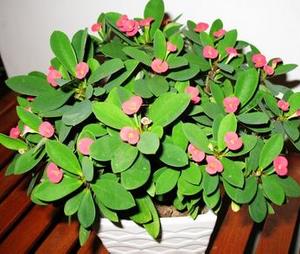
1. In summer: strengthen air convection so that the heat inside the plant can dissipate. Place it in semi-shade, or give it 50% shade, and mist it appropriately, 2 to 3 times a day.
2. In winter: move it indoors to a bright place for care. If kept outdoors, you can wrap it with plastic film to overwinter, but every two days at noon when the temperature is relatively high, uncover the film to let it breathe.
Light management: In summer, when placed in semi-shade for care, or given 50% shade, the leaf color will be more beautiful. In spring and autumn, because the temperature is not very high, it should be given direct sunlight to help it carry out photosynthesis and accumulate nutrients. In winter, place it indoors in a bright spot for care. If it is normally kept indoors, place it near southeast-facing doors and windows so it can receive light, and after every one month or one and a half months, move it outdoors for two months of care; otherwise the leaves will grow thin and yellow, and new branches or leaf stalks will be slender with elongated internodes, in a state of leggy growth.

Fourth, Uses of Crown of Thorns
1. Ornamental value. Crown of Thorns can be used for potted ornamental display, thorn hedges, and so on. It is easy to cultivate and has a long flowering period. Its red bracts are bright and eye-catching, making it a very popular potted plant. Because the young stems of Crown of Thorns are soft, they are often used to tie into shapes such as peacocks, becoming fine decorative pieces placed in public places such as hotels and shopping malls.
2. Medicinal value. The stems, flowers, branches, and leaves of Crown of Thorns can be used as medicine. It is cool in nature, bitter in taste, and mildly toxic. It has the effects of drawing out toxins, purging fire, cooling blood, and stopping bleeding.
Fifth, Is It Poisonous to Grow Crown of Thorns Indoors?
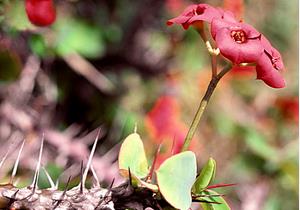
The entire Crown of Thorns plant has sharp thorns, and the white milky sap in the stems is toxic. The white milky sap secreted from wounds of Crown of Thorns-type plants has an irritating effect on human skin and mucous membranes. Accidental ingestion can cause nausea, vomiting, diarrhea, dizziness, and so on. When growing it at home, as long as you do not casually break off flowers for children to play with, it will not cause harm. Experienced gardeners often use the soaked and filtered liquid from the stems and leaves of Euphorbia plants to control flower pests such as aphids and red spider mites. The stems, flowers, branches, and leaves can be used as medicine. It is cool in nature and bitter in taste. It is mildly toxic. It has the effects of drawing out toxins, purging fire, cooling blood, and stopping bleeding.
A piece of advice for flower enthusiasts: Although Crown of Thorns flowers are beautiful, because they are poisonous, it is best not to place them indoors.
If the ambient temperature approaches 0°C, it will die from frost injury.
1. In summer: strengthen air convection so that the heat inside the plant can dissipate. Place it in semi-shade, or give it 50% shade, and mist it appropriately, 2 to 3 times a day.
2. In winter: move it indoors to a bright place for care. If kept outdoors, you can wrap it with plastic film to overwinter, but every two days at noon when the temperature is relatively high, uncover the film to let it breathe.
Light management: In summer, when placed in semi-shade for care, or given 50% shade, the leaf color will be more beautiful. In spring and autumn, because the temperature is not very high, it should be given direct sunlight to help it carry out photosynthesis and accumulate nutrients. In winter, place it indoors in a bright spot for care. If it is normally kept indoors, place it near southeast-facing doors and windows so it can receive light, and after every one month or one and a half months, move it outdoors for two months of care; otherwise the leaves will grow thin and yellow, and new branches or leaf stalks will be slender with elongated internodes, in a state of leggy growth.
Fourth, Uses of Crown of Thorns
1. Ornamental value. Crown of Thorns can be used for potted ornamental display, thorn hedges, and so on. It is easy to cultivate and has a long flowering period. Its red bracts are bright and eye-catching, making it a very popular potted plant. Because the young stems of Crown of Thorns are soft, they are often used to tie into shapes such as peacocks, becoming fine decorative pieces placed in public places such as hotels and shopping malls.
2. Medicinal value. The stems, flowers, branches, and leaves of Crown of Thorns can be used as medicine. It is cool in nature, bitter in taste, and mildly toxic. It has the effects of drawing out toxins, purging fire, cooling blood, and stopping bleeding.
Fifth, Is It Poisonous to Grow Crown of Thorns Indoors?
The entire Crown of Thorns plant has sharp thorns, and the white milky sap in the stems is toxic. The white milky sap secreted from wounds of Crown of Thorns-type plants has an irritating effect on human skin and mucous membranes. Accidental ingestion can cause nausea, vomiting, diarrhea, dizziness, and so on. When growing it at home, as long as you do not casually break off flowers for children to play with, it will not cause harm. Experienced gardeners often use the soaked and filtered liquid from the stems and leaves of Euphorbia plants to control flower pests such as aphids and red spider mites. The stems, flowers, branches, and leaves can be used as medicine. It is cool in nature and bitter in taste. It is mildly toxic. It has the effects of drawing out toxins, purging fire, cooling blood, and stopping bleeding.
A piece of advice for flower enthusiasts: Although Crown of Thorns flowers are beautiful, because they are poisonous, it is best not to place them indoors.