How to Grow Sedum rubrotinctum (Jelly Bean Plant)? A Complete Guide to Care Methods
First, Sedum rubrotinctum
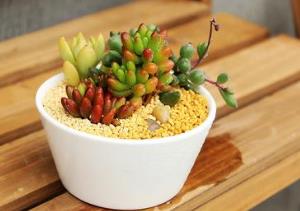
Habits: It likes warmth and is not cold-tolerant. It likes light and has fairly strong drought tolerance. The optimum growing temperature is 10°C-28°C. It is highly adaptable and not demanding about soil.
Watering: It grows slowly and is drought-tolerant, so it does not need much water. Therefore, avoid heavy fertilizing and heavy watering; water when the soil is dry and water thoroughly, while in winter, when indoor temperatures are lower, reduce the amount and frequency of watering. Generally, apply an organic liquid fertilizer once a month. As the plant grows upward, once an old plant's stems become woody after many years, be sure to pay attention to the amount of water, as too much moisture will cause the stems to rot. Generally, after 3 years of cultivation the plant's shape begins to become messy, so pruning should be done in advance.
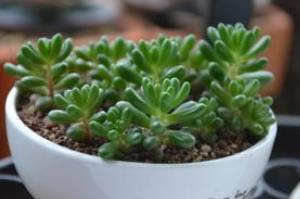
Propagation: Use the cutting method; both stem cuttings and leaf cuttings work, and it is also a variety that is very easy to propagate. For stem cuttings, you can use the branches removed by pruning, cut them into 5 cm stem sections, preferably air-dry them in a cool place for 3 to 5 days, and after the cut surface is slightly dry, insert them into the seedbed. For leaf propagation, remove a complete leaf from the stem, being careful not to damage the leaf, leave it for 3 days, and then insert it as a cutting. This method has a high propagation rate and is suitable for mass propagation, but the plants take shape relatively slowly.
Diseases: Sedum rubrotinctum has few diseases, and occasionally leaf spot and stem rot occur. Leaf spot is mainly caused by poor ventilation and high air humidity. Systemic fungicides can be used for control. Improving ventilation is the key to preventing leaf spot. Stem rot is mostly caused by an overly humid environment in winter.
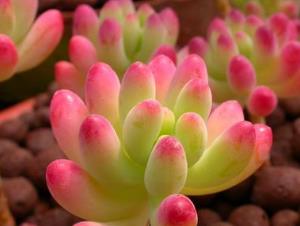
There are three major elements to growing Sedum rubrotinctum: soil, water and light.
Soil: The growing medium used for Sedum rubrotinctum 'Aureum' is cinder mixed with peat; flower lovers who think it looks unattractive can lay down pure river sand or other granules on top. Sedum rubrotinctum 'Aureum', like Sedum rubrotinctum, tends to grow tall when it lacks light, so to make it more beautiful, it is generally pruned so that the old stem becomes attractive. The soil must be loose and breathable; it absolutely must not stay wet without drying out, as that easily causes root rot. Do not use garden soil; beginners had best use succulent-specific soil.
Water: When watering, follow "water when dry, dry out between waterings"; water again once it is dry. If you really cannot resist, set a schedule of watering once a week; in summer and winter it should be reduced even further, or even stopped.
Temperature and light: During the growing season, Sedum rubrotinctum 'Aureum' should receive plenty of sunlight. When summer temperatures rise above 35 degrees, it easily gets sunburned, so you can provide appropriate shading or half-day sun, avoiding direct light at noon. Sedum rubrotinctum 'Aureum' does not grow too slowly, and the plant is fairly drought-tolerant, so watering when dry and letting it dry between waterings is enough; the growing medium should mainly be soft and breathable.
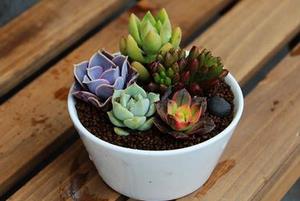
Sedum rubrotinctum likes a warm, dry environment with plenty of sunlight. It is not tolerant of severe cold, tolerates drought and strong light, and dislikes waterlogged conditions. The potting soil can be a mixed soil of garden soil plus a certain amount of coarse sand. The optimum growing temperature is 13-18°C, and the winter temperature should not be lower than 5°C. During the growing season, keep the potting soil moist; in winter reduce watering and keep the potting soil slightly dry. Stems that have grown too tall or too dense, or that have lost too many fleshy leaves, need to be pruned to keep the plant's shape attractive.
Propagation methods:
Sedum rubrotinctum can be propagated by cuttings, stem cuttings and leaf cuttings. For stem cuttings, you can use the branches removed by pruning, cut them into sections about 5 cm long, air-dry them in a cool place for 3 to 5 days, and after the cut surface is slightly dry, insert them into the seedbed. The seedbed soil just needs to be soft. For leaf propagation, remove a complete leaf from the stem, being careful not to damage the leaf, air-dry it for 3 days, and then insert it as a cutting. During the cutting process, a carbendazim solution can be sprayed to sterilize. The ratio is 800:1 or 1000:1. Sedum rubrotinctum has no real pests or diseases; ventilation is enough.
1. Care methods
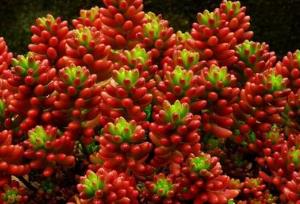
Growth habits: Sedum rubrotinctum can tolerate cold, and in midsummer when sunlight is plentiful, the leaf tips turn red. It is fairly adaptable to temperature, and an environment with a pronounced day-night temperature difference is even more favorable for its growth.
Propagation: Sedum rubrotinctum is mostly propagated by cuttings, both stem cuttings and leaf cuttings. For the stem cutting method, first take the stems and leaves removed by pruning, preferably air-dry them in the shade for three to five days so the cut surface is slightly dry, then insert them into the seedbed. For the leaf cutting method, select a complete leaf, leave it for three days, and then insert it as a cutting. The leaf cutting method is mostly suitable for mass propagation; its shortcoming is that leaf cuttings form mature plants relatively slowly.
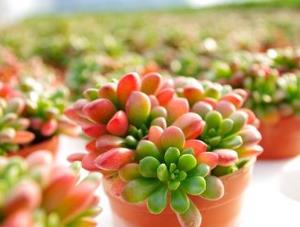
Disease control: Sedum rubrotinctum very rarely suffers from pests or diseases. The occasional leaf spot is mostly caused by poor ventilation or high air humidity, so ventilation is the key to disease problems in Sedum rubrotinctum.
2. Points to note
Sedum rubrotinctum is fairly easy to grow; as long as you water less, provide more light and ensure good ventilation, it will grow very well. In addition, you can also plant Sedum rubrotinctum together with other succulents; crowded and jostling together, they make quite a lively display. These chaotically beautiful little plants are sure to bring a lot of joy to life.
Third, Care Methods for Sedum rubrotinctum
1. Care methods
Growth habits: Sedum rubrotinctum can tolerate cold, and in midsummer when sunlight is plentiful, the leaf tips turn red. It is fairly adaptable to temperature, and an environment with a pronounced day-night temperature difference is even more favorable for its growth.
Propagation: Sedum rubrotinctum is mostly propagated by cuttings, both stem cuttings and leaf cuttings. For the stem cutting method, first take the stems and leaves removed by pruning, preferably air-dry them in the shade for three to five days so the cut surface is slightly dry, then insert them into the seedbed. For the leaf cutting method, select a complete leaf, leave it for three days, and then insert it as a cutting. The leaf cutting method is mostly suitable for mass propagation; its shortcoming is that leaf cuttings form mature plants relatively slowly.
Disease control: Sedum rubrotinctum very rarely suffers from pests or diseases. The occasional leaf spot is mostly caused by poor ventilation or high air humidity, so ventilation is the key to disease problems in Sedum rubrotinctum.
2. Points to note
Sedum rubrotinctum is fairly easy to grow; as long as you water less, provide more light and ensure good ventilation, it will grow very well. In addition, you can also plant Sedum rubrotinctum together with other succulents; crowded and jostling together, they make quite a lively display. These chaotically beautiful little plants are sure to bring a lot of joy to life.