A Detailed Guide to Growing and Caring for Night-blooming Jasmine (Cestrum nocturnum)
Night-blooming jasmine blooms at night and releases a rich floral fragrance, which is why it is also called night fragrant flower or night orchid fragrance. So do you know how to grow it?
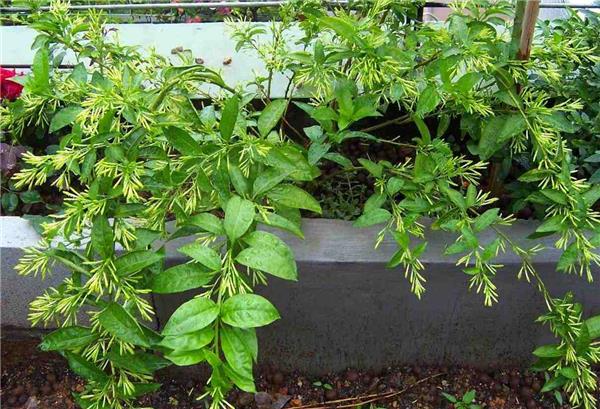
How to grow night-blooming jasmine.
1. Prepare the potting soil. Night-blooming jasmine prefers loose, well-drained, organic-rich, slightly acidic soil. Its potting soil is generally made by mixing 3 parts peat soil or leaf mold with 2 parts coarse river mud and a small amount of farmyard manure. When potting, fill about the bottom 1/5 of the depth with granular crushed brick pieces to help drainage, and use the prepared potting soil for the upper part.
2. Suitable environment. Potted night-blooming jasmine requires well-ventilated environmental conditions. From early May to the end of September, it is best placed in a sunny spot in the courtyard or on a balcony for care. Although it likes plenty of sunlight, it should avoid scorching sun exposure at midday in summer.
3. Fertilizing. During its growth, apply liquid fertilizer once every 10 to 15 days. Starting in late April, apply a dilute liquid fertilizer once every half month. From mid-May onward, continuous blooming can be ensured. If high-efficiency humic acid liquid fertilizers such as Chunquan 883 or Huimanfeng can be applied, the effect will be even better.
4. Water regulation. Summer is its peak growing season. In addition to applying sufficient fertilizer, the potting soil must be kept constantly moist, and if necessary, water twice a day. If it is a seedling, spray water on the leaves once to twice a day.
5. Suitable temperature. In mid-to-late October each year, it should be moved into a shed or greenhouse. The shed or greenhouse temperature should be kept at 8°C to 12°C. If the temperature is below 5°C, the leaves will turn yellow, fall off, and eventually the plant will die.
6. Repotting. Repotting should be done in early spring before the plant is moved outdoors in early April. When repotting, remove some of the old soil and old roots, replace with fresh culture soil, and carry out heavy pruning to encourage new branches. After repotting, keep the potting soil moist, but there must be no standing water in the pot. If the young leaves droop slightly after repotting, water promptly.
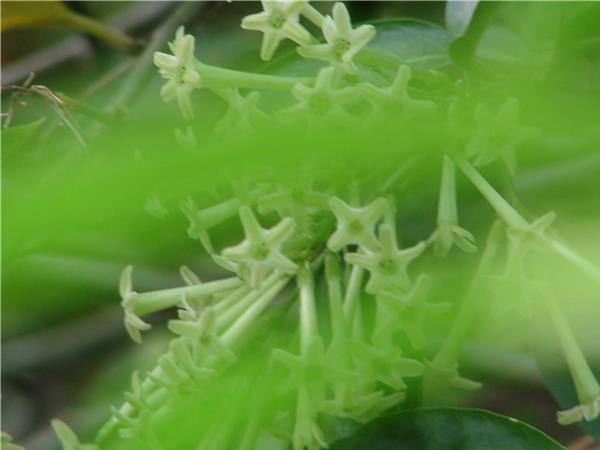
7. Adjusting plant shape. During cultivation and management, a trellis needs to be set up. After the plant climbs onto the trellis, promptly pinch off the growing tips to encourage more branching. After flowering, promptly cut off the spent flower stalks and apply additional fertilizer. After the flowers fade, cut off dead and dry branches, leaves, and overly dense branches, and shorten excessively vigorous shoots.
Propagation methods of night-blooming jasmine.
1. Cutting propagation.
1. Selecting cuttings. Choose branches that are robust and free from pests and diseases. On the same plant, choose current-year branches from the middle and upper parts facing the sun, with shorter internodes, thick and strong branches and leaves, and plump buds. Do not choose branches that are about to flower or excessively vigorous shoots.
2. Choosing the substrate. Mix peat soil, leaf mold, and sand in a ratio of 3:3:4 respectively. The bed soil prepared in this way has the characteristics of raising bed temperature, retaining water, allowing aeration, being fertile, and being slightly acidic, and is suitable for branch rooting and sprouting.
3. Treating the cuttings. Before cutting, treat the cuttings with agents such as ABT rooting powder, which has the effect of promoting rooting. Cut the cuttings into sections 8 cm to 12 cm long, each with 2 to 3 buds. The lower cut of the cutting should preferably be 0.5 cm below a node, and the cut should be smooth. Remove the lower leaves, leaving only 2 to 3 leaves at the top. The insertion depth is generally about 3 cm.
4. Creating rooting conditions. The suitable rooting temperature is 20°C to 24°C. Generally, soil temperature being 3°C to 5°C higher than air temperature is favorable for rooting. The relative air humidity of the cutting bed should be 80% to 90%, which is favorable for rooting, and the light level should be about 30%. Moisture should be appropriate: slightly more water in the early cutting stage, and slightly drier later. The suitable period for open-field cutting locally is from early May to mid-June. At this time the climate is relatively good and can better satisfy the temperature and humidity conditions needed for cuttings to root.
5. Strengthening post-cutting management. After cutting, water thoroughly, cover with plastic film, and place in a relatively shady place, or scatter straw on the film to prevent direct sunlight, and increase light at night to help the cuttings survive. Ventilate once to twice a day to replenish the oxygen needed and prevent disease. Spray water frequently to keep the cutting bed moderately moist, but do not spray too much water; otherwise the cutting bed will be too wet, which often affects callus formation and rooting of the cuttings. When the new roots of the cuttings grow to 2 cm to 3 cm, they can be transplanted into pots at the appropriate time.
2. Potting method.
1. Prepare the potting soil. Night-blooming jasmine prefers loose, well-drained, organic-rich, slightly acidic soil. Its potting soil is generally made by mixing 3 parts peat soil or leaf mold with 2 parts coarse river mud and a small amount of farmyard manure. When potting, fill about the bottom 1/5 of the depth with granular crushed brick pieces to help drainage, and use the prepared potting soil for the upper part.
2. Suitable environment. Potted night-blooming jasmine requires well-ventilated environmental conditions. From early May to the end of September, it is best placed in a sunny spot in the courtyard or on a balcony for care. Although it likes plenty of sunlight, it should avoid scorching sun exposure at midday in summer.
3. Fertilizing. During its growth, apply liquid fertilizer once every 10 to 15 days. Starting in late April, apply a dilute liquid fertilizer once every half month. From mid-May onward, continuous blooming can be ensured. If high-efficiency humic acid liquid fertilizers such as Chunquan 883 or Huimanfeng can be applied, the effect will be even better.
4. Water regulation. Summer is its peak growing season. In addition to applying sufficient fertilizer, the potting soil must be kept constantly moist, and if necessary, water twice a day. If it is a seedling, spray water on the leaves once to twice a day.
5. Suitable temperature. In mid-to-late October each year, it should be moved into a shed or greenhouse. The shed or greenhouse temperature should be kept at 8°C to 12°C. If the temperature is below 5°C, the leaves will turn yellow, fall off, and eventually the plant will die.
6. Repotting. Repotting should be done in early spring before the plant is moved outdoors in early April. When repotting, remove some of the old soil and old roots, replace with fresh culture soil, and carry out heavy pruning to encourage new branches. After repotting, keep the potting soil moist, but there must be no standing water in the pot. If the young leaves droop slightly after repotting, water promptly.
7. Adjusting plant shape. During cultivation and management, a trellis needs to be set up. After the plant climbs onto the trellis, promptly pinch off the growing tips to encourage more branching. After flowering, promptly cut off the spent flower stalks and apply additional fertilizer. After the flowers fade, cut off dead and dry branches, leaves, and overly dense branches.
8. Pest control. It is often harmed by aphids and scale insects, which can be controlled with Tianwangxing, cypermethrin, and Kuishaling, with relatively good results.
Precautions for growing night-blooming jasmine.
Night-blooming jasmine should not be placed indoors. Its fragrance can make patients with high blood pressure and heart disease feel dizzy, depressed, and uncomfortable, causing symptoms such as chest tightness and difficulty breathing, so night-blooming jasmine is not suitable for indoor placement. It is best placed outdoors as an ornamental plant. Night-blooming jasmine originated in the tropical regions of Asia, where daytime temperatures are high and few flying insects come out to activity. In the evening and at night, when the temperature drops, many flying insects come out to forage. At this time, night-blooming jasmine emits a strong fragrance to lure flying insects to come and pollinate. Through the influence of environmental factors over generations, night-blooming jasmine has developed the habit of always emitting fragrance at night. If it is kept indoors for a long time, it can cause dizziness, coughing, and even asthma and insomnia.
Night-blooming jasmine is a plant that likes fertilizer, so during its growth it should be fertilized in small amounts and multiple times. Friends who grow night-blooming jasmine must pay attention to this.
The uses of night-blooming jasmine in its cultivation methods.
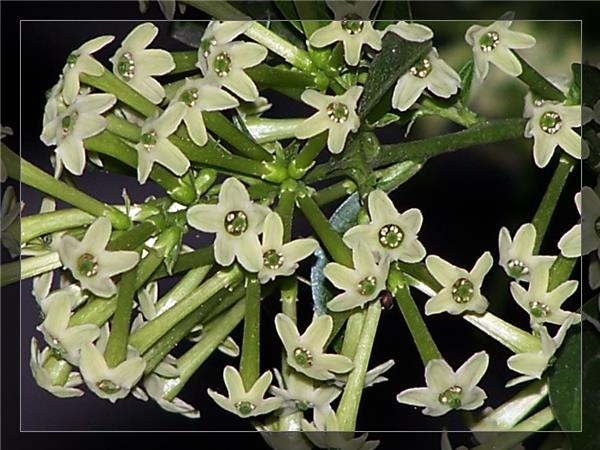
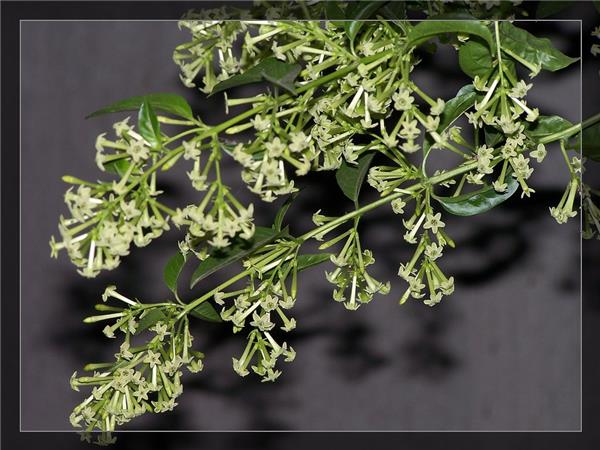
1. Ornamental. Night-blooming jasmine has slender branches and blooms in summer and autumn. Its yellow-green flowers open in the evening and give off waves of strong, refreshing fragrance. In the south it is often used to decorate courtyards, windowsides, pond edges, and pavilion sides, and it has a certain ornamental value.
2. Medicinal. Night-blooming jasmine can be used as medicine. It has the effect of clearing the liver and improving eyesight, and can treat red and swollen eyes, measles affecting the eyes, corneal opacity, and so on.
3. Edible. Night-blooming jasmine can be eaten, mainly using its fresh flowers and flower buds. It is a semi-wild vegetable.
4. Mosquito repellent. Night-blooming jasmine is relatively strong in fragrance and also has a certain toxicity, so it can repel mosquitoes, which is also a convenience in life. Usually a screen window is installed on the window, and the plant is grown outdoors.
If the temperature is below 5°C, the leaves will turn yellow, fall off, and eventually the plant will die.6. Repotting. Repotting should be done in early spring before the plant is moved outdoors in early April. When repotting, remove some of the old soil and old roots, replace with fresh culture soil, and carry out heavy pruning to encourage new branches. After repotting, keep the potting soil moist, but there must be no standing water in the pot. If the young leaves droop slightly after repotting, water promptly.
7. Adjusting plant shape. During cultivation and management, a trellis needs to be set up. After the plant climbs onto the trellis, promptly pinch off the growing tips to encourage more branching. After flowering, promptly cut off the spent flower stalks and apply additional fertilizer. After the flowers fade, cut off dead and dry branches, leaves, and overly dense branches.
8. Pest control. It is often harmed by aphids and scale insects, which can be controlled with Tianwangxing, cypermethrin, and Kuishaling, with relatively good results.
Precautions for growing night-blooming jasmine.
Night-blooming jasmine should not be placed indoors. Its fragrance can make patients with high blood pressure and heart disease feel dizzy, depressed, and uncomfortable, causing symptoms such as chest tightness and difficulty breathing, so night-blooming jasmine is not suitable for indoor placement. It is best placed outdoors as an ornamental plant. Night-blooming jasmine originated in the tropical regions of Asia, where daytime temperatures are high and few flying insects come out to activity. In the evening and at night, when the temperature drops, many flying insects come out to forage. At this time, night-blooming jasmine emits a strong fragrance to lure flying insects to come and pollinate. Through the influence of environmental factors over generations, night-blooming jasmine has developed the habit of always emitting fragrance at night. If it is kept indoors for a long time, it can cause dizziness, coughing, and even asthma and insomnia.
Night-blooming jasmine is a plant that likes fertilizer, so during its growth it should be fertilized in small amounts and multiple times. Friends who grow night-blooming jasmine must pay attention to this.
The uses of night-blooming jasmine in its cultivation methods.
1. Ornamental. Night-blooming jasmine has slender branches and blooms in summer and autumn. Its yellow-green flowers open in the evening and give off waves of strong, refreshing fragrance. In the south it is often used to decorate courtyards, windowsides, pond edges, and pavilion sides, and it has a certain ornamental value.
2. Medicinal. Night-blooming jasmine can be used as medicine. It has the effect of clearing the liver and improving eyesight, and can treat red and swollen eyes, measles affecting the eyes, corneal opacity, and so on.
3. Edible. Night-blooming jasmine can be eaten, mainly using its fresh flowers and flower buds. It is a semi-wild vegetable.
4. Mosquito repellent. Night-blooming jasmine is relatively strong in fragrance and also has a certain toxicity, so it can repel mosquitoes, which is also a convenience in life. Usually a screen window is installed on the window, and the plant is grown outdoors.