Anthurium Growing Methods and Daily Care Tips
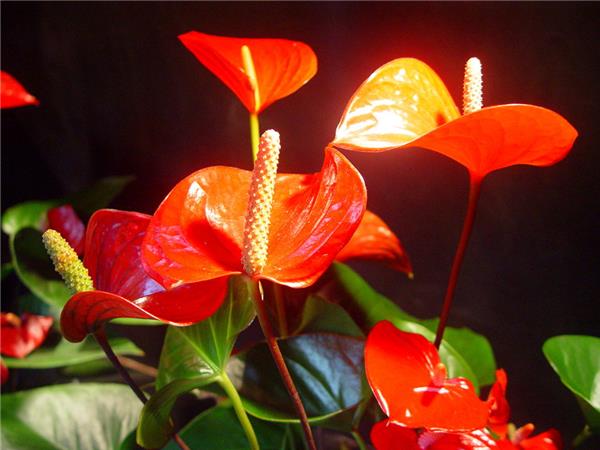
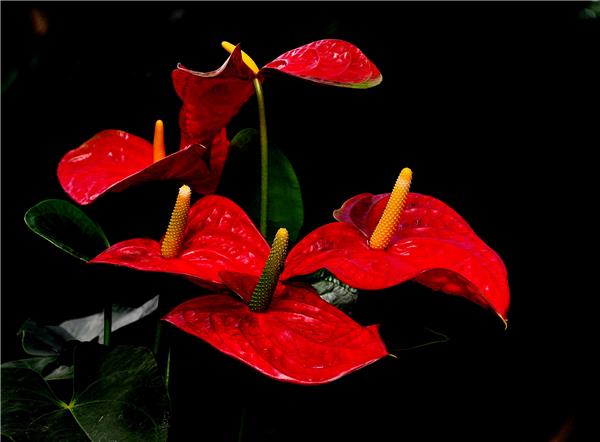
Anthurium, also known as flamingo flower, is deeply loved by everyone because of its broad green leaves, spadix like a Buddha's flame, and petals red as fire, full of auspicious and festive meaning. Now let us introduce the growing methods for anthurium.
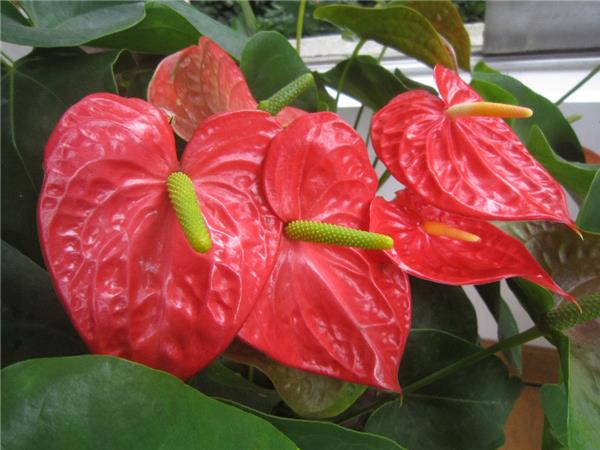
Anthurium growing methods:
1. Choosing flower pots for growing anthurium.
(1) Pot material requirements: In production, dark red plastic pots are mostly used. To coordinate with home decor, plastic flower pots in varied colors can be used for cultivation.
(2) Pot size: When divided seedlings or tissue-cultured seedlings of anthurium have 2 leaves, they can be transplanted into pots with a diameter of 9 cm, 1 plant per pot. After they fill the pot, they can be planted into pots with a diameter of 16-20 cm.
2. Preparing potting soil for growing anthurium.
Anthurium prefers soil rich in humus, fertile, loose, and well-drained. In production, peat soil or leaf mold plus 1/3 perlite is mostly used. At home, the following formula can be used: peat soil : leaf mold : sand : perlite = 4:2:2:2.
3. Watering methods for growing anthurium.
Anthurium prefers moist to wet soil and relatively high air humidity. In the peak growing seasons of spring, summer, and autumn, keep the potting soil moist, and at the same time frequently mist its leaves and surroundings to increase air humidity. When the temperature drops to around 18°C in late autumn, gradually reduce water supply so that the potting soil remains moist. Winter is the flowering season, so water cannot be lacking, but because winter temperatures are relatively low, watering should not be excessive; keeping the potting soil moist is enough. At the same time, because indoor air humidity is relatively low, attention should be paid to misting its leaves and surroundings several times. If placed in an air-conditioned room, the number of mistings should be increased. During flowering, be careful not to spray water on the flowers.
4. Fertilizing methods for growing anthurium.
Anthurium likes fertilizer but cannot tolerate concentrated fertilizer. Do not fertilize in late autumn, winter, or early spring when temperatures are relatively low. In spring, after new leaves emerge, begin topdressing, applying once every 10 days a mixture of fully rotted 10-times diluted liquid fertilizer mixed with an equal amount of 1000-times potassium dihydrogen phosphate solution, or 1000-times "Peters" general-purpose fertilizer. After the temperature drops to 15°C in late autumn, stop fertilizing.
5. Four-season management for growing anthurium.
(1) Spring management.
When the spring temperature steadily stays above 15°C, repot the plant (young plants are repotted once a year, while mature plants are generally repotted once every 2-3 years). After they survive, move them to a suitable light location for cultivation.
Anthurium fears direct strong light and prefers semi-shade. In early spring, when the temperature does not exceed 25%, it should be placed in an environment with sufficient light for cultivation. In the later part of spring, it should be moved to a semi-shaded place for cultivation. Anthurium has a very long flowering period and can bloom continuously under suitable conditions. If it is placed in a dark indoor spot for a long time, it will affect subsequent flowering, and the leaves are prone to losing their luster, while the petioles of new leaves are also prone to excessive elongation, causing the plant shape to become loose and sprawling. When the spring temperature is above 20°C, anthurium begins to grow new leaves. After new leaves appear, begin topdressing. In the early leaf-emergence stage, the potting soil should preferably be moist; after leaves emerge, increase the amount of watering and keep the potting soil moist.
(2) Summer management.
Anthurium grows in high-temperature, high-humidity tropical rainforests, so summer is the peak growing season for anthurium. In terms of management, keep the soil moist, pay attention to supplementing air humidity, and fertilize regularly. But anthurium fears strong light, so it should be placed in a bright indoor spot or a semi-shaded courtyard for cultivation. When placed indoors, because indoor air humidity is relatively low and cannot meet its air humidity requirements, its surroundings and leaves should be frequently misted and sprinkled with water. In summer, it is best not to place anthurium in an air-conditioned room for cultivation.
(3) Autumn management.
In early autumn, when the temperature is relatively high, management is the same as in summer. After the autumn temperature becomes cool, appropriately increase morning and evening light or place it in a semi-shaded spot for cultivation; other management is the same as in summer. As the temperature decreases, gradually increase light.
When the autumn temperature drops to 20°C, anthurium cultivated in the courtyard should be promptly moved indoors to a spot with light or onto a windowsill for cultivation. Pay attention to maintaining indoor temperature, and gradually reduce the frequency of watering so that the potting soil remains moist. When placed indoors, pay attention to supplementing indoor air humidity. When the temperature drops below 18°C, stop fertilizing.
(4) Winter management.
Anthurium is not cold-tolerant. In winter, the indoor temperature should be kept above 15°C, otherwise it cannot bloom. If the temperature is below 10°C, anthurium is prone to cold damage.
Sufficient light is beneficial to anthurium flowering. When light is sufficient, anthurium blooms more and the flower color is vivid. Therefore, potted plants should be placed on a windowsill with light for cultivation. However, when light is relatively strong, the leaf color tends to turn yellow, which is not good for ornamental value, so the strong midday light should be shaded. After flowering, the potted plant can be placed in a bright room for viewing. When the indoor winter temperature is kept at 15-20°C, the potting soil should be kept moist, fertilization should continue, and at noon the anthurium leaves and surroundings should be misted several times to increase indoor air humidity. If an air conditioner is used indoors for heating, it will reduce indoor air humidity, so the anthurium leaves and surroundings should be misted and sprinkled with water at regular times to increase air humidity.
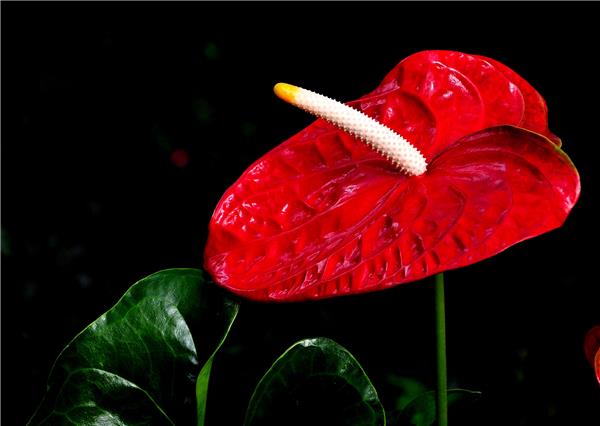
(5) Flowering period management.
Ensure sufficient morning and evening light, keep the indoor temperature above 15°C, keep the potting soil moist, and pay attention to fertilizing to provide nutrients and ensure subsequent flowering.
6. Pruning methods for growing anthurium.
(1) During the growing period, promptly prune away withered yellow leaves and diseased leaves.
(2) When leaves are too dense, appropriately thin out some old leaves. Pruning old leaves can also promote the growth of new leaves.
7. Precautions for growing anthurium.
For potted soil, it is best to use a culture soil mixed from 6 parts leaf mold, 3 parts river sand (or perlite), and 1 part fully rotted organic fertilizer such as cow manure or chicken manure. When potting and planting, fill the bottom of the pot to a depth of 1/4 to 1/3 with soft crushed brick pieces and the like to facilitate drainage of the potting soil.
Mature plants are repotted once every 2-3 years. When repotting, remove the old soil and replace it with new culture soil, and combine this with division propagation. During the growing season, apply liquid fertilizer once every 10-15 days, pay attention to maintaining sufficient moisture in the potting soil, and frequently spray water on the leaf surface and the ground around the pot to increase air humidity, but do not spray water onto the flowers, so as not to affect flowering quality. In spring and autumn, appropriate shading should be provided. Let it receive light in the morning and evening; in summer, about 50%-70% of sunlight can be shaded; in winter, greenhouse cultivation does not need shading. At home, it can be placed near a south-facing window.
8. Propagation methods for growing anthurium.
Anthurium is commonly propagated by division and cuttings.
(1) Division propagation.
In April-May, take the plant out of the pot after flowering, cut off side shoots with aerial roots, and pot them separately to become new plants. The divided daughter plants should have at least 3-4 leaves.
(2) Cutting propagation.
Cut off relatively old branches, remove the leaves, and use every 1-2 nodes as a cutting. Insert them upright or flat in river sand, vermiculite, or perlite, keeping the temperature at 25-35°C; roots and new shoots can grow in about 30 days. Anthurium cultivated in a high-temperature environment can produce seeds after artificial pollination. After collecting the seeds, sow them immediately at a temperature of 25-30°C; they can germinate in about 15 days.
Seed propagation is mainly used in breeding work. In recent years, tissue culture methods have often been used to propagate anthurium in large quantities.
9. What to do when anthurium leaves turn yellow:
There are mainly several causes of anthurium leaves turning yellow: 1. too much watering 2. lack of sunlight 3. lack of fertilizer. When yellow leaves appear on anthurium, pay attention to checking for root rot, and once there is root rot, prune it promptly. Excessive watering or excessive light can easily lead to yellow leaves and curled edges, so pay attention to adjusting the position of the potted plant.
Anthurium has broad leaves and large flowers, so when misting, also wipe the flowers and leaves at the same time. Keeping them fresh and clean is the key to a beautiful plant. Anthurium flowers are slightly toxic, and the toxin mainly comes from the sap. Never eat them by mistake, and wash your hands after each care session. Anthurium is best grown outdoors, or in a corner with good ventilation that is not easily touched.
(1) During the growing period, promptly prune away withered yellow leaves and diseased leaves.
(2) When leaves are too dense, appropriately thin out some old leaves. Pruning old leaves can also promote the growth of new leaves.
7. Precautions for growing anthurium.
For potted soil, it is best to use a culture soil mixed from 6 parts leaf mold, 3 parts river sand (or perlite), and 1 part fully rotted organic fertilizer such as cow manure or chicken manure. When potting and planting, fill the bottom of the pot to a depth of 1/4 to 1/3 with soft crushed brick pieces and the like to facilitate drainage of the potting soil.
Mature plants are repotted once every 2-3 years. When repotting, remove the old soil and replace it with new culture soil, and combine this with division propagation. During the growing season, apply liquid fertilizer once every 10-15 days, pay attention to maintaining sufficient moisture in the potting soil, and frequently spray water on the leaf surface and the ground around the pot to increase air humidity, but do not spray water onto the flowers, so as not to affect flowering quality. In spring and autumn, appropriate shading should be provided. Let it receive light in the morning and evening; in summer, about 50%-70% of sunlight can be shaded; in winter, greenhouse cultivation does not need shading. At home, it can be placed near a south-facing window.
8. Propagation methods for growing anthurium.
Anthurium is commonly propagated by division and cuttings.
(1) Division propagation.
In April-May, take the plant out of the pot after flowering, cut off side shoots with aerial roots, and pot them separately to become new plants. The divided daughter plants should have at least 3-4 leaves.
(2) Cutting propagation.
Cut off relatively old branches, remove the leaves, and use every 1-2 nodes as a cutting. Insert them upright or flat in river sand, vermiculite, or perlite, keeping the temperature at 25-35°C; roots and new shoots can grow in about 30 days. Anthurium cultivated in a high-temperature environment can produce seeds after artificial pollination. After collecting the seeds, sow them immediately at a temperature of 25-30°C; they can germinate in about 15 days.
Seed propagation is mainly used in breeding work. In recent years, tissue culture methods have often been used to propagate anthurium in large quantities.
9. What to do when anthurium leaves turn yellow:
There are mainly several causes of anthurium leaves turning yellow: 1. too much watering 2. lack of sunlight 3. lack of fertilizer. When yellow leaves appear on anthurium, pay attention to checking for root rot, and once there is root rot, prune it promptly. Excessive watering or excessive light can easily lead to yellow leaves and curled edges, so pay attention to adjusting the position of the potted plant.
Anthurium has broad leaves and large flowers, so when misting, also wipe the flowers and leaves at the same time. Keeping them fresh and clean is the key to a beautiful plant. Anthurium flowers are slightly toxic, and the toxin mainly comes from the sap. Never eat them by mistake, and wash your hands after each care session. Anthurium is best grown outdoors, or in a corner with good ventilation that is not easily touched.