What are the benefits and effects of fresh Lalang grass rhizome
Lalang grass rhizome is the perennial Lalang grass rhizome of the grass family. The Lalang grass rhizome is densely covered with scales. The culms are clustered, upright, 2-3 in number, with 4-10mm long soft hairy nodes. It is dug in both spring and autumn. Dried. The fibrous roots and membranous outer skin are removed, and it is cut for eating raw or stir-frying into charcoal. It is also called Mao root, Di Guan, Ru root, Lan root, etc. Main indications: cools the blood and stops bleeding, clears heat and detoxifies. For symptoms such as vomiting blood, blood in urine, infection, edema, jaundice, difficult urination, fever, thirst, dry retching due to stomach heat, and cough.
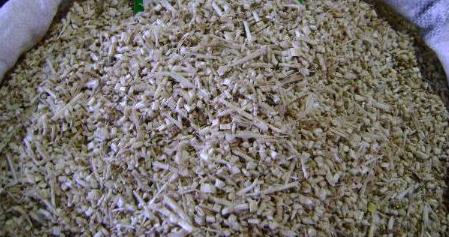
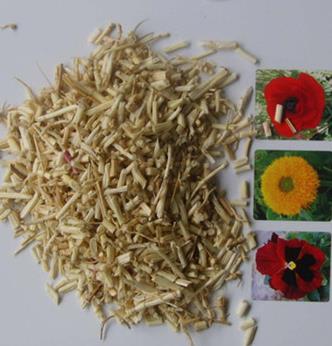
Dried hairy root made from Lalang grass rhizome: pick out impurities, wash clean, moisten slightly, cut, sun-dry, and winnow away fragments. It can also be sprouted from raw root, stir-fried in a pan with force until black, sprayed with water, taken out, and air-dried to make root charcoal. The simplest way is to take the medicine, pick out impurities, wash clean, cut, and sun-dry.
Treatment of acute nephritis: the main function of Lalang grass rhizome is to relieve spasm of the glomerular blood vessels, thereby increasing renal blood flow and glomerular filtration rate, producing a diuretic effect; at the same time, renal ischemia is reduced, renin is lowered, and blood pressure returns to normal. The curative effect on acute nephritis is good, the curative effect on chronic nephritis is poor, and it has no effect on hepatic and cardiac edema.
Antibacterial effect: the decoction of Lalang grass rhizome has a clear inhibitory effect on Shigella dysenteriae and Shigella sonnei in vitro, but has no effect on Shigella flexneri and Shigella dysenteriae.
In addition, Lalang grass rhizome contains Coix seed, which inhibits skeletal muscle contraction and metabolism. Besides functions such as sedation, analgesia, fever with restlessness and thirst, stomach vomiting and counterflow, lung-heat cough, edema, and jaundice. Lalang grass rhizome is used to treat high blood pressure, and Agrimonia pilosa is used to treat upper gastrointestinal bleeding; both have a certain curative effect.
Along with some methods in daily life, the following common symptoms can also be treated:
1. Bleeding from a knife wound: an amount of Lalang grass flower, dry the wound. Gently press and bandage.
2. Internal bleeding: Lalang grass rhizome 60 grams, hemp root 30 grams, white sugar made by the 15-gram method.
3. Hemoptysis from pulmonary tuberculosis: fresh Lalang grass rhizome 60 grams, lotus node charcoal 15 grams, gardenia charcoal 15 grams, Diao root 15 grams, 20 grams, Platycladus orientalis charcoal. Decoct in water and take.
4. Blood in urine: fresh blood Lalang grass rhizome 60 grams, small thistle 30 grams, plantain herb 30 grams. Decoct in water and take.