How to care for a banyan bonsai at home? Detailed pruning methods
I believe that for all you flower lovers, the banyan is one of the most familiar flowering plants. We often grow it in bonsai. Moreover, banyan bonsai is one of our most common bonsai, evergreen through all four seasons, with a graceful posture. It is also relatively simple to care for, making it the first choice for beginner bonsai growers. So now let me introduce to you the knowledge of how to plant and prune banyan bonsai.
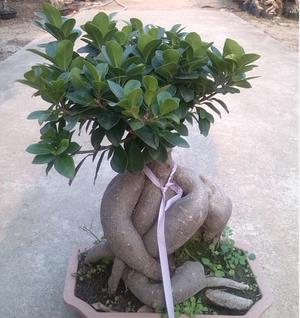
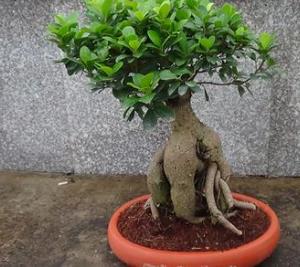
The roots of banyan bonsai interlace with one another, rising and falling unevenly, simple and beautiful, and of great ornamental value. It is a traditional-shaped bonsai and is deeply loved by people. Generally, banyan bonsai should be placed in a ventilated and well-lit spot, and there should be a certain amount of spatial humidity. Insufficient sunlight, poor ventilation, and no certain spatial humidity can easily make the plant turn yellow and dry out, leading to pest and disease problems, and eventually death. It likes acidic soil and is a non-cold-tolerant plant. In northern regions, it generally still needs to be moved into a greenhouse for maintenance and management in winter. To care well for banyan bonsai, it is necessary in daily maintenance to carry out scientific management of watering, fertilizing, pruning, pest and disease control, and other aspects.
Second, how to care for banyan bonsai
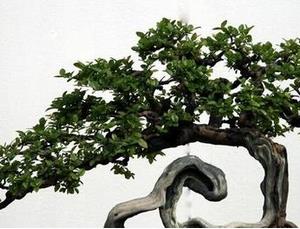
Soil requirements: The cultivation soil for banyan bonsai generally needs to be loose, breathable, and slightly acidic black stone powder mud, river sand, construction stone powder, coal cinder, and so on, and these cultivation soils are relatively easy to obtain.
Watering requirements: For banyan bonsai cultivation, it is enough to cover the roots with the cultivation soil, and for planted trees it is suitable to insert them about 3 cun deep. After watering to settle the roots, place it in a cool, wind-sheltered spot for care, and for ground planting use a cover for shade. Watering can be determined according to weather conditions, keeping the cultivation soil moist but not waterlogged. Too much waterlogging easily causes the roots to turn black and necrotic. If a surviving banyan is waterlogged for a long time, it easily results in only roots growing and no branches or trunk growing. During the dog days, if it is not watered for two or three days, the tree will not wither and die, but once it is watered, the leaves will wilt, turn green-brown, and fall off, affecting growth. Therefore, water management should follow the principle of watering when dry and stopping when wet.
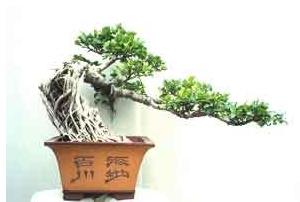
Lighting environment: Banyan bonsai should generally be placed in a ventilated and well-lit spot, and there should be a certain amount of spatial humidity. Insufficient sunlight, poor ventilation, and no certain spatial humidity can make the plant turn yellow and dry out, leading to pest and disease problems, and eventually death.
Pruning key points: Do not blindly cut branches. First let it sprout. For a newly planted old stump, it is best not to prune in the first year. If there are too many branches, pruning should be carried out between March and April. Each time, cut off only a small amount of messy branches, and do it in multiple sessions. Once too much is cut, it will affect the growth of the roots and the entire tree stump.
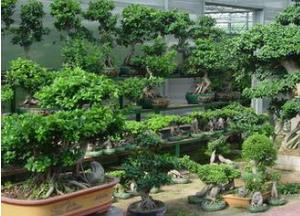
Pest and disease control: Diseases and insect pests: Root damage or rot also easily causes leaf drop, but because the roots grow in the soil, it is very difficult to notice. Root rot caused by long-term failure to repot or improper fertilizer and water is very common. It is best, without damaging the roots, to check the root system and properly prune dead roots, weak roots, and damaged roots. Dip them in growth agent and then plant them back into the pot. In addition, banyan roots easily develop root rot or root nodule disease caused by various bacteria and fungi, so appropriate attention should be paid to spraying chemicals for prevention and control. The main insect pests of banyan are aphids, red spiders, scale insects, and so on. Spray leaves with omethoate at 500 PPM or spray to kill with a 1000-fold solution of 50 percent isocarbophos wettable powder. Using laundry detergent water or essential balm water at 0.1 percent is also very effective.
1. Improper watering: When watering a banyan, you must adhere to the principle of not watering until dry, and when watering, water thoroughly. The dryness mentioned here refers to the surface of the potting soil being dry, not the potting soil being completely dry. Of course, even if it is completely dry, it will not cause great harm to the banyan in a short time, because the leaves of the banyan are thick and small, and it has a certain drought tolerance.
2. Improper fertilization: Banyan fertilization needs to be carried out with the method of light fertilizer applied frequently, avoiding the use of high-concentration chemical fertilizers or organic fertilizers that have not been fermented and decomposed, otherwise fertilizer damage will occur, with mild cases causing leaf drop and severe cases causing death.
3. Insufficient light: The banyan grows well in an environment with sufficient light. In the high-temperature period of summer, if it can be shaded by 30 percent to 50 percent, the leaf color will appear even more emerald green, but when the temperature is below 32 degrees, it is best not to shade it, so as to avoid leaf drop.
4. Caused by insect pests: The main insect pests that cause leaf drop in banyan are red spiders and scale insects. Although thrips are also harmful, this insect only curls leaves and sucks sap, and its harmfulness is somewhat smaller than the above two, and thrips are also easy to control. You only need to remove and destroy the curled leaves. Red spiders are relatively small, and the usual damage site is the back of the leaves. It is caused by poor ventilation and dry air. After washing the whole plant with plenty of water, spray with acaricides specifically for mites, such as manjing and kemite. Scale insects mostly damage sites such as stems and leaf stalks. They vary in size and color, and in shape include round, oval, and so on. They generally do not move, but they are quite harmful and need timely control. They can be brushed off with a toothbrush or wiped clean with a rag, or controlled by spraying a 0.2 percent solution of laundry detergent or essential balm, or controlled by spraying pesticides such as methidathion. The effects are all good.
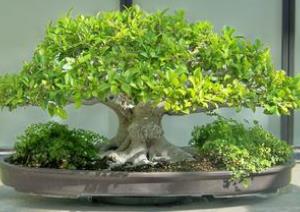
Bonsai trees are still constantly growing. If they are allowed to grow naturally without suppression, it will inevitably affect the tree posture and shape and cause them to lose their artistic value. Therefore, timely pruning is necessary: shorten long branches and thin out dense branches, so as to maintain a beautiful tree posture and appropriate proportions.
1. Pinching: For tree bonsai, in order to suppress their height growth and promote side branches to develop flat and spreading, the tender tips of the branch ends can be pinched off.
2. Bud removal: When many adventitious buds grow at the base of the trunk or on the trunk of tree bonsai, the buds should be removed at any time to avoid the sprouting of forked branches and affecting the beauty of the tree shape.
Leaf removal: For foliage tree bonsai, the ornamental period is often the period when new leaves sprout. For example, the new leaves of maple and pomegranate are red. Through leaf removal treatment, the tree can send out new leaves several times a year, bright and pleasing to the eye, improving its ornamental effect.
3. Branch pruning: Tree bonsai often grows many new branches. In order to maintain their beautiful shape, attention must often be paid to pruning. The pruning method should be decided according to the tree shape. If it is a cloud-layer shape, then prune the branches into a flat and neat form. Generally, dead branches, parallel branches, crossing branches, and so on that hinder beauty should all be cut off in time.
4. Root pruning: When repotting, combine it with root pruning. Roots that are too dense or too long should be pruned. This can be considered according to the following situations. If the tree's new roots are poorly developed and the root system has not densely covered the bottom surface of the soil ball, then the original pot can still be used for repotting, and there is no need to prune the root system. For tree species with developed root systems, if the fibrous roots densely cover the bottom surface of the soil ball, then a slightly larger pot should be used, the dense root system should be thinned, old roots should be removed, and a few new roots should be retained for repotting. For some old stump bonsai, when repotting, the roots can be appropriately raised to increase their ornamental value, and old roots and part of the root ends should be pruned off, and loose fertile soil should be added to promote the growth of new roots.
2. Precautions
1. Improper watering: When watering a banyan, you must adhere to the principle of not watering until dry, and when watering, water thoroughly. The dryness mentioned here refers to the surface of the potting soil being dry, not the potting soil being completely dry. Of course, even if it is completely dry, it will not cause great harm to the banyan in a short time, because the leaves of the banyan are thick and small, and it has a certain drought tolerance.
2. Improper fertilization: Banyan fertilization needs to be carried out with the method of light fertilizer applied frequently, avoiding the use of high-concentration chemical fertilizers or organic fertilizers that have not been fermented and decomposed, otherwise fertilizer damage will occur, with mild cases causing leaf drop and severe cases causing death.
3. Insufficient light: The banyan grows well in an environment with sufficient light. In the high-temperature period of summer, if it can be shaded by 30 percent to 50 percent, the leaf color will appear even more emerald green, but when the temperature is below 32 degrees, it is best not to shade it, so as to avoid leaf drop.
4. Caused by insect pests: The main insect pests that cause leaf drop in banyan are red spiders and scale insects. Although thrips are also harmful, this insect only curls leaves and sucks sap, and its harmfulness is somewhat smaller than the above two, and thrips are also easy to control. You only need to remove and destroy the curled leaves. Red spiders are relatively small, and the usual damage site is the back of the leaves. It is caused by poor ventilation and dry air. After washing the whole plant with plenty of water, spray with acaricides specifically for mites, such as manjing and kemite. Scale insects mostly damage sites such as stems and leaf stalks. They vary in size and color, and in shape include round, oval, and so on. They generally do not move, but they are quite harmful and need timely control. They can be brushed off with a toothbrush or wiped clean with a rag, or controlled by spraying a 0.2 percent solution of laundry detergent or essential balm, or controlled by spraying pesticides such as methidathion. The effects are all good.
Bonsai trees are still constantly growing. If they are allowed to grow naturally without suppression, it will inevitably affect the tree posture and shape and cause them to lose their artistic value. Therefore, timely pruning is necessary: shorten long branches and thin out dense branches, so as to maintain a beautiful tree posture and appropriate proportions.
1. Pinching: For tree bonsai, in order to suppress their height growth and promote side branches to develop flat and spreading, the tender tips of the branch ends can be pinched off.
2. Bud removal: When many adventitious buds grow at the base of the trunk or on the trunk of tree bonsai, the buds should be removed at any time to avoid the sprouting of forked branches and affecting the beauty of the tree shape.
Leaf removal: For foliage tree bonsai, the ornamental period is often the period when new leaves sprout. For example, the new leaves of maple and pomegranate are red. Through leaf removal treatment, the tree can send out new leaves several times a year, bright and pleasing to the eye, improving its ornamental effect.
3. Branch pruning: Tree bonsai often grows many new branches. In order to maintain their beautiful shape, attention must often be paid to pruning. The pruning method should be decided according to the tree shape. If it is a cloud-layer shape, then prune the branches into a flat and neat form. Generally, dead branches, parallel branches, crossing branches, and so on that hinder beauty should all be cut off in time.
4. Root pruning: When repotting, combine it with root pruning. Roots that are too dense or too long should be pruned. This can be considered according to the following situations. If the tree's new roots are poorly developed and the root system has not densely covered the bottom surface of the soil ball, then the original pot can still be used for repotting, and there is no need to prune the root system. For tree species with developed root systems, if the fibrous roots densely cover the bottom surface of the soil ball, then a slightly larger pot should be used, the dense root system should be thinned, old roots should be removed, and a few new roots should be retained for repotting. For some old stump bonsai, when repotting, the roots can be appropriately raised to increase their ornamental value, and old roots and part of the root ends should be pruned off, and loose fertile soil should be added to promote the growth of new roots.