How to Grow a Jade Plant? Detailed Care Instructions
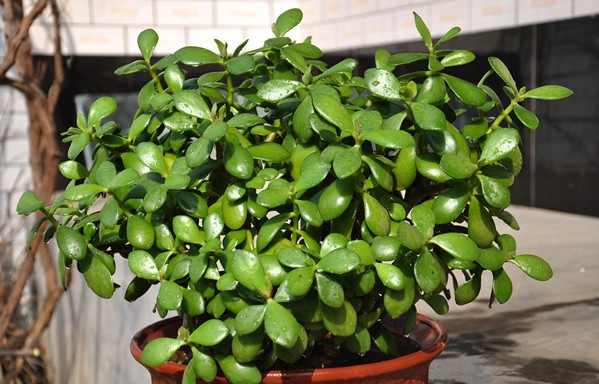
The jade plant has thick, plump, glossy green leaves that shine like jasper, and its branches are sturdy and quaint, resembling a large tree. Placed in a living room or office lobby, it looks especially noble and grand, with a beautiful scene. The jade plant not only releases oxygen during the day but also absorbs indoor carbon dioxide at night, which most indoor flowers cannot match. Therefore, small potted jade plants are very suitable for keeping in the bedroom. Many friends do not know how to grow a jade plant or are unclear about jade plant care methods. Below, the editor will give a brief introduction.
Jade Plant Introduction
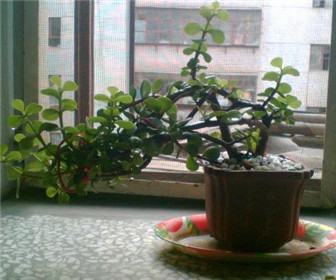
Jade plant flower, also known as jade plant, sedum tree, glass tree, eight treasures, kanqing, wintergreen, succulent evergreens, Latin scientific name: Jade plant, Crassulaceae, Crassula genus, also known as jade plant, sedum tree, glass tree, eight treasures, kanqing, wintergreen, succulent evergreens, fat baby. It prefers a warm, dry, and sunny environment. It is not cold-tolerant, fears strong light, and is slightly shade-tolerant. The soil should preferably be fertile, well-drained sandy loam. The winter temperature should not be lower than 7°C. The jade plant flower is native to southern Africa and can be used as a household ornamental plant.
Jade Plant Care Methods
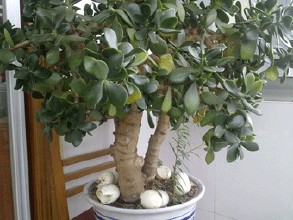
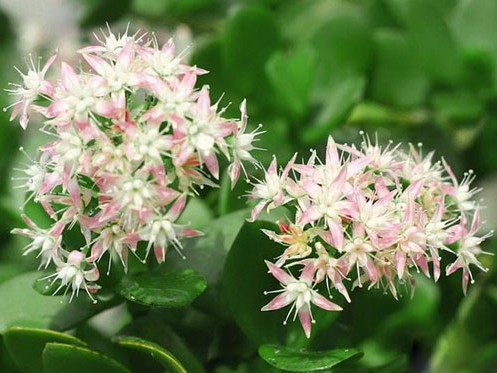
The jade plant flower has a tall and elegant crown, emerald green stems and leaves, and white flowers at the top, making it very elegant and unique. If matched with a pot stand or gravel to make a small bonsai, the decoration is even more beautiful.
The jade plant flower prefers a warm, dry, and sunny environment. It is not cold-tolerant, fears strong light, and is slightly shade-tolerant. The soil should preferably be fertile, well-drained sandy loam. The winter temperature should not be lower than 7°C.
Jade plants are commonly propagated by cuttings. During the growing season, cut off plump, full terminal branches 8-10 cm long, let them dry slightly, then insert them into a sand bed; they root about 3 weeks after insertion. Single-leaf cuttings can also be used. Then insert into the sand bed; they root about 4 weeks after insertion, and when the roots are 2-3 cm long, pot them up.
Every spring, the pot needs to be changed, adding fertile soil. Jade plants grow relatively quickly; to maintain a full plant shape, fertilizer and water should not be excessive. During the growing period, water 2-3 times a week, and strictly control watering during the hot, humid July-August. In midsummer, if ventilation is poor or there is excessive water shortage, it can also cause leaves to turn yellow and fall off, so it should be placed in a semi-shaded place for care. After autumn begins, watering should gradually decrease. When cultivated outdoors, avoid heavy rain washing, otherwise too much water accumulates at the roots and can easily cause root rot and death. When repotting each year or bringing it indoors in autumn, attention should be paid to shaping and pruning to make the plant shape more quaint and elegant.
The main diseases of jade plant flowers are anthracnose and leaf spot, which can be sprayed with 70% thiophanate-methyl wettable powder at 1000 times dilution. If indoor ventilation is poor, stems and leaves are susceptible to scale insects, which can be killed by spraying with 40% omethoate emulsifiable concentrate at 1000 times dilution.
Precautions for Jade Plant Care
(1) The potting soil for jade plants should be well-drained, but it should not be too loose, otherwise it will easily lodge when it grows larger. During the plum rain season, avoid outdoor rain and water accumulation. During the semi-dormant period from July to August, watering must also be strictly controlled, otherwise root rot easily occurs. In winter, it should be dry rather than damp; the potting soil only needs to be slightly moist.
(2) The branches and leaves of the jade plant contain a large amount of euphorbia resin. When human skin comes into contact with the sap flowing from the branches and leaves, it can cause skin redness, swelling, pain, and blistering. If it accidentally splashes into the eyes, it can cause blindness.
(3) In summer, appropriate shading can be used to prevent heat and lower temperature; in other seasons, it should receive sufficient light. The potting soil should preferably be dry rather than wet, and attention should be paid to rain protection. In winter, the potting soil should be relatively dry, and attention should be paid to ventilation to prevent leaf loss.
(4) Move it indoors in mid-October and place it in a warm place with sufficient light. The minimum overwintering temperature must not be lower than 5°C. Strictly control watering, and just keep the potting soil from drying out completely. Rotate the pot once every half month to avoid slanting branches and leaves that affect appearance. If light is insufficient, pay even more attention to preventing damage from damp heat, root rot, and leaf loss.
(5) Jade plants prefer loose sandy culture soil and avoid overly wet soil. For small seedlings propagated by cuttings, transplant when the temperature is relatively high. The best time for potting up is early summer. After the seedlings recover, do not water too much and do not place them in a shaded place.
Pest and Disease Control for Jade Plant Care
1. Jade plant leaf spot disease
Symptoms: This disease occurs on the leaves of jade plants, and is prone to occur in humid weather. The lesions are initially small brown spots, with water-soaked, faded green edges, and expand in concentric rings, round to oval, with brown edges and grayish-white centers. In the later stage, dark brown mold spots appear in the center of the lesions, becoming a dark brown mold layer under humid conditions.
Control method: Remove diseased and residual leaves in time; both in the early and late stages of the disease, spray with 0.5%-1% Bordeaux mixture (or 50% carbendazim at 1000 times dilution).
2. Jade plant anthracnose
Symptoms: This disease also occurs on the leaves of jade plants, and in severe cases can spread to the petioles. The lesions initially appear as water-soaked small yellow spots, and after expansion become oval to irregular brown or yellowish-brown, slightly showing concentric rings. In the later stage, the lesions merge into a dry, withered appearance and produce small black dots arranged in concentric rings. This disease is mainly caused by poor ventilation.
Control method: Strengthen care and increase application of phosphorus and potassium fertilizers; in the early stage of the disease, spray with 0.3%-0.5% equal-amount Bordeaux mixture (or 60% zineb at 800-900 times dilution, or 70% thiophanate at 1500 times dilution).
3. Brown soft scale
Symptoms: When soft scales harm plants, they generally gather on leaf surfaces or young leaves, piercing and sucking plant sap, and at the same time excrete sticky liquid. Their excrement easily causes a large proliferation of sooty mold pathogens, making stems and leaves black, affecting the plant's photosynthesis, causing weak growth and yellow, withered leaves, and harming ornamental value. When the infestation is severe, branches and stems are covered with insects, causing the plant to turn yellow and wither, affecting growth.
Control method: If there are few affected plants or not many insects, generally use a bamboo strip or similar object to scrape off the insects.
In severe cases, it can spread to the petioles. The lesions initially appear as water-soaked small yellow spots, and after expansion become oval to irregular brown or yellowish-brown, slightly showing concentric rings. In the later stage, the lesions merge into a dry, withered appearance and produce small black dots arranged in concentric rings. This disease is mainly caused by poor ventilation.
Control method: Strengthen care and increase application of phosphorus and potassium fertilizers; in the early stage of the disease, spray with 0.3%-0.5% equal-amount Bordeaux mixture (or 60% zineb at 800-900 times dilution, or 70% thiophanate at 1500 times dilution).
3. Brown soft scale
Symptoms: When soft scales harm plants, they generally gather on leaf surfaces or young leaves, piercing and sucking plant sap, and at the same time excrete sticky liquid. Their excrement easily causes a large proliferation of sooty mold pathogens, making stems and leaves black, affecting the plant's photosynthesis, causing weak growth and yellow, withered leaves, and harming ornamental value. When the infestation is severe, branches and stems are covered with insects, causing the plant to turn yellow and wither, affecting growth.
Control method: If there are few affected plants or not many insects, generally use a bamboo strip or similar object to scrape off the insects.