How to Grow String of Pearls: A Detailed Guide to Care Methods
There are many types of spider plants, and String of Pearls (Senecio rowleyanus) is one of them. Many people are not very familiar with String of Pearls; in fact, it differs only in appearance, while its growth habits and other aspects are very similar to those of other spider plants. Below, the care methods for String of Pearls are the main focus, to help everyone better understand this plant. String of Pearls belongs to the spider plant family; its scientific name is Senecio rowleyanus, and it also has a very cute name, "Lover's Tears," looking truly like beads from a broken necklace, very adorable. Below is a detailed introduction to the care methods for String of Pearls, so that more and more people will start paying attention to this plant, fully grasp all aspects of its information, let it grow healthily, and contribute to greening the home.
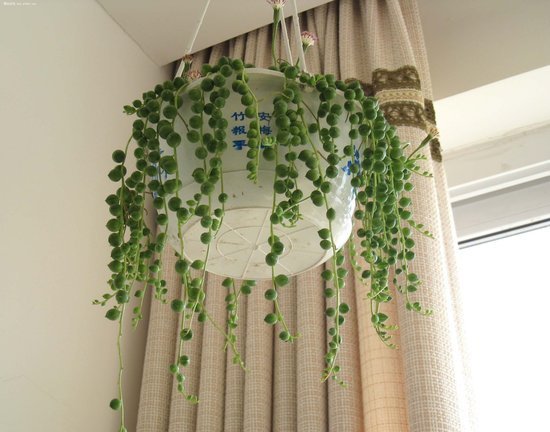
Native to southern Africa, String of Pearls has a beautiful appearance and is very suitable as an ornamental plant. Its growth habits are that it prefers warm, moist soil, can tolerate drought, but not shade, and has extremely strong vitality; it only needs a little water and nutrients to grow vigorously. It has low light requirements and can grow in strong light as well as in weak light. The most suitable temperature for growth is between 15°C and 25°C. "Better dry than wet" is a key point in growing String of Pearls; too much light will scorch the plant, while too little light will lead to poor growth.
Detailed Guide to String of Pearls Care 1: Propagation Methods
The propagation method for String of Pearls is mostly cuttings. You can trim the stems and leaves into segments of 8-10 cm each, then insert them into the potting soil, half-buried, with humidity controlled between 50% and 60%. They will root in 10 days to half a month, and with careful care they can survive. At this time, strictly control the amount of watering and keep the potting soil in a state between dry and wet, which is most beneficial to plant growth.
Detailed Guide to String of Pearls Care: 2: Cultivation Management
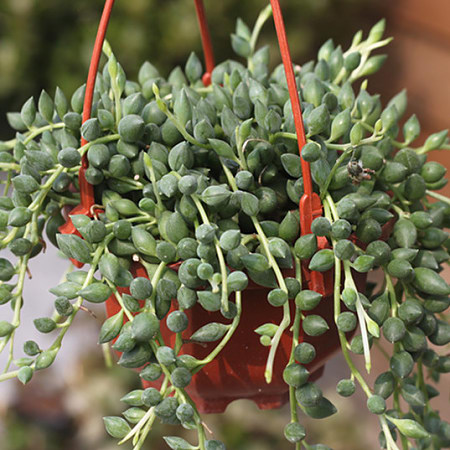
"Better dry than wet" is one focus of growing String of Pearls. In addition, "light fertilizer, frequent application" is also an extremely important point. The saying "better dry than wet" is because String of Pearls, which comes from southern Africa, likes a warm environment and is relatively drought-tolerant but cannot tolerate waterlogging, so it is better to place it in a dry environment than to cause poor development due to overwatering. "Light fertilizer, frequent application" means that fertilizer should be applied often, but each time with dilute fertilizer; do not apply too much at once, which would cause problems in its growth.
Detailed Guide to String of Pearls Care: 3: Pest Prevention
String of Pearls actually rarely suffers from pest problems, but such cases still occur. Generally speaking, the most common disease of String of Pearls is aphid infestation, which occurs in spring. When encountering this phenomenon, use 500 times diluted omethoate to kill them. In summer, mites may appear, and 1000 times diluted dicofol can be used to kill them. When pests occur, pay attention to increasing leaf humidity, which can reduce pests, and ventilation facilities should also be adequate.
This concludes the detailed guide to String of Pearls care. By following the above steps, you can let String of Pearls grow healthily. I hope that after reading this article, everyone can distinguish the various spider plants and understand their growth habits, so as to take proper care of them and decorate our homes.
Growth Habits of String of Pearls
Native to southern Africa, String of Pearls has a beautiful appearance and is very suitable as an ornamental plant. Its growth habits are that it prefers warm, moist soil, can tolerate drought, but not shade, and has extremely strong vitality; it only needs a little water and nutrients to grow vigorously. It has low light requirements and can grow in strong light as well as in weak light. The most suitable temperature for growth is between 15°C and 25°C. "Better dry than wet" is a key point in growing String of Pearls; too much light will scorch the plant, while too little light will lead to poor growth.
String of Pearls Care Methods
1. Propagation method: The propagation method for String of Pearls is mostly cuttings. You can trim the stems and leaves into segments of 8-10 cm each, then insert them into the potting soil, half-buried, with humidity controlled between 50% and 60%. They will root in 10 days to half a month, and with careful care they can survive. At this time, strictly control the amount of watering and keep the potting soil in a state between dry and wet, which is most beneficial to plant growth.
2. Cultivation management: "Better dry than wet" is one focus of growing String of Pearls. In addition, "light fertilizer, frequent application" is also an extremely important point. The saying "better dry than wet" is because String of Pearls, which comes from southern Africa, likes a warm environment and is relatively drought-tolerant but cannot tolerate waterlogging, so it is better to place it in a dry environment than to cause poor development due to overwatering. "Light fertilizer, frequent application" means that fertilizer should be applied often, but each time with dilute fertilizer; do not apply too much at once, which would cause problems in its growth.
3. Pest prevention: String of Pearls actually rarely suffers from pest problems, but such cases still occur. Generally speaking, the most common disease of String of Pearls is aphid infestation, which occurs in spring. When encountering this phenomenon, use 500 times diluted omethoate to kill them. In summer, mites may appear, and 1000 times diluted dicofol can be used to kill them. When pests occur, pay attention to increasing leaf humidity, which can reduce pests, and ventilation facilities should also be adequate.
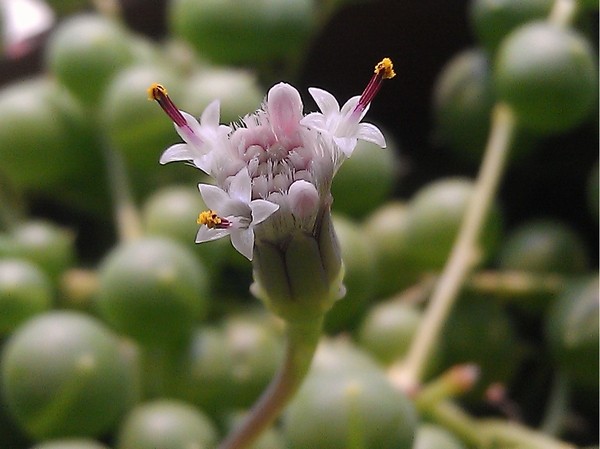
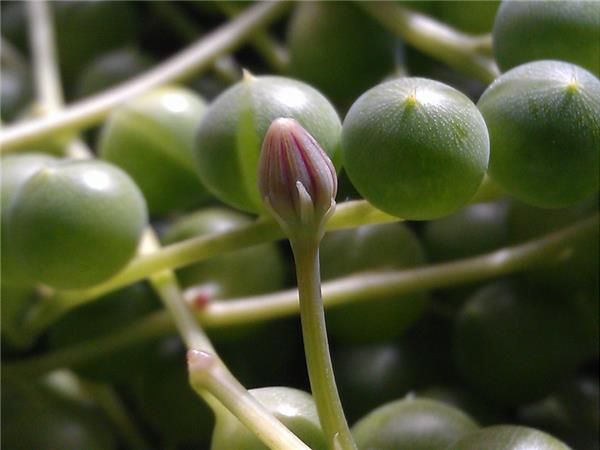
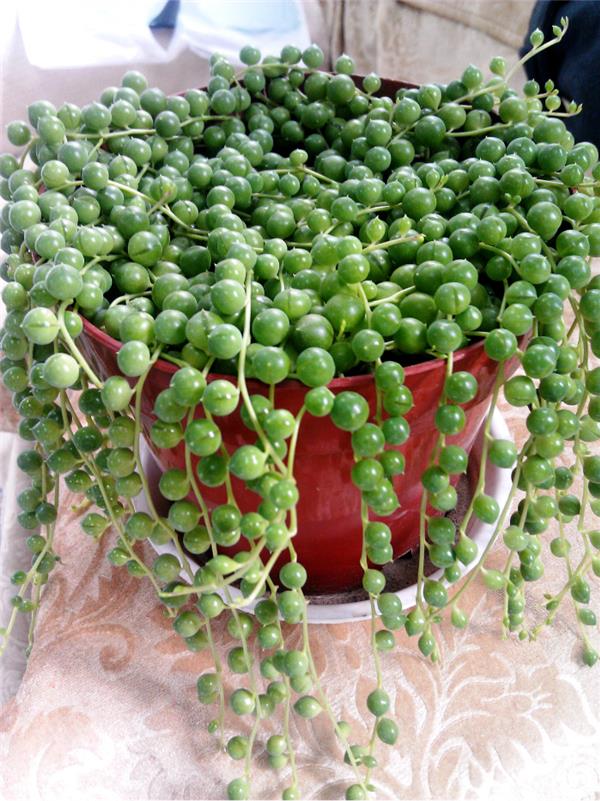
The above is a related introduction to the care methods for String of Pearls. I believe everyone has gained a further understanding of how to grow String of Pearls. String of Pearls has oval, spherical succulent leaves, light green, alternately arranged; the flowers are pale yellow-white or pale purple, small and cute. Generally grown as potted plants to admire the hanging beads, after three to four years they can reach over one meter in length, remaining verdant and lush all year round, deeply loved by home gardeners.
In addition, "light fertilizer, frequent application" is also an extremely important point. The saying "better dry than wet" is because String of Pearls, which comes from southern Africa, likes a warm environment and is relatively drought-tolerant but cannot tolerate waterlogging, so it is better to place it in a dry environment than to cause poor development due to overwatering. "Light fertilizer, frequent application" means that fertilizer should be applied often, but each time with dilute fertilizer; do not apply too much at once, which would cause problems in its growth.3. Pest prevention: String of Pearls actually rarely suffers from pest problems, but such cases still occur. Generally speaking, the most common disease of String of Pearls is aphid infestation, which occurs in spring. When encountering this phenomenon, use 500 times diluted omethoate to kill them. In summer, mites may appear, and 1000 times diluted dicofol can be used to kill them. When pests occur, pay attention to increasing leaf humidity, which can reduce pests, and ventilation facilities should also be adequate.
The above is a related introduction to the care methods for String of Pearls. I believe everyone has gained a further understanding of how to grow String of Pearls. String of Pearls has oval, spherical succulent leaves, light green, alternately arranged; the flowers are pale yellow-white or pale purple, small and cute. Generally grown as potted plants to admire the hanging beads, after three to four years they can reach over one meter in length, remaining verdant and lush all year round, deeply loved by home gardeners.