How long does the flowering period of a Phalaenopsis orchid generally last?
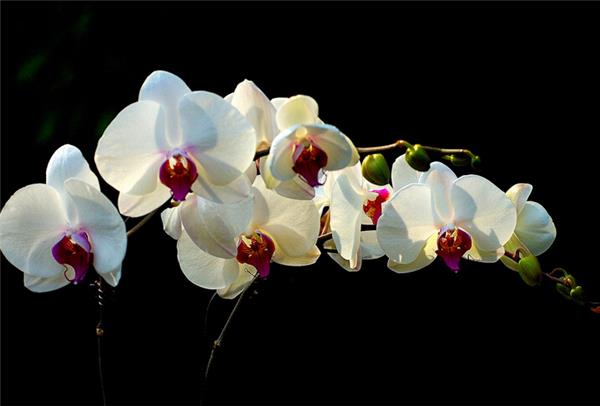 The Phalaenopsis orchid is a very popular holiday flower. Many flower lovers buy one when it is already in bloom, but they do not know how to care for it while it is flowering, how long the flowering period lasts, or what points to note when caring for it during blooming. Introduction to the Phalaenopsis orchid
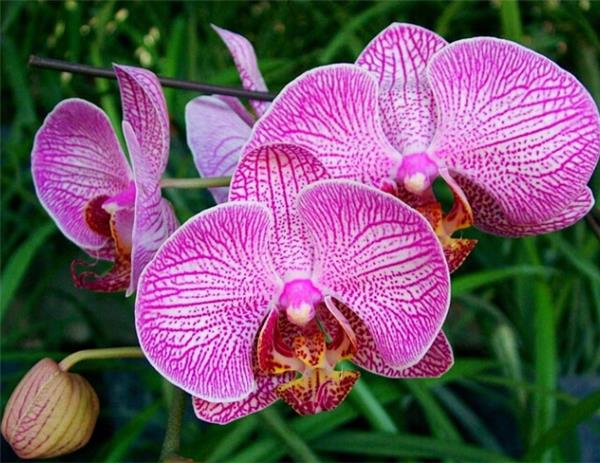
The Phalaenopsis orchid is a cut-flower type plant in the orchid family, with more than 70 native species, most of which are produced in Asia, and it is also distributed in the Philippines, Malaysia, India and other places. The Phalaenopsis orchid is a monopodial epiphytic orchid with a short stem and large leaves; its flowers resemble butterflies, which is how it got its name. Phalaenopsis orchids come in many colors, with graceful flower shapes and a fragrant scent. They are a treasure among tropical orchids and have long enjoyed the reputation of "Queen of Orchids." The Phalaenopsis orchid is not only beautiful in appearance but also rich in cultural heritage, and it is loved by many flower enthusiasts. It is also a favorite of artists and often appears in photographic works.
As a cut-flower type plant in the orchid family, the Phalaenopsis orchid has about 100 species, and it is native to North Africa, Eurasia, North America and Central America. The stem of the Phalaenopsis orchid is short and is generally wrapped by leaf sheaths; the leaves are fleshy, green on the upper side, elliptical or sickle-shaped elliptical, with pointed tips, and the base is sometimes skewed or wedge-shaped, with a broad and short sheath; the inflorescence axis of the Phalaenopsis orchid is purple-green, more or less flexuous, and usually bears several flowers that open one by one from the base toward the tip; the floral bracts are ovate-triangular, and the pedicel together with the ovary is green and slender; the flowers are white, beautiful in shape, and long-lasting; the dorsal sepal is nearly elliptical, and the petals are rhombic-circular with a narrowed base forming a short claw and bear reticulate veins; the Phalaenopsis orchid likes to grow in humid environments, is naturally fond of warmth and afraid of cold, and its suitable growth temperature is 15-20°C.
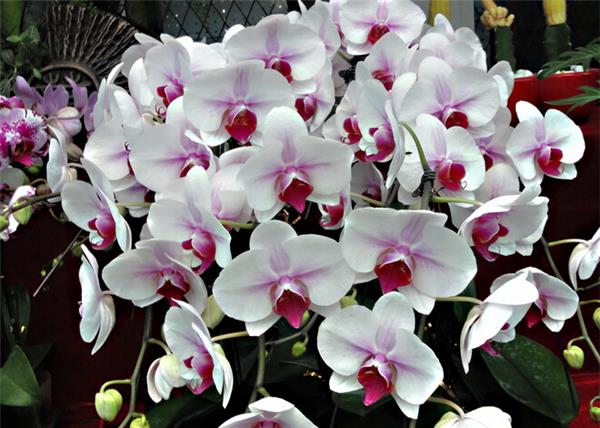
The scientific name of the Phalaenopsis orchid means, according to its original Greek meaning, "an orchid that looks like a butterfly." It can absorb nutrients from the air to survive and is very resilient; it can be said to be a large clan among tropical orchids. As a cut-flower type plant in the orchid family, the Phalaenopsis orchid has a relatively long flowering period; generally, the flowering period of the Phalaenopsis orchid is from April to June each year, and the flowers can last 2-3 months.
The flower language of the Phalaenopsis orchid
The Phalaenopsis orchid has a graceful posture, elegant and varied flower colors, and is named for its butterfly-like flower shape. Its scientific name, according to its original Greek meaning, is: "an orchid that looks like a butterfly," and it has a beautiful symbolism.
White Phalaenopsis orchid: pure love and precious friendship; mini Phalaenopsis orchid: angel of happiness and in the prime of life;
Red-hearted Phalaenopsis orchid: good fortune and eternal union; yellow Phalaenopsis orchid: a thriving career and prosperous business;
Striped Phalaenopsis orchid: everything goes smoothly and all wishes come true; red Phalaenopsis orchid: a smooth official career and a happy, fulfilling life.
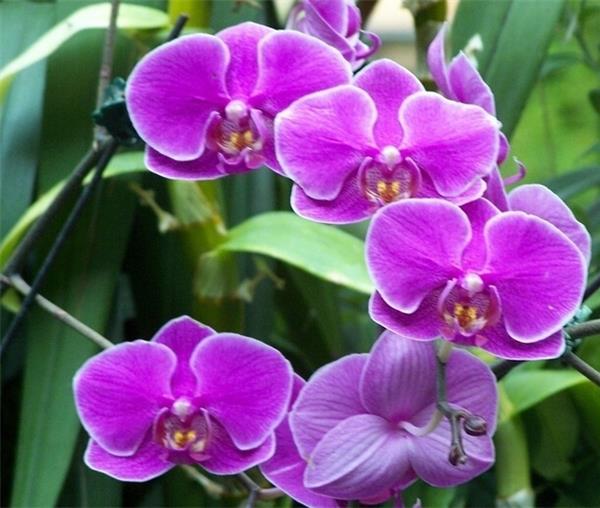
The growth of the Phalaenopsis orchid is divided into the growth stage from seedling to mature plant and the flowering stage of flower forcing and cut flowers. In these two stages, mastering certain techniques for cultivating the Phalaenopsis orchid is beneficial for its better growth. The cultivation of the Phalaenopsis orchid requires the roots to have good aeration and ensures that the growing medium is loose, well-drained and well-aerated; during the growth period of the Phalaenopsis orchid, fertilize once every ten days, and from flower bud formation to the flowering period, more phosphorus fertilizer is needed, and frequent spraying with water is needed to ensure air humidity; after the flowering period of the Phalaenopsis orchid, the temperature should be kept at 20-25°C. If the temperature is too low, the new plant will recover slowly and is prone to rot. High temperatures are also unfavorable for the growth of the Phalaenopsis orchid, as they will push it into a semi-dormant state, affect its flower bud differentiation, and cause it not to bloom. Finally, the size of the flower pot used for cultivating the Phalaenopsis orchid also has certain requirements and needs to be chosen according to the size of the Phalaenopsis orchid plant; it should be neither too large nor too small.
1. Watering too frequently can cause root rot. Friends who grow Phalaenopsis orchids always worry that the orchid lacks water, and regardless of whether the growing medium is dry, they water it every day, causing severe root rot.
2. Keep the temperature appropriate and do not let it get too low. Usually, flowering Phalaenopsis orchids are mostly marketed in early spring, and after being bought home they are generally placed in places such as the living room for appreciation. Although the daytime temperature in these places is sufficient, the nighttime temperature is somewhat on the low side. On the other hand, professionally cultivated orchids are mostly kept in well-equipped greenhouses. By comparison, the temperature and humidity at home are somewhat insufficient, so the plant's growth tends to weaken day by day. Therefore, sometimes no matter how well it is cared for, the orchid still may not bloom.
3. Fertilize little but often; do not overfertilize. Some people fertilize whenever fertilizer is available and do not pay attention to concentration, thinking that fertilizing will make the plant grow faster. One should know that the Phalaenopsis orchid is suitable for light fertilizer and should be fertilized little but often. Remember that "tonic feeding" must not be excessive, otherwise it will have the opposite effect.
4. Use a small pot for a small plant; do not plant a small plant in a large pot. Some people think that using a large pot can give the Phalaenopsis orchid a more spacious environment and sufficient material. In fact, after using a large pot, the sphagnum moss is not easy to dry. One should know that the Phalaenopsis orchid likes aeration, and when air flows freely it thrives.
5. Increase indoor humidity to supplement moisture and avoid dried flower buds. Most Phalaenopsis orchids nowadays are forced into bloom. After leaving the base, once the environment changes, the problem of dried buds easily appears. At this time, do not think it is because of dryness and do not water more; instead, increase indoor humidity, control indoor temperature, and do not let the temperature get too high. When buying flowers, try to choose ones with thicker petals.
6. Light should not be excessive. Although the Phalaenopsis orchid prefers shade, the plant still needs to receive some light. Especially before and after the flowering period, appropriate light can promote flowering in the Phalaenopsis orchid and make the flowers vivid and long-lasting. Generally, it should be placed in a spot indoors with scattered light, and direct sunlight should be avoided.
7. Ventilation is very important. The normal growth of the Phalaenopsis orchid requires circulating fresh air, so when grown at home, ventilation must be good, especially during the high-humidity period in summer. Good ventilation must be used to prevent heat stress and at the same time avoid infection by pests and diseases. Friends who grow Phalaenopsis orchids always worry that the orchid lacks water, and regardless of whether the growing medium is dry, they water it every day, causing severe root rot.
2. Keep the temperature appropriate and do not let it get too low. Usually, flowering Phalaenopsis orchids are mostly marketed in early spring, and after being bought home they are generally placed in places such as the living room for appreciation. Although the daytime temperature in these places is sufficient, the nighttime temperature is somewhat on the low side. On the other hand, professionally cultivated orchids are mostly kept in well-equipped greenhouses. By comparison, the temperature and humidity at home are somewhat insufficient, so the plant's growth tends to weaken day by day. Therefore, sometimes no matter how well it is cared for, the orchid still may not bloom.
3. Fertilize little but often; do not overfertilize. Some people fertilize whenever fertilizer is available and do not pay attention to concentration, thinking that fertilizing will make the plant grow faster. One should know that the Phalaenopsis orchid is suitable for light fertilizer and should be fertilized little but often. Remember that "tonic feeding" must not be excessive, otherwise it will have the opposite effect.
4. Use a small pot for a small plant; do not plant a small plant in a large pot. Some people think that using a large pot can give the Phalaenopsis orchid a more spacious environment and sufficient material. In fact, after using a large pot, the sphagnum moss is not easy to dry. One should know that the Phalaenopsis orchid likes aeration, and when air flows freely it thrives.
5. Increase indoor humidity to supplement moisture and avoid dried flower buds. Most Phalaenopsis orchids nowadays are forced into bloom. After leaving the base, once the environment changes, the problem of dried buds easily appears. At this time, do not think it is because of dryness and do not water more; instead, increase indoor humidity, control indoor temperature, and do not let the temperature get too high. When buying flowers, try to choose ones with thicker petals.
6. Light should not be excessive. Although the Phalaenopsis orchid prefers shade, the plant still needs to receive some light. Especially before and after the flowering period, appropriate light can promote flowering in the Phalaenopsis orchid and make the flowers vivid and long-lasting. Generally, it should be placed in a spot indoors with scattered light, and direct sunlight should be avoided.
7. Ventilation is very important. The normal growth of the Phalaenopsis orchid requires circulating fresh air, so when grown at home, ventilation must be good, especially during the high-humidity period in summer. Good ventilation must be used to prevent heat stress and at the same time avoid infection by pests and diseases.