What are the benefits of pothos? Read this and you'll know it all
Many offices grow this kind of plant, and many people think pothos is just nice to look at, but besides that, pothos also has air-purifying effects and more. Below, let's share the benefits of pothos and the effects and benefits of pothos flowers.
The benefits of pothos
1. Pothos can lower blood sugar, balance the level of sugar in the blood, and effectively reduce and prevent the occurrence of complications.
2. Pothos lowers blood lipids, effectively reducing the levels of cholesterol and triglycerides in the blood, achieving a blood-clearing effect.
3. Pothos lowers blood pressure, stabilizes blood pressure, and effectively prevents stroke, acute coronary heart disease and the severe kidney failure they cause. It helps prevent cardiovascular and cerebrovascular diseases and other non-communicable diseases.
4. Pothos invigorates the blood in cases of coronary heart disease and softens arterial blood vessels; it has the effect of dilating blood vessels and increasing coronary artery flow.
5. Pothos promotes the flow of qi and blood circulation, and has antibacterial and anti-inflammatory effects. It has good medicinal effects on vascular inflammation, high fever with convulsions, and sore swollen throat.
6. Pothos enhances the body's immunity, and long-term use has anti-cancer effects.
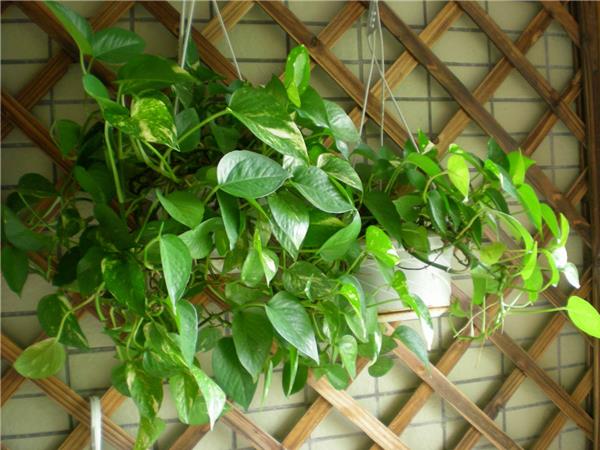
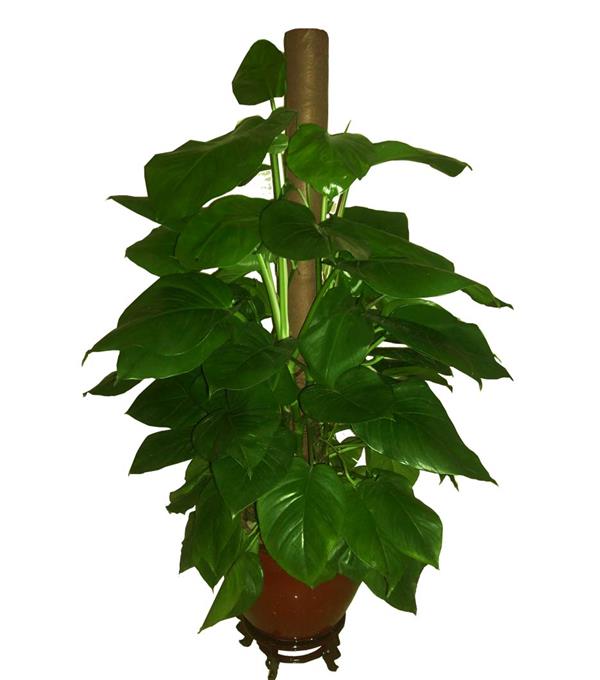
7. Pothos is very good at absorbing formaldehyde, and it also has high ornamental value. Its trailing stems hang down naturally, so it can both purify the air and make full use of space, adding lively lines and bright colors to dull cabinet surfaces. It can purify the air, and its ability to absorb harmful gases such as formaldehyde and benzene is extremely strong. In a 10 sq m room, placing 2 pots is enough to absorb the formaldehyde indoors. In daily life we often use household cleaning detergents, and we cannot avoid preparing meals surrounded by cooking fumes, and the smell of these detergents and the cooking fumes are also harmful to the human body. To deal with these harmful gases that we cannot drive away, we can let the odor absorber - pothos - show its skills. It can open its stomata and clear away 70% of harmful gases for us every night. Araceae, a large evergreen climbing plant. Pothos has strong twining ability and well-developed aerial roots. It can be allowed to climb on a cylinder tied with palm fiber and placed in an entrance hall or hotel, or it can be trained into a hanging form and placed in a study or on a windowsill. It is a flower plant relatively suitable for indoor placement.
Pothos has significant therapeutic effects on diabetes, coronary heart disease, high blood pressure, high blood lipids and various vascular inflammations. Pothos flowers can lower blood sugar and blood lipids, and mainly have a good auxiliary therapeutic effect on diabetes, fatty liver, coronary heart disease, obesity, high blood lipids and various vascular inflammations. In addition, they have a good health-care effect on the eyes and liver.
How to consume pothos:
1. Soak 4-5 pothos flowers in boiled water every morning and evening. After brewing 3 to 4 times, replace them; 2. A simple method for lowering the three highs: when brewing pothos tea, it is best to use a transparent glass cup, put in 4-6 pieces each time, and then brew with boiling water. If many people are drinking, a transparent teapot can be used, put in 10-15 pieces each time, pour in boiling water and brew for 3-5 minutes, then pour the tea into each person's transparent glass cup.
3. Middle-aged and elderly people, obese people, and patients with high blood pressure, diabetes and coronary heart disease can also drink it as boiled water in daily life. Each time you drink, do not finish it all at once; leave one third of a cup of tea, then add fresh tea, let it brew for a moment, and then drink. Generally, an obvious effect appears in 1-2 months, with absolutely no exaggeration. This is recorded in the Encyclopedia.
The ornamental value of pothos
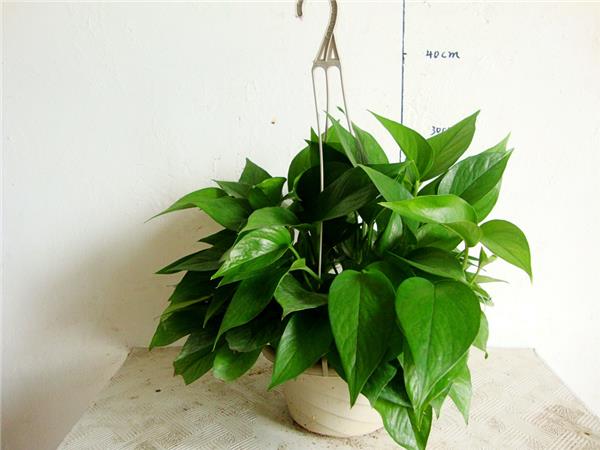
Pothos is one of the very excellent indoor decorative plants, a climbing vine foliage flower. Its vine stems are slender and soft, and its leaves are delicate and elegant. Place a pot on top of a cabinet at a high position and let its vine stems hang down calmly, or after the hanging vine stems grow too long, loop and hang them into a circle, just like emerald-colored relief sculpture. In this way it both makes full use of space and purifies the air, and also adds a green decoration with lively lines and bright colors to a dull cabinet surface. It is extremely full of vitality and adds a harmonious touch of charm to the room.
For potted pothos, fertile, loose, well-drained leaf mold soil should be selected, preferably slightly acidic. Pothos is extremely shade-tolerant and can be placed in a sunny indoor spot in all four seasons. In a dimly lit room, it should be moved every half month to a brighter environment for a period of recovery, otherwise the internodes tend to lengthen and the leaves become smaller. Pothos likes a hot and humid environment, and the overwintering temperature should not be lower than 15°C. The potting soil should be kept moist, and water should often be sprayed on the leaf surface to increase air humidity, so as to benefit the growth of aerial roots. During the vigorous growth period, liquid fertilizer can be applied once a month. For plants kept indoors for a long time for viewing, the leaves at the base of the stems easily fall off, reducing ornamental value. In May and June, when the temperature turns warmer, pruning and renewal can be carried out together with cuttings to encourage new buds to sprout from the base stems.
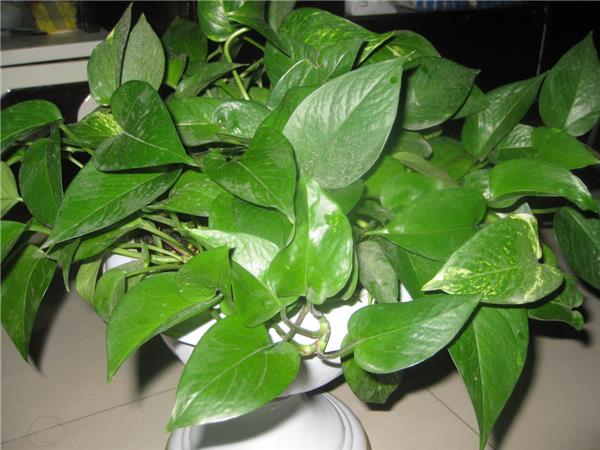
Pothos is mainly propagated by cuttings. In late spring and early summer, cut 15 cm to 30 cm branches, remove the leaves from 1 to 2 nodes at the base, and pot them directly in culture soil, with 3 to 5 stems per pot. Water thoroughly, place in a cool and ventilated spot, and keep the potting soil moist. In about one month they will take root and sprout, and in the same year they can grow into plants with ornamental value. Pothos can also be grown in water, but compared with soil culture the plants are smaller.
Pothos is mainly propagated by cuttings. In late spring and early summer, cut 15 cm to 30 cm branches, remove the leaves from 1 to 2 nodes at the base, and pot them directly in culture soil, with 3 to 5 stems per pot. Water thoroughly, place in a cool and ventilated spot, and keep the potting soil moist. In about one month they will take root and sprout, and in the same year they can grow into plants with ornamental value. Pothos can also be grown in water, but compared with soil culture the plants are smaller.