Pothos Growing Methods and Key Points for Routine Care
Many friends enjoy growing pothos. This lovely plant not only has a strong air-purifying ability but can also decorate a beautiful home. However, have you paid attention to the growing methods and precautions for the easy-to-grow pothos? To keep the pothos at home evergreen, let us take a look at its growing methods below.
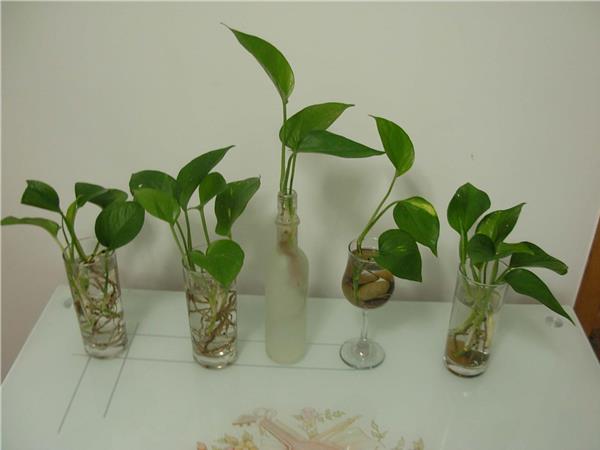
Pothos Growing Methods
1. For growing pothos indoors at home, use loose, well-draining soil for potting, and pothos does well in slightly acidic soil.
2. Temperature: The suitable temperature for growing pothos is 20 to 30 degrees, and it should not go below 15 degrees at the lowest; around 10 degrees it will freeze to death. Of course, most homes have growing temperature conditions suitable for pothos. Just pay attention to keeping it warm in winter; when the climate is too cold, you can keep pothos warm by reducing how often windows are opened.
3. Light: Because pothos originally grows in dark primeval forests and is fond of shade, its light requirements are not strong. Therefore, when growing pothos, usually just place it indoors where it can see sunlight; you can also take it into the sun at noon to sun it for a bit so it can carry out photosynthesis better, then bring it back indoors for display. Although pothos is very shade-tolerant, it is also not good to leave it in a dark place for a long time; at least about half a month or so it should be exposed to strong light.
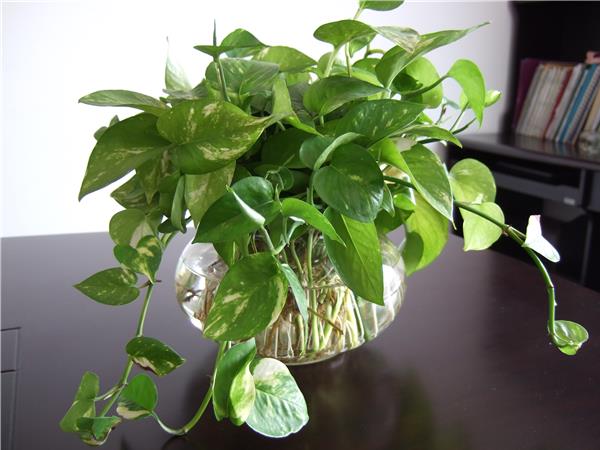
4. Water: When growing pothos, do not water too much; at most just spray water at its roots. As long as the soil is kept moist. If water accumulates, it will breed mosquitoes and insects, seriously affecting the growth and ornamental effect of pothos. In summer, you can water appropriately more; the principle is to keep the potting soil moist but not waterlogged. In winter, watering should be moderated, once every two or three days is enough. When indoor heating is on, you can water appropriately more; when the indoor temperature is too low, be careful to reduce watering. When you cannot water, you can lower its temperature by sprinkling water on the leaves.
5. Fertilizing: When pothos growth slows, fertilize less; during the growth period of pothos, you can appropriately increase fertilizing, and when fertilizing, mainly use sprayed liquid fertilizer.
The difference between pothos growing methods and those of other plants is that because it has aerial roots on its stem nodes, it is very easy to keep alive, and propagation is generally done by cuttings. Especially at 15°C to 25°C, this is the stage when it grows fastest. The pothos growing methods and precautions summarized here for everyone are all very practical. Growing some pothos at home adds beauty and purifies the air, so isn't that killing two birds with one stone?
Pothos Cultivation Methods
(1) Soil cultivation. To grow flowers well, soil is very important. One of the important reasons many flower lovers cannot grow flowers well and keep having them die is soil, so when growing spider plants, if conditions permit, it is recommended to use nutrient soil, or your own soil with good permeability.
(2) Care environment and watering. From the habits of pothos we can also see that pothos is shade-tolerant but averse to direct sunlight, so when choosing a care environment, a ventilated place with scattered light is best. Watering is a very interesting matter, and many flower lovers cannot get it right. It should be mentioned here that different soils, different pots, and different regions all have different amounts and frequencies of watering. Flower lovers should mainly judge whether to water based on the moisture of the soil. A little dryness is not scary, but do not let water accumulate every day.
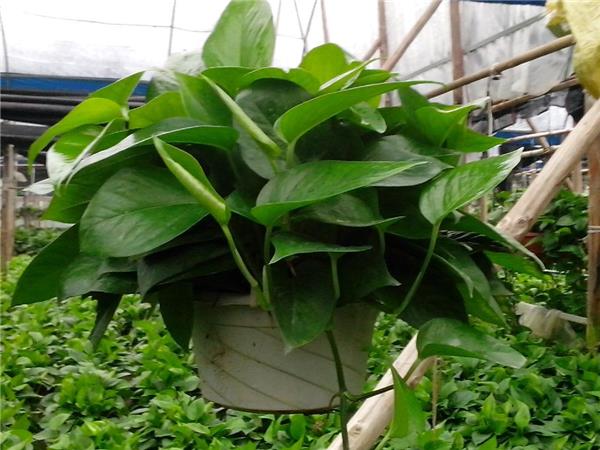
(3) Hydroponics. Actually, there are two kinds of hydroponics. One is pure hydroponics, and the other is filling a pot or teacup with vermiculite and then filling it with water. Of these two, the vermiculite one is relatively simpler. There is no special trick; it mainly depends on the environment. You can refer to soil cultivation. As for watering, that does not exist, and flower lovers can water freely.
Pothos Propagation
Pothos propagation can use the cutting and stem-burying methods, that is, in late spring and early summer select a robust pothos vine, cut a branch 15 cm to 30 cm long, remove the leaves from the basal 1 to 2 nodes (do not damage the aerial roots), then insert it into the growing pot soil. After burying the soil well and watering thoroughly, first place it in a shaded place. Afterward, for a period of time, spray water on the leaf surface every day or cover it with plastic film to keep it moist. The room temperature should not be below 20°C, and the survival rate is generally above 90%.
For potted pothos, use fertile, loose, well-draining leaf mold soil, preferably slightly acidic. Pothos is extremely shade-tolerant and can be placed in a sunny indoor spot in all four seasons. In rooms with dim light, it should be moved every half month to a bright environment to recover for a period of time; otherwise, the internodes tend to elongate and the leaves become smaller. Pothos likes a hot and humid environment, and the overwintering temperature should not be below 15°C. The potting soil should be kept moist, and water should often be sprayed on the leaf surface to increase air humidity, so as to favor the growth of aerial roots. Usually pothos is grown by the layering and stem-burying methods. In late spring and early summer, select a robust pothos vine, cut a branch 15 cm to 30 cm long, remove the leaves from the basal 1 to 2 nodes, being careful not to damage the aerial roots, then insert it into plain sand or coal cinders, with a depth of 1/3 of the cutting. Water thoroughly and place it in a shaded place. Spray water on the leaf surface every day or cover it with plastic film to keep it moist. As long as the environment is kept no lower than 20°C, the survival rate is above 90%.
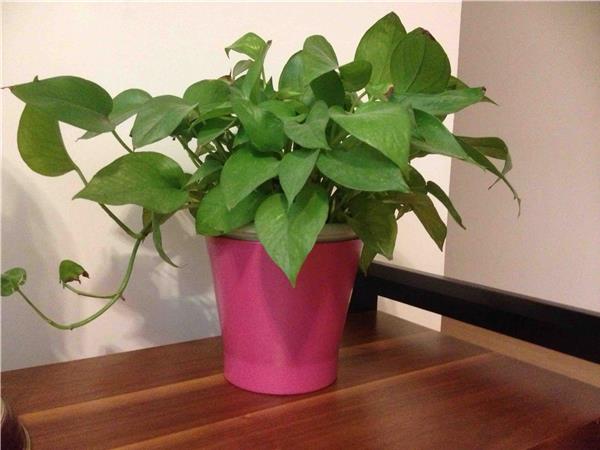
In spring, summer, and autumn, pothos can be placed near an east- or north-facing windowsill, while in winter it can be placed at a south-facing window. If it is kept for a long time in an environment with overly dim light, it will not only cause the trailing stems to grow excessively, the internodes to become longer, and the plant shape to become sparse and scattered, but the yellow-white striped markings on the leaf surface will also become smaller and paler, and the markings may even disappear completely and fade to green. If grown outdoors, pay attention to shading; especially in summer, pay more attention to preventing direct strong light, otherwise it will cause new leaves to become smaller, the leaf color to become dull, and the leaf edges to be easily scorched. The suitable temperature for pothos growth is 20°C to 30°C, and the winter room temperature should not be below 15°C.
The main causes of yellowing leaves in pothos are mainly too low temperature, improper watering, unsuitable light, improper fertilizing, too low humidity, and pests and diseases. The growing environment for pothos requires a temperature above 15°C; below this temperature range, leaves will turn yellow. Watering requires keeping the potting soil moist; it must not be dry, nor can it be waterlogged for a long time. The light environment should mainly be semi-shade; when the winter temperature is lower, it can be kept in full sun, and when the summer sun is strong, direct sunlight is absolutely forbidden. However, being in a dim place for a long time will also cause yellow leaves, and the position needs to be adjusted in time. Fertilizing requires applying little but often; do not feed it fully all at once, otherwise fertilizer damage is likely. Air humidity is best at 60-85%; when below 50%, the leaves tend to yellow. When there is harm from red spiders and scale insects, the leaves also tend to yellow, and the condition spreads very quickly, so special pesticide sprays are needed for prevention and control. In addition, often wiping the leaves is a good preventive method.
With a depth of 1/3 of the cutting, water thoroughly and place it in a shaded place. Spray water on the leaf surface every day or cover it with plastic film to keep it moist. As long as the environment is kept no lower than 20°C, the survival rate is above 90%.
In spring, summer, and autumn, pothos can be placed near an east- or north-facing windowsill, while in winter it can be placed at a south-facing window. If it is kept for a long time in an environment with overly dim light, it will not only cause the trailing stems to grow excessively, the internodes to become longer, and the plant shape to become sparse and scattered, but the yellow-white striped markings on the leaf surface will also become smaller and paler, and the markings may even disappear completely and fade to green. If grown outdoors, pay attention to shading; especially in summer, pay more attention to preventing direct strong light, otherwise it will cause new leaves to become smaller, the leaf color to become dull, and the leaf edges to be easily scorched. The suitable temperature for pothos growth is 20°C to 30°C, and the winter room temperature should not be below 15°C.
The main causes of yellowing leaves in pothos are mainly too low temperature, improper watering, unsuitable light, improper fertilizing, too low humidity, and pests and diseases. The growing environment for pothos requires a temperature above 15°C; below this temperature range, leaves will turn yellow. Watering requires keeping the potting soil moist; it must not be dry, nor can it be waterlogged for a long time. The light environment should mainly be semi-shade; when the winter temperature is lower, it can be kept in full sun, and when the summer sun is strong, direct sunlight is absolutely forbidden. However, being in a dim place for a long time will also cause yellow leaves, and the position needs to be adjusted in time. Fertilizing requires applying little but often; do not feed it fully all at once, otherwise fertilizer damage is likely. Air humidity is best at 60-85%; when below 50%, the leaves tend to yellow. When there is harm from red spiders and scale insects, the leaves also tend to yellow, and the condition spreads very quickly, so special pesticide sprays are needed for prevention and control. In addition, often wiping the leaves is a good preventive method.