How to Grow a Conophytum burgeri? Master These Care Points
It is now commonplace for people to love growing succulents, especially for office workers who face a computer every day. Their favorite thing to do is place a few carefully tended succulents on their desk, and the Conophytum burgeri is one of them. The Conophytum burgeri is very different from other succulents; it looks semi-transparent, which makes it very endearing. But how is it grown, and what are the key points for growing a Conophytum burgeri? Let us take a look at the Conophytum burgeri below.
Brief Introduction to Conophytum burgeri
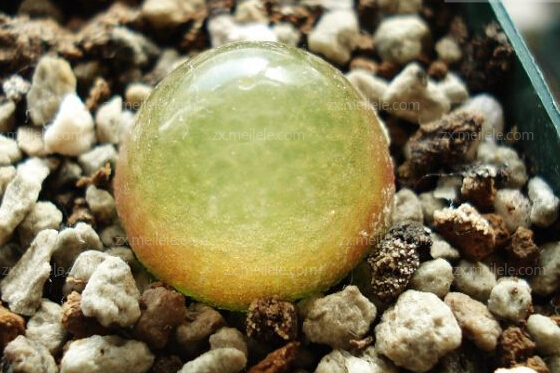
Conophytum burgeri, also called Mount Fuji, gets this alternative name because its plant shape looks very much like Japan's Mount Fuji from a distance. It is a succulent plant of the genus Conophytum in the family Aizoaceae, and is one of the indoor potted plants that people love very much today. The epidermis of this plant is bright green and semi-transparent; under direct sunlight it can be seen to be semi-transparent and very crystal clear. At the same time, when light is abundant in summer, the epidermis color turns red. It blooms in spring and autumn; its flowers are relatively large, with a light purplish-red flower color, opening during bright daytime and closing at night, very delicate and beautiful, and deeply loved and welcomed by people.
How to Grow a Conophytum burgeri
1. Temperature and Light
The Conophytum burgeri actually has relatively high requirements for growing temperature. It loves a cool living environment, and is suitable for growing in an environment with a relatively large temperature difference between day and night. Usually, the temperature cannot be too high or too low. In winter, the growing temperature must not be lower than 5°C for it to overwinter safely. When temperatures are high in summer, the plant naturally enters a dormant period, and during cultivation, good ventilation and cooling measures must be taken. At the same time, the Conophytum burgeri has a relatively large demand for light. The more sufficient the sunlight, the more beneficial it is to the plant's growth. In daily cultivation, it should be given more sun, but it is also necessary to avoid harsh sun exposure to protect the plant's leaves.
2. Water and Fertilizer
The Conophytum burgeri relatively loves a dry environment and does not have a particularly large demand for water, but it cannot go without watering either. If the soil in the flowerpot is moist, then after planting the plant does not need to be watered immediately, but after that it should be watered in 1 to 2 days. In addition, during daily cultivation, attention should still be paid to watering only when dry and letting it dry out between waterings. Water after the soil dries; being slightly dry is very good. Also, during the rainy season, avoid letting the plant be rained on, as this is bad for the plant's root system. At the same time, the plant's demand for fertilizer is very small, because the Conophytum burgeri does not grow fast and its nutrient needs are not high, so daily cultivation does not require much fertilizing.
3. Soil and Repotting
To grow a Conophytum burgeri, the soil is usually required to be loose, breathable, well-draining, and have a certain degree of granularity, and this soil also needs to contain an appropriate amount of calcareous material. Generally, everyone can use some leaf mold, grass peat, peat, and akadama soil or coarse sand mixed with some bone meal. At the same time, in order to maintain the plant's beauty and prevent the plant from rotting, some small stones or ceramsite, etc., can also be placed on the surface of the soil in the flowerpot. In addition, to maintain the soil's vitality and nutrients, when necessary, usually in autumn, it needs to be repotted. When repotting, care should be taken to keep the plant intact.
Conclusion: The Conophytum burgeri is a plant that looks very interesting. Many people are attracted to it at first glance. Its cultivation method is simple, and everyone can learn it quickly without any worry.
[You May Be Interested In]
☑ How to Grow Succulents ☑ How Is a Mousse Mattress ☑ Impressionist Oil Paintings ☑ Potted Plants ☑ Peperomia obtusifolia
☑ Complete Collection of Children's Simple Drawings ☑ Rosa 'Louis XIV' ☑ Curtain Chain Stores ☑ Fatsia japonica ☑ Epiphyllum