How to Grow and Care for Ihlenfeldtia vanzylii (Deer Antler Begonia)
Ihlenfeldtia vanzylii is a fairly common type of succulent. It is called "Deer Antler Begonia" because its leaves resemble deer antlers and its flowers resemble begonia blossoms. Ihlenfeldtia vanzylii is native to the region of South Africa and was brought into the country as an ornamental plant. Its leaf shape is beautiful and highly ornamental, and it has the effect of purifying the air and absorbing radiation. It is often seen beside offices in the country. So, do you know how to grow Ihlenfeldtia vanzylii?
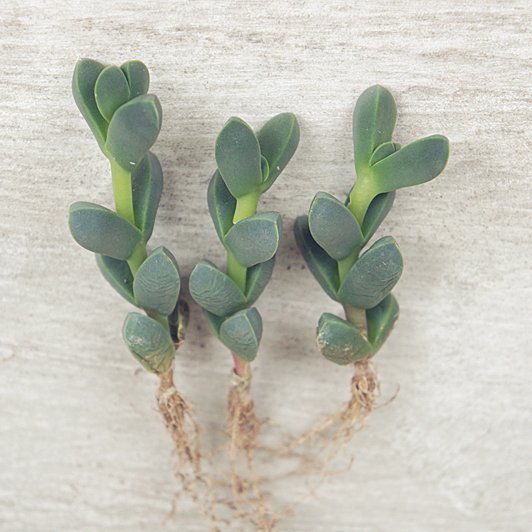
How to Grow Ihlenfeldtia vanzylii
Management and Care
Ihlenfeldtia vanzylii is repotted every spring, and the whole plant is pruned, with a mixed soil composed of fertile peat soil or leaf mold and coarse sand added, and a light spraying of water is enough. During the spring growing period, keep the potting soil from drying out as the standard, spray water on the ground often, and maintain a certain air humidity. In summer, Ihlenfeldtia vanzylii enters a semi-dormant state, and it can be placed in a semi-shaded spot for care, keeping the potting soil from becoming excessively dry. After autumn, Ihlenfeldtia vanzylii begins to grow again, and is fertilized once every half month. As winter approaches, the stems and leaves enter a vigorous growth period and begin to bloom. When the indoor temperature is kept at 15-20°C in winter, it blooms continuously. After 2-3 years of pot cultivation, it needs to be re-cuttaged.
Summer Care
Ihlenfeldtia vanzylii has no obvious dormancy period in summer; it can safely pass the summer as long as it is in a cool, ventilated place, and the cool season is their peak growing season. Below 2°C, watering should gradually be stopped. Keeping the potting soil dry is enough for it to get through winter; in the coldest season, the temperature in the sunroom is minus 3°C, which is a sustained temperature, reaching a minimum of minus 10°C, and no frost damage occurred. This shows it is fairly cold-tolerant, on the premise that the potting soil is dry.
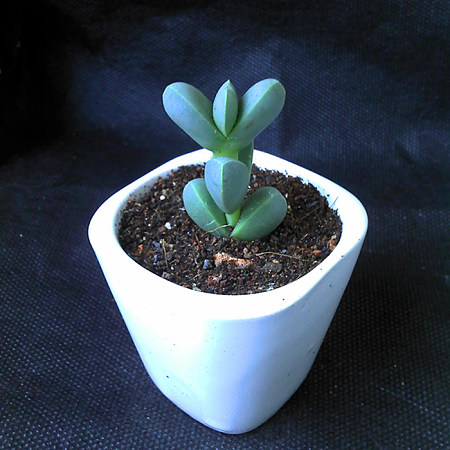
After normal growth, Ihlenfeldtia vanzylii f. variegata slowly grows taller and branches. Select relatively tall, older woody branches; new branches are too tender and not easy to root from cuttings, while old branches can be dried for a few days after cutting and then directly inserted into the growing medium. Kite once inserted them directly into soil, and for a whole winter they did not grow roots, only starting to grow when spring arrived; water when completely dry, so as long as the soil is slightly loose, it can be propagated by cuttings. It is not very demanding about soil. It only becomes very beautiful after forming a cluster; Ihlenfeldtia vanzylii f. variegata does not grow fast, since after all it is a variegated variety, and variegated varieties all grow slowly.
Winter Care
1. Light: Ihlenfeldtia vanzylii f. variegata likes a warm, dry environment with plenty of sunlight, and should be placed in a spot with ample sunlight; if the light is insufficient, it will become leggy. 2. Temperature: winters are relatively cold, so it should be moved into a sunroom for care; when the potting soil is dry, it can endure a low temperature of minus 3°C.
3. Watering: water less in winter; below 2°C, watering should gradually be stopped, and keeping the potting soil dry is enough for it to get through winter.
4. Fertilizing: during the growing season of Ihlenfeldtia vanzylii f. variegata, a little nutrient and water can be given; when the temperature is too low, stop fertilizing.
5. Potting soil: use fertile, loose sandy loam for the potting soil. For example, coal cinder mixed with peat, with granular river sand spread on the soil surface.
6. Pests and diseases: if care is improper in winter, root-knot nematode disease may occur, which can be controlled with 3% carbofuran granules. Among insect pests, there is damage by scale insects, which can be sprayed and killed with a 1500-fold dilution of 50% fenitrothion emulsifiable concentrate.
Planting Techniques and Precautions
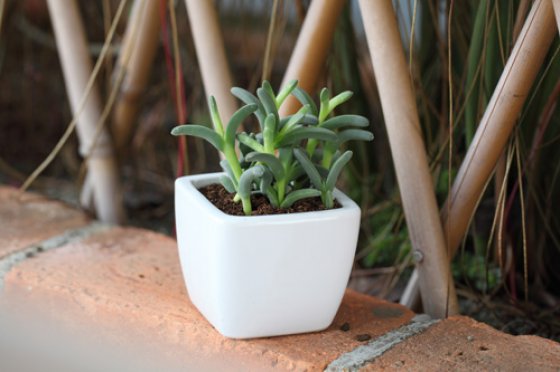
1. If Ihlenfeldtia vanzylii is potted, its pot soil needs to drain and be ventilated. It must not accumulate water. The soil should not be too acidic; neutral is fine. The soil should not have too much humus; ordinary soil is enough. The size of the pot depends on the length and size of its roots.
2. Ihlenfeldtia vanzylii does not like being wet, nor does it like being dry. It is generally recommended to water only when the soil is not dry. In summer, a certain humidity must be maintained, and more water can be sprayed on the leaves.
3. For its growing conditions, it is generally recommended to use partial light. In summer, because the temperature is too high, it is recommended to place Ihlenfeldtia vanzylii in a shady spot for growing, keeping the soil from drying out. In spring and autumn it grows vigorously, so appropriate light can be given. 4. During the growing period of Ihlenfeldtia vanzylii, it is generally recommended to fertilize in spring and autumn. The fertilizer should be a thin fertilizer. The time is once every half month or once a month.
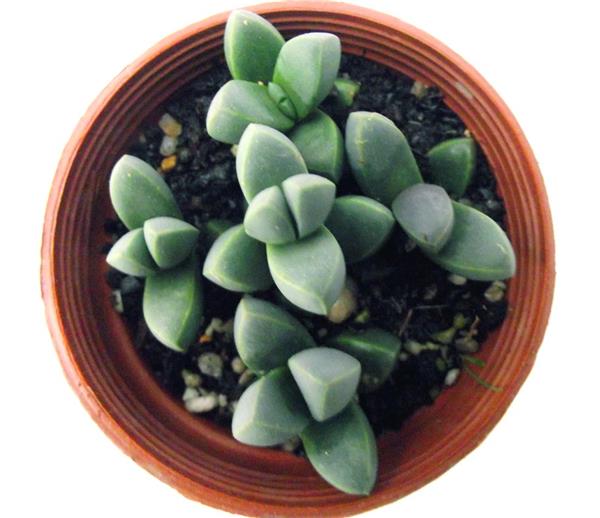
5. The recommended growing temperature for Ihlenfeldtia vanzylii is around 20°C. If it is below 15°C, it will not grow, but if it is below 5°C, then it will stop growing and may even develop wrinkles. In summer, place it in a ventilated, cool spot as much as possible.
Care methods for Ihlenfeldtia vanzylii: the main care method in spring is to repot it, prune leggy leaves or roots. Apply water. In summer, Ihlenfeldtia vanzylii is in a dormant state, and it is recommended to place it in a shady spot for growing, water it occasionally, and keep the soil from becoming too dry. In autumn and spring it is always growing, so appropriate fertilizing is recommended in spring and autumn. In winter, as long as the temperature is kept at around 20°C, it will keep blooming, and the flowering period is also relatively long.
Apply water. In summer, Ihlenfeldtia vanzylii is in a dormant state, and it is recommended to place it in a shady spot for growing, water it occasionally, and keep the soil from becoming too dry. In autumn and spring it is always growing, so appropriate fertilizing is recommended in spring and autumn. In winter, as long as the temperature is kept at around 20°C, it will keep blooming, and the flowering period is also relatively long.