Do Cacti Have Leaves? A Detailed Guide to Growing Them
Do cacti have leaves? The answer is: yes, but in order to adapt to the dry, rain-scarce desert environment, over the long ages cacti kept changing their form, and the leaves gradually disappeared, turning into fleshy spines or dense fine hairs, reducing water transpiration to the greatest extent. The leaves of the cactus have degenerated, and it relies on the stem to produce nutrients; the stem is green and performs the function of leaves, carrying out photosynthesis in the sunlight. So the spines of a cactus evolved from leaves. And the spines of a cactus can absorb nutrients from the air.
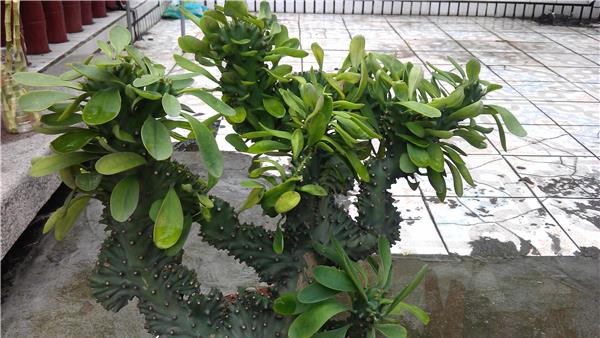
The cactus's original home is a harsh, arid environment. In an arid environment, water is hard-won; to cope with severe drought, the cactus's leaves degenerated, some becoming needle-like or spine-like, generally regarded as modified leaves. This fundamentally reduces the transpiration surface and tightens the water budget. Someone planted an apple tree and a cactus of roughly the same height together, and observed their water loss over a day in summer; the result was 10-20 kg for the apple tree, but only 20 grams for the cactus, a difference of over a thousand times. Therefore, cacti can survive tenaciously in the desert.
The cactus is a perennial plant, and its species are quite numerous. Besides its specialized leaves, the cactus also has a soft, water-absorbing, water-storing root and a fleshy stem; the stem can carry out photosynthesis, produce nutrients, and also has water-storing cells, and the stems of some cacti are covered with a layer of wax that prevents water loss. Cactus flowers are bright and beautiful, in colors such as yellow, white, red and purple. The largest cactus in the world reaches 15-18 m tall, weighs 10 tonnes, and can store over a thousand kg of water.
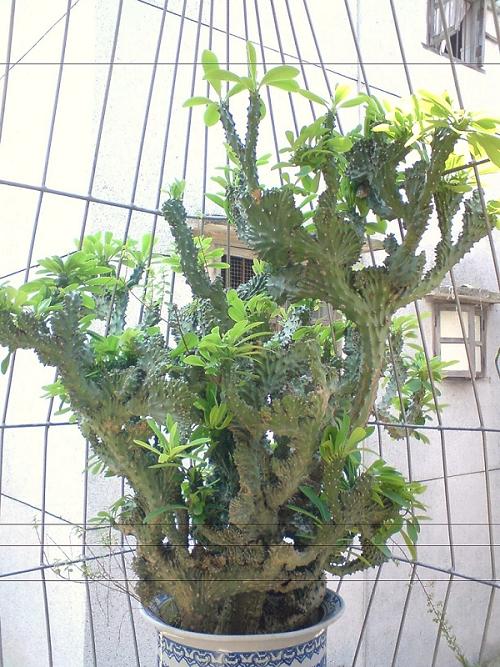
Cactus spines also come in many kinds; some spines become white fine hairs, densely covering the body, and these white hairs can reflect intense sunlight, thereby lowering the body surface temperature and also achieving the effect of reducing water transpiration. Furthermore, the cactus stem also becomes a fleshy, succulent stem, and this fleshy stem can store large amounts of water. It is precisely through these changes in its body form that the cactus adapts to the arid climate.
Many plants are good friends to humans, but the cactus is a bit "standoffish" -- the sharp, hard spines on its body make people recoil in fear. Plants generally have leaves, so why does the cactus have only spines?
In fact, these spines are the cactus's leaves. Cacti generally grow in arid deserts, where the sun is fierce and it often does not rain for long periods; if a cactus is to survive in this environment, it must retain water in its body as much as possible. If a cactus grew broad, thick leaves, they would easily evaporate water under the blazing sun. But if the leaves are small, this will not happen. Spines are the smallest leaves. When it rains, the cactus's thick stem stores a large amount of water, while the tiny leaves reduce water loss. In this way, even if it does not rain for several months or even a year, the cactus can survive. In addition, the cactus's spines are also its weapon. With a body full of spines, few animals dare to touch it.
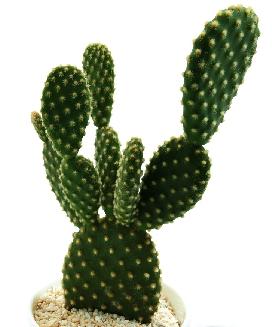
The whole cactus is a treasure, with indispensable functional benefits for humans; cactus flowers have high ornamental value, cactus fruit is edible, and it also has many health benefits, promoting cell growth and delaying skin aging and oxidation.
What are the uses of the cactus?
1. Acute mastitis: Take an appropriate amount of fresh cactus or cactus ball, remove the spines and hairs on the surface, wash clean, and mash. When using, spread the cactus paste thickly on the red and swollen area of the breast, cover with gauze, and fix with adhesive tape. Change the dressing several times a day, keeping it moist.
2. Suppurative otitis media: Take equal parts of cactus (peeled) and dandelion, wash clean, mash and squeeze out the juice, and drip it into the ear, 2 to 4 drops each time, 2 to 3 times a day. This formula has a good effect on patients with suppurative otitis media, generally requiring about 3 to 5 days of medication, and has a good antibacterial, anti-inflammatory, heat-clearing and detoxifying effect.
3. Mumps: Mash an appropriate amount of cactus (peeled, washed clean), add a little duck egg white, mix thoroughly and evenly, and put in a bottle, sealed for later use. When treating, spread the medicinal paste onto thick sterilized gauze, and choose the size of the patch area according to the extent of swelling in the patient's parotid gland area. Apply to one side for unilateral onset, and to both sides for bilateral onset, changing the dressing once a day. For those who use the medicine promptly, it generally heals after 2 applications.
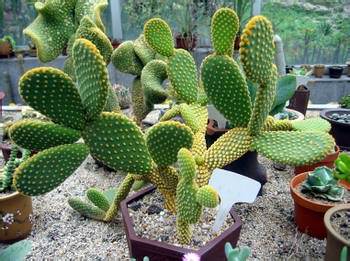
The cactus's homeland is North America, where it is arid all year round; there, ordinary plants find it very hard to survive, because plants evaporate water to the outside every day, and ordinary plants have broad leaves and evaporate more water, while the land cannot supply enough water, so they wither and die, and therefore ordinary plants cannot settle and make their home there. In order to survive there, the cactus degenerated its broad leaves into sharp, hard spines, so that the water in its body does not easily evaporate, and it will not dry up and die.
Every plant in nature has its own peculiarities. In order to survive in nature, they all possess their own secret weapons. In order to adapt to society, we should also study hard so that we have more secret weapons.
It generally heals after 2 applications.
The cactus's homeland is North America, where it is arid all year round; there, ordinary plants find it very hard to survive, because plants evaporate water to the outside every day, and ordinary plants have broad leaves and evaporate more water, while the land cannot supply enough water, so they wither and die, and therefore ordinary plants cannot settle and make their home there. In order to survive there, the cactus degenerated its broad leaves into sharp, hard spines, so that the water in its body does not easily evaporate, and it will not dry up and die.
Every plant in nature has its own peculiarities. In order to survive in nature, they all possess their own secret weapons. In order to adapt to society, we should also study hard so that we have more secret weapons.