What is the flower language and meaning of the four-leaf clover?
Introduction: The four-leaf clover is a rare variation of plants in the Trifolium genus, and there are also those with five or more leaves, up to as many as eighteen leaves. In the West, finding a four-leaf clover is considered a sign of good luck, while in Japan it is believed to bring happiness, so it is also called the lucky clover. Out of roughly ten thousand clovers, only one will have four leaves. Below, let us learn together about the flower language and meaning of the four-leaf clover.
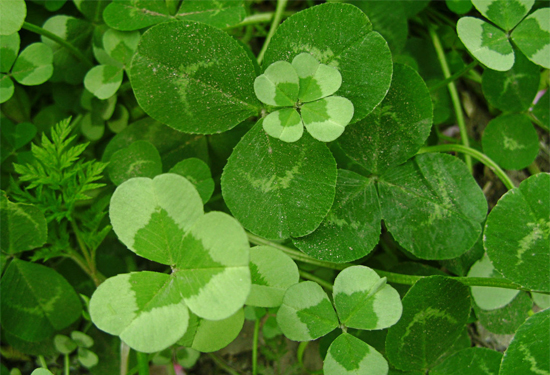
The four-leaf clover has four leaves, and each leaf has a different meaning and flower language. The first leaf represents hope; the second leaf represents faith; the third leaf represents love; and the extra fourth leaf represents luck.

Another interpretation of the four-leaf clover's meaning says that the first leaf represents love; the second leaf represents health; the third leaf represents glory; and the fourth leaf represents riches.

People always say that finding a four-leaf clover means finding happiness, because the first leaf of the clover represents hope, the second leaf represents giving, and the third leaf represents love. Even if you have given, hoped, and loved, you will not necessarily find happiness. But the meaning of the four-leaf clover is: regain faith within hope, use faith to win love, and what you get is happiness!

At traditional Irish weddings, the lucky clover is indispensable; the bride's bouquet and the groom's boutonniere must both be paired with lucky clover. In any case, the four-leaf clover is telling us that we should treat life with positivity and optimism, that everything will get better, and that everything will come. Everything will come.
Recommended reading: The flower language of the dandelion and the dandelion's promise; the flower language and legends of the bellflower