The Legend of the Sunflower and the Meaning of Its Flower Language
The sunflower, commonly known as the sunflower seed plant and also called the sun flower, is a large annual plant of the genus Helianthus in the Asteraceae family that can grow up to 3 m tall. This plant, native to North America, is now closely tied to human life. Based on its growth characteristics, people have attributed many beautiful and moving legends to the sunflower, and from these legends and its own traits they have distilled the sunflower's flower language. Thus the legend of the sunflower and the question of what the sunflower's flower language is are closely connected.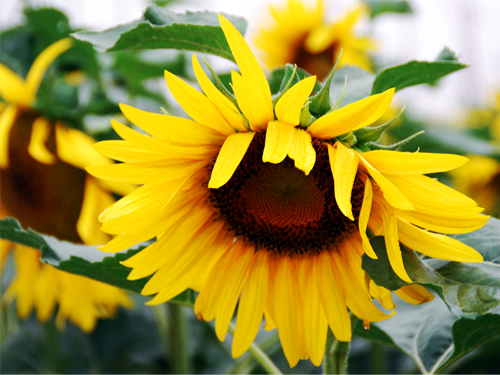
At present, five of the legends about the sunflower are relatively widely circulated, and the sunflower's flower language is also derived from these five sunflower legends.
Story One: A water nymph named Clytie happened to meet the sun god Apollo one day and fell in love with him at first sight, yet she could not win so much as a direct glance from Apollo. But the nymph did not give up. Instead, she gazed at the sky by the water's edge every day, fixing her eyes on Apollo as he drove his splendid golden chariot across the sky, until the sun god set. Day after day, she never did wait for the sun god to come before her, and she grew increasingly haggard. The gods took pity on her and turned her into a large golden-yellow sunflower. Her face became the flower disc, forever facing the sun, following him every day - Apollo - and telling him of her unchanging love and adoration. People today have passed this legend down to the present and have given the sunflower its flower language - silent love.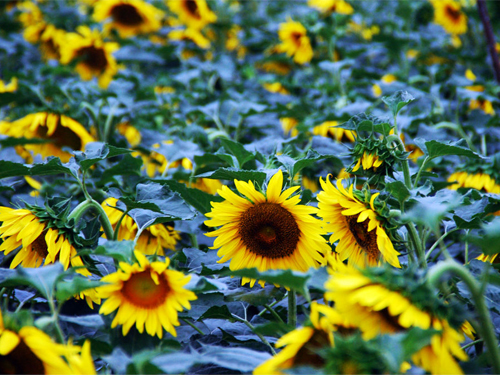
Story Two: This is a poignant Greek myth whose plot resembles Story One. It mainly tells of the sea goddess Clytie, who as the lover of the sun god Helios, after Helios transferred his affections to the Persian princess Leucothoe, burned with rage and in a fit of anger informed the Persian king Orchamus of the relationship between Leucothoe and Helios. In his fury, Orchamus buried his daughter the princess alive. When the sun god Helios learned of this, he cut off all contact with Clytie. The infatuated Clytie went several days without food or drink, gazing at Helios as he drove his sun chariot rising in the east and setting in the west, growing more haggard by the day, until at last she turned into a sun-turning flower (the sunflower). This sunflower legend is likewise widely circulated, and for it people have given the sunflower its flower language - pride and loyalty.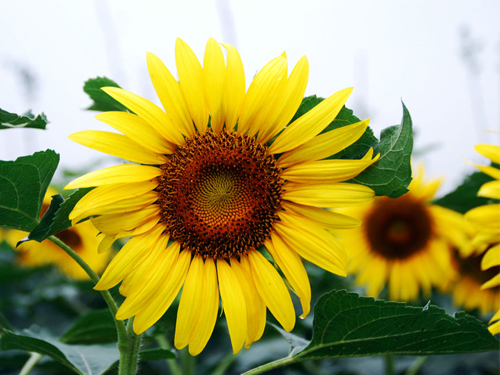
Story Three: Long ago, a princess, out of her love for the sun, left home regardless of everything to chase the sun's footsteps. One day she met the sun's mother and told her of the love for the sun in her heart. The sun's mother was deeply moved and arranged for her to marry the sun. Not long afterward, she grew sorrowful because she could not see her husband's true face. The sun's mother, taking pity on her, told her how to see the sun's true face. But because she looked too intently and lost track of time, she was driven from the house by her angry husband and then departed eastward. She did not give up, but kept chasing the sun without pause. Seeing how persistent she was, the sun turned her into a sunflower: wherever the sun goes, the sunflower's face turns toward it. This sunflower legend is likewise widely circulated, and for it people have given the sunflower its flower language - bravely pursue the happiness you want.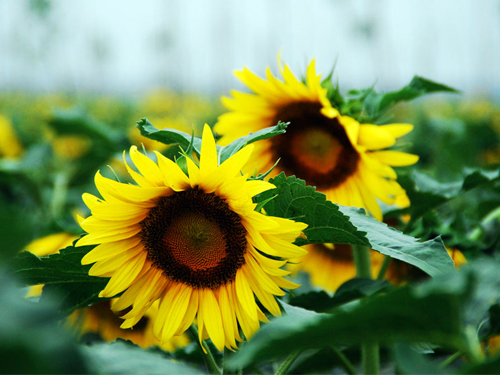
Story Four: This legend originates from Russia, because the sunflower is Russia's national flower and also the flower that yearns toward light, the flower that brings people beautiful hope. The legend tells of an ancient farmer's daughter named Minggu, whom her stepmother, a "domineering woman," regarded as a thorn in her side. Having suffered every kind of abuse, she talked back to her stepmother over a trivial matter, and the stepmother whipped her with a leather strap, but missed and struck her own biological daughter, who had come to mediate. The stepmother was both furious and full of hate, and at night, while Minggu was sound asleep, she gouged out her eyes. Unable to bear the pain, Minggu broke open the door and fled, and soon died. After her death, a vivid yellow flower bloomed on her grave, facing the sunlight all day long - it was the sunflower. It expressed Minggu's yearning for light and her loathing of darkness. This legend inspires people to hate violence and darkness and to pursue the light. For it people have given the sunflower its flower language - faith and radiance.
Story Five: A beautiful young girl named Clytie, who secretly loved the sun god Apollo, because she could not win Apollo's love, took extreme measures to gain sympathy, feeding on dew and drinking tears instead of tea. After nine days and nine nights without sleep or rest, gazing upward, her feet had become roots, her slender body had become branches and leaves, and her pale little face had become a flower. Though Clytie's appearance had changed, her heart remained forever unchanged, her face always gazing up at the sun. It is precisely because of this legend that people have given the sunflower its flower language - adoration.
From the five legends about the sunflower above, it can be summed up that the flower language people have given the sunflower is: faith, radiance, pride, loyalty, adoration, bravely pursuing the happiness you want, and silent love. Because the sunflower is closely tied to humans in real life and is a plant with a deep bond with humanity, it has also been given the sunflower's flower language: affinity. People born under this flower's blessing are ideal lovers and even the best lifelong companions. The sunflower positively represents a positive attitude toward life, and also represents strength and eternity.
Editor's picks: How to plant roses, Rose planting and cultivation.. Succulent plant growing and care feng shui has its rules
Story Five: A beautiful young girl named Clytie, who secretly loved the sun god Apollo, because she could not win Apollo's love, took extreme measures to gain sympathy, feeding on dew and drinking tears instead of tea. After nine days and nine nights without sleep or rest, gazing upward, her feet had become roots, her slender body had become branches and leaves, and her pale little face had become a flower. Though Clytie's appearance had changed, her heart remained forever unchanged, her face always gazing up at the sun. It is precisely because of this legend that people have given the sunflower its flower language - adoration.
From the five legends about the sunflower above, it can be summed up that the flower language people have given the sunflower is: faith, radiance, pride, loyalty, adoration, bravely pursuing the happiness you want, and silent love. Because the sunflower is closely tied to humans in real life and is a plant with a deep bond with humanity, it has also been given the sunflower's flower language: affinity. People born under this flower's blessing are ideal lovers and even the best lifelong companions. The sunflower positively represents a positive attitude toward life, and also represents strength and eternity.
Editor's picks: How to plant roses, Rose planting and cultivation.. Succulent plant growing and care feng shui has its rules