Taboos and precautions for growing ginkgo bonsai at home
When people mention ginkgo, the first thing that probably comes to mind is a ginkgo tree growing in nature, not a ginkgo bonsai. But in fact, ginkgo bonsai is what people encounter more often in daily life. Ginkgo is a very precious deciduous tree, with beautiful leaves and an elegant form. When presented as a bonsai, it has extraordinary ornamental value and artistic value. Placing a ginkgo bonsai at home can not only decorate the environment, but also enhance the owner's artistic taste in life. So how should a ginkgo bonsai be grown, and what taboos and precautions are there? Let us take a look below.
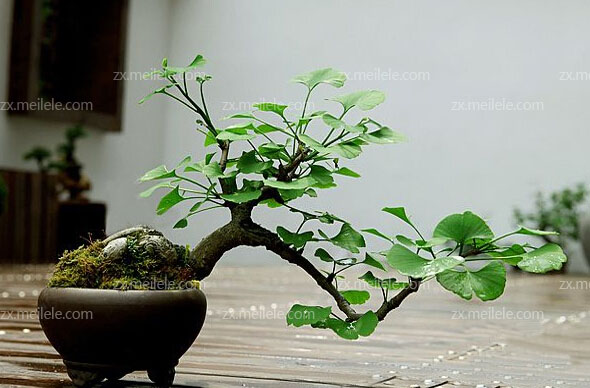
Pot soil management for ginkgo bonsai
The first thing to pay attention to when growing a ginkgo bonsai at home is the management of the pot soil. Because the volume of the flower pot is limited, at a certain point the root growth of the ginkgo will be restricted and constrained by the pot, so the limited pot soil must contain sufficient nutrients to sustain the ginkgo's growth needs; otherwise, at a certain point the ginkgo will need to be repotted. Generally speaking, the pot soil required for a ginkgo bonsai is relatively loose, breathable and nutrient-rich soil. So we can use loose and fertile garden soil mixed with an appropriate amount of fully decomposed organic fertilizer and plant straw, or buy the soil needed for a ginkgo bonsai from a professional shop.
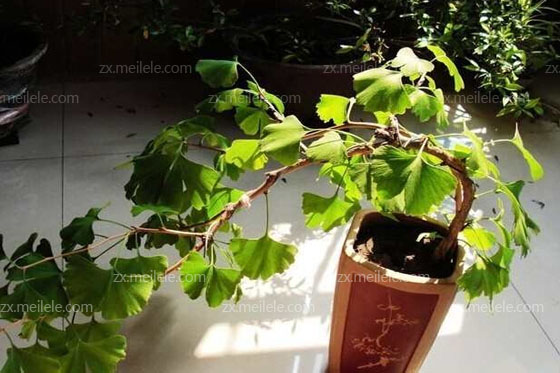
Pruning and shaping of ginkgo bonsai
As a type of bonsai, a ginkgo bonsai must also be pruned and shaped. Pruning and shaping are related to each person's own level of appreciation and aesthetic views; how to prune and shape generally depends on the owner's ideas. However, common ginkgo bonsai can mainly be pruned into bow shape, two-tiered flat-spreading shape, cross shape and spindle shape, etc. At a certain point, that is, when the ginkgo is growing very well, it can be pruned in time by pinching the growing tips, removing buds, removing leaves, trimming branches and trimming roots, shortening long branches and thinning dense branches, so as to fully maintain its beautiful tree form.
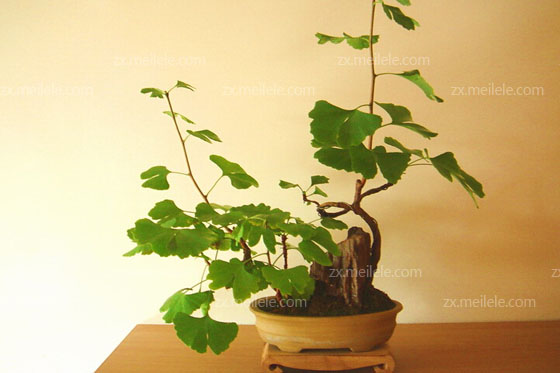
Fertilizer and water management for ginkgo bonsai
Growing any plant is inseparable from fertilizer and water. The term fertilizer and water includes both fertilizer and watering, and of course the most important part is water. Watering is the most important and most frequent task in the management of bonsai plants, especially because the size of the flower pot is limited and the water content in it is correspondingly extremely limited, so the number of waterings and the amount of water each time need to be strictly controlled. Generally speaking, watering should depend on the degree of dryness and moisture in the pot. Under normal circumstances, a ginkgo bonsai needs to be watered once every 1 to 2 days. However, in summer when the temperature is too high and in dry seasons, the number of waterings per day should be 2 times, once at 8 a.m. and once at 5 p.m. At the same time, also be careful to spray some clean water on the leaves of the ginkgo bonsai.
As for fertilizing, there are also certain precautions. Because of the artistic characteristic of bonsai, showing the large within the small, it should not be fertilized too much or too frequently. It is necessary to master the fertilizer concentration and types, and grasp the fertilizing season. In early spring, a bud-promoting fertilizer mainly based on nitrogen fertilizer can be applied as a top dressing; during full bloom, a 0.1% borax solution can be sprayed. Note that the fertilizing of ginkgo bonsai should be done little and often, trying to achieve the goal of both preventing root burn and allowing full absorption, especially avoiding fertilizing in summer.
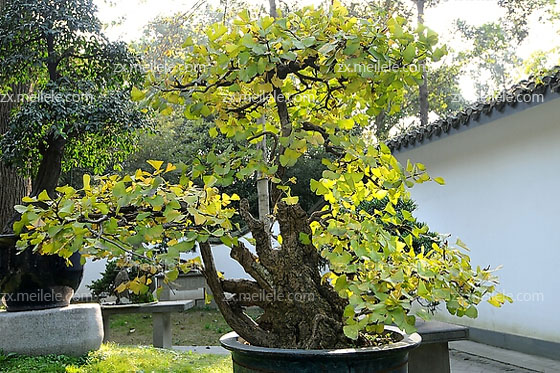
Conclusion: Ginkgo bonsai is a relatively valuable type of bonsai, so when growing it at home, you must put in more thought. Whether it is fertilizing, watering, pruning or anything else, all must be attended to one by one, and every task should be completed as well as possible so that the ginkgo bonsai can be more beautiful.
[You may be interested in]
☑ Why does mimosa close up ☑ When do Wuyuan rapeseed flowers bloom ☑ Floor mats ☑ Embroidered insoles ☑ Summer sleeping mats
☑ What does a pink rose mean ☑ When do Baiyangdian lotus flowers bloom ☑ Curtain prices ☑ Orchid pictures ☑ Orchids