How to control pests on succulents? Introduction to practical methods
Succulents are relatively susceptible to damage from small insects, so below we introduce in detail the methods for controlling pests on succulents.
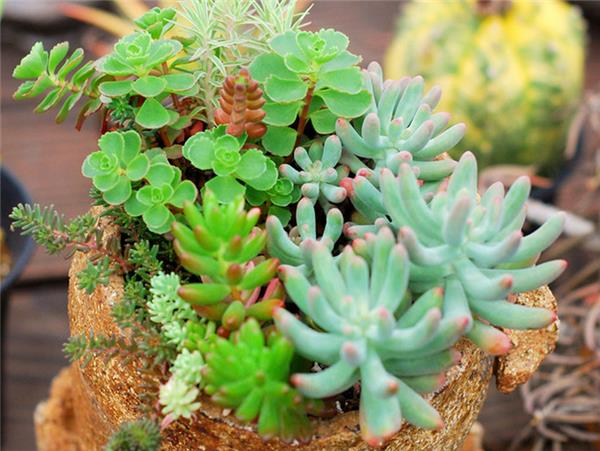
Methods for controlling pests on succulents
1. Red spider mite
It mainly harms succulents of the Apocynaceae and Euphorbiaceae families, as well as the Asteraceae and Liliaceae. It sucks the sap from young stems and leaves with its mouthparts; affected leaves develop yellow-brown patches or turn yellow and drop off, and these scars remain forever. Generally, you can check whether there are spider webs on the underside of the leaves, and whether there are very small red/white/dark-colored insects; if there are, it is usually red spider mite.
Control measures include increasing environmental humidity to reduce and avoid spread; you can use a 40% dicofol 1000-1500x solution to kill them by absorption, or abamectin.
2. Mealybugs
They have a very wide range of damage, often harming succulents such as Agave and Haworthia with tightly arranged leaves, sucking the sap of stems and leaves, causing poor growth of the plant, and in severe cases withering and death. Their peak period comes earlier than that of red spider mite, and they often already multiply in large numbers in early spring. But there is also an aspect of their damage that is easy to control: they tend to concentrate only on a small number of plants; sometimes one plant is covered with mealybugs while a neighboring plant has not a single one.
Control measures: when the number is small, they can be removed with a brush. In addition, they can also be sprayed with a 800-1000x solution of profenofos. Mixing a certain amount of carbofuran into the potting soil has a preventive effect, but the efficacy lasts only 3 months.
3. Whiteflies
Their range of damage is not large; they occur more often on shrub-like succulents of the Euphorbiaceae family such as Euphorbia tirucalli, Euphorbia milii, Euphorbia lactea, and Euphorbia neriifolia, piercing and sucking sap on the underside of leaves, causing leaves to turn yellow and drop off, while also inducing sooty mold, with large patches of unsightly black powder on stems and leaves, directly affecting the ornamental value of the plant.
Control measures: in addition to improving environmental ventilation, in the early stage of occurrence you can spray with a 40% omethoate emulsifiable concentrate 1000-2000x solution, or spray with malathion 500x solution or dimethoate mixed with dichlorvos 1000x solution; 2 days after spraying, use a strong water stream to wash away the dead insects together with the black powder.
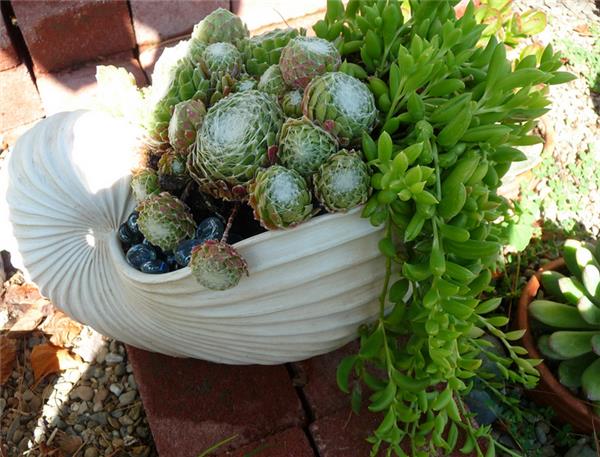
4. Aphids
Mostly harm succulents of the Crassulaceae and Asteraceae families, often sucking the sap of the young parts of the plant, causing weakened plant growth; their secretions also attract ant infestation.
Control measures: if the number is small, they can be caught manually, pinching each one you see. In the early stage of damage, spray with an 80% dichlorvos emulsifiable concentrate 1500x solution; Bayer imidacloprid from Germany can also be considered.
That is all for the introduction to methods for controlling pests on succulents. Next, let us look at the control of succulent diseases.
1. Fusarium wilt
It is a bacterial disease and a major disease of succulents. It often harms succulents with tubers, invading through root wounds, causing reddish-brown lesions on the tubers, which rot and die within a few days.
Control measures: before potting, spray with a 70% thiophanate wettable powder 1000x solution for prevention; after drying, apply sulfur powder for disinfection.
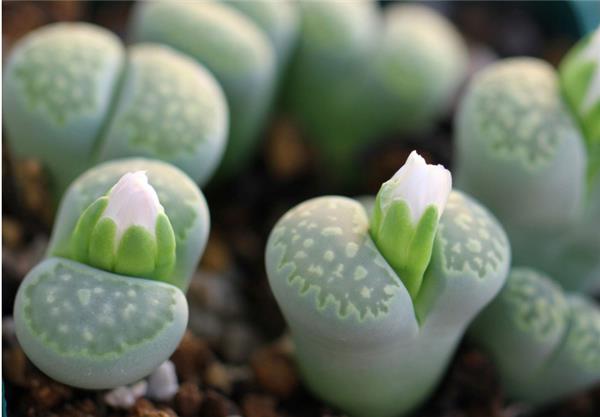
2. Anthracnose
It is an important disease harming succulents and belongs to fungal diseases. It mostly occurs in hot and humid seasons, especially in the high-temperature and humid plum rain season; excessive application of nitrogen fertilizer may also cause it. In the early stage of onset, small brown spots appear on the leaves, then expand into round or oval shapes. The lesions gradually dry up, and in severe cases the whole plant is affected.
Control measures: first open windows for ventilation to reduce indoor air temperature and humidity. Then spray with a 70% thiophanate-methyl wettable powder 1000x solution, or spray 70% thiophanate-methyl, 60% anthracnose fumei, carbendazim, etc., to prevent the disease from continuing to spread.
3. Rust disease
It often occurs on succulents of the Euphorbiaceae family; large rust-brown lesions appear on the epidermis of the stems and expand upward from the base of the stem, and in severe cases the stem is covered with lesions.
Control measures: combined with pruning, cut off the diseased branches to allow new branches to sprout again, then spray with a 12.5% diniconazole wettable powder 2000-3000x solution.
4. Physiological diseases
Due to harsh growing conditions such as strong light exposure, severely insufficient light, sudden low temperatures, and long-term water shortage, the epidermis of stems and leaves becomes scorched and browned, growing points become leggy, some tissues freeze, and tips shrink. The most fundamental measure is to start by improving cultivation conditions.
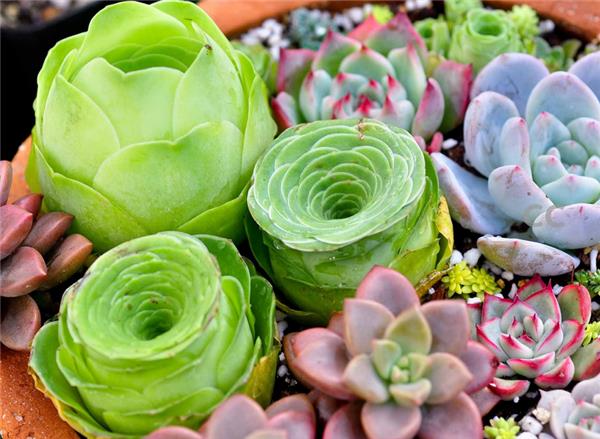
Methods for controlling diseases and pests on succulents
The control of diseases and pests on succulents is mainly based on prevention. First, the environment must be clean and tidy. Strict checks must be carried out on introduced succulents, and they should only be placed in the greenhouse when it is confirmed that there are no diseases or pests. Seasonal transitions are seasons prone to diseases and pests. Generally, when the weather goes "from cold to warm" and "from hot to cool," these are precisely the periods when diseases and pests are most likely to break out suddenly. In addition, just after summer, succulents have just passed their long dormant period and are gradually resuming growth, but their physiological functions have not fully recovered and their resistance is still at a very weak stage, so they are also easily invaded by diseases and pests. Concentrated pesticide spraying in the greenhouse during the three periods of early winter, early spring, and before the plum rain season has a doubled effect with half the effort. In addition, disinfecting the potting soil has a very good preventive effect.
The pesticides commonly used for succulents mainly include two categories: fungicides for preventing and treating diseases (such as carbendazim, thiophanate, chlorothalonil, zineb, etc.) and insecticides (such as omethoate, dicofol, malathion, fenvalerate, abamectin, etc.), and the right medicine can be chosen according to the symptoms. The concentration of the pesticide must be strictly controlled according to the instructions, especially insecticides; if the concentration is slightly stronger, phytotoxicity occurs, and Obregonia denegrii and some Euphorbiaceae succulents are especially sensitive to this.
Seasonal transitions are seasons prone to diseases and pests. Generally, when the weather goes "from cold to warm" and "from hot to cool," these are precisely the periods when diseases and pests are most likely to break out suddenly. In addition, just after summer, succulents have just passed their long dormant period and are gradually resuming growth, but their physiological functions have not fully recovered and their resistance is still at a very weak stage, so they are also easily invaded by diseases and pests. Concentrated pesticide spraying in the greenhouse during the three periods of early winter, early spring, and before the plum rain season has a doubled effect with half the effort. In addition, disinfecting the potting soil has a very good preventive effect.The pesticides commonly used for succulents mainly include two categories: fungicides for preventing and treating diseases (such as carbendazim, thiophanate, chlorothalonil, zineb, etc.) and insecticides (such as omethoate, dicofol, malathion, fenvalerate, abamectin, etc.), and the right medicine can be chosen according to the symptoms. The concentration of the pesticide must be strictly controlled according to the instructions, especially insecticides; if the concentration is slightly stronger, phytotoxicity occurs, and Obregonia denegrii and some Euphorbiaceae succulents are especially sensitive to this.