What potting soils are used for growing succulents? An introduction to common soil types
In recent years, succulents have become increasingly popular, but do you know what potting soils are used for growing succulents?
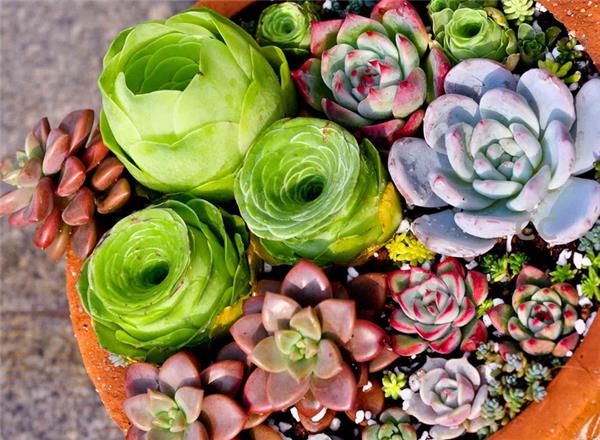
What potting soils are used for growing succulents
Ceramsite: It is characterized by good aeration, with a fine-pore structure inside. Placed at the bottom of the pot, it can replace pot-foot stones (succulent pots are rather small, and generally pot-foot stones are simply too big to be suitable). Its gaps are large, making it very suitable for drainage. When placed in the middle and mixed with other soils, it is mainly used to retain water. Placed on the pot surface, it can serve as decoration and prevent splashing. The particle size can be chosen as you like; generally, the larger the better when placed at the bottom. Its hardness is very high, and it can be reused after repotting.
Akadama: Anyone who grows succulents knows it, the most versatile succulent soil. Its characteristic: expensive. When dry, the color is rather grayish-yellow; after absorbing water, it turns reddish-brown, making it very easy to judge soil moisture. It belongs to mineral soils, with its place of origin in Japan. There are many domestic imitations, produced by sintering, with varying quality; most pulverize within one or two years, including the Asahi Akadama exported from China to Japan.
Coco coir: Its characteristics: all-natural, water-retentive and air-permeable, very well suited to the needs of succulents. I rather like its coconut fibers, high in fiber, draining very quickly, which helps with root development. If used alone over the long term, it tends to clump, so it is recommended to mix it with other soils. It is fully biodegradable. In addition, its cost-effectiveness is quite good.
Pumice: A volcanic soil, lightweight, it can fly away if you blow on it. Its characteristics: light, air-permeable, cheap! Personally, I think it is the best raw material for mixing soil; small-particle pumice can completely replace perlite (I hate that stuff the most!). It has strong water absorption; because there is a large amount of air in its internal fine pores, it helps roots breathe, and most importantly, it pulverizes extremely slowly! This is the main reason perlite loses completely.
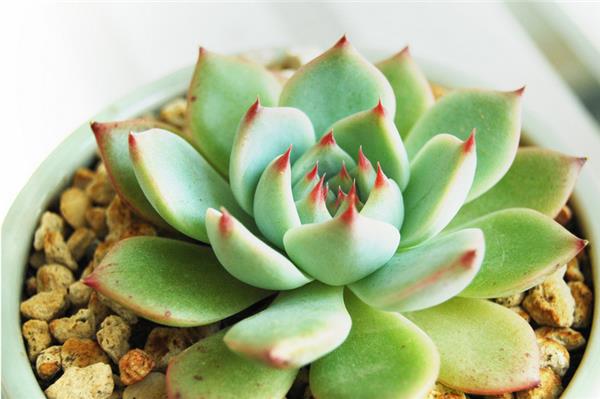
German Klasmann 422 peat: The best succulent soil mix; those who use it know. It is sphagnum peat, with moderate fiber, simply made to order for Crassulaceae. Its characteristics: soft, well-aerated, free of impurities. Combined reasonably with the pumice mentioned above, it can handle almost all Crassulaceae, Aizoaceae, and Cactaceae. Beginners take note: it itself contains no added nutrients, so you have a high degree of freedom for adding fertilizer later.
Perlite: I guess the greenhouse bosses hyped it up. What good is this stuff, seriously! It crumbles at a touch, floats up as soon as you water, it is basically all foam! Its only characteristic is being cheap. It cannot absorb much water either, and after being mixed into soil for a long time it slowly floats upward! After it breaks apart, it turns into dust, an accomplice to soil clumping! In short, it is just speechlessly bad.
Vermiculite: With a mica-like structure, it is actually also very easy to break apart, and it expands after absorbing water. Its characteristics: water-retentive, very water-retentive. Its overall traits are slightly better than perlite, and it is used to regulate soil moisture. The quality from different vendors is uneven, with very large differences; personally, I feel the lighter the color and the harder, the better, while the brown kind breaks apart immediately.
Pine bark: It is actually just pine tree bark. It can really absorb water, and many people also like to use it to grow moisture-loving plants like orchids. Mixed into soil, it can retain water and is also rich in nutrients. Its irregular structure can also prevent soil compaction, and succulents also like to cheekily burrow into its crevices. Truly a great material that serves multiple purposes at once, except that breaking it into pieces is troublesome. It can replace vermiculite and perlite.
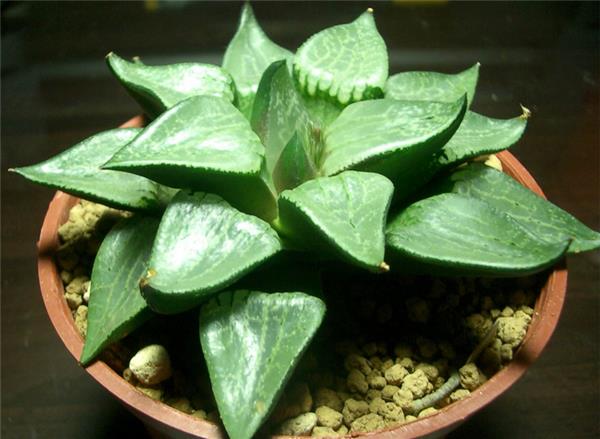
Kanuma soil: Its properties and usage are equivalent to Akadama, lighter, but with good water absorption, and it pulverizes easily, in only about two years. It is very widely used in succulent soil mixes. Like Akadama, I personally do not recommend using it alone. Although many people use it by itself, over time its properties deteriorate and it tends to compact.
Kiryu sand: A reddish volcanic stone, with relatively high iron content, very heavy. It is the heaviest soil I have encountered. Its characteristics: hard, good drainage, can be laid at the bottom layer for drainage. It does not have any special properties, yet it still has the nerve to sell for so much.
Rice husk charcoal / chaff ash: Drains and aerates, alkaline, usually used to adjust soil pH. Its characteristics: cheap and easy to use, and rich in potassium fertilizer, with a small amount of calcium and magnesium; its soft texture helps with root development. It protects succulents, and soft-bodied animals like snails really hate it.
Jindalü granular peat: I really like using this. Its characteristics: high hardness, it can even serve as a slow-release fertilizer, rich in organic matter and humic acid, saving you the trouble of fertilizing. It is generally placed in the middle or at the bottom. Because it does not break down, it will not compact, and it also helps drainage. I basically put some in every pot. A 3.5-liter bag can be used for so, so, so many pots, hehe.
Jindalü succulent soil: A mixed soil of pumice, grass peat, peat, crushed bark, crushed brick particles, etc. Fertilizer has already been added. Like Asahi succulent soil, it belongs to fine-textured soil, but it feels very wet, and it seems it never dries out no matter what. Watering is also rather troublesome, and its permeability is poor. It is recommended to mix it with other granular soils such as pumice and Akadama.
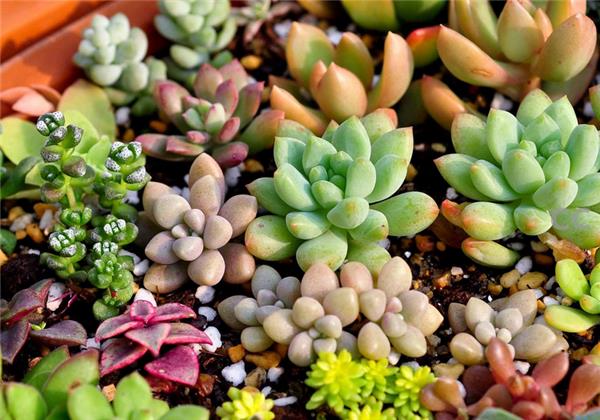
Jindalü orchid soil: A mixed soil of pumice, grass peat, bark, vermiculite, crushed brick particles, tree fern, etc. Although it is called orchid soil, I think it is very suitable for succulents. When you water, it permeates quickly, and its overall properties are better than Jindalü succulent soil. There is a lot of bark, the soil does not compact easily, and it also provides a good grip for thick roots. In addition, the quality of the vermiculite in this soil is very good.
Kanuma stone: This must be washed with water before use, there is too much dust! When dry, it is white; after absorbing water, it turns a beautiful golden yellow, and it looks very nice scattered on the surface! Its characteristics are similar to pumice: very light, with just the right hardness, not too hard and not as prone to pulverizing as Akadama. Anyway, the price is about the same. It contains no fertilizer, so it needs to be added later.
Fafard Planting Mix No. 1 peat: Like Klasmann 422 peat, it is sphagnum peat. The two have similar properties and are both excellent succulent soils. I feel Fafard's soil texture is finer and fluffier, with fewer impurities, though it also has less long fiber. Anyway, both are used for mixing soil, so there is not much difference. Fafard's soils all have an unspecified nutrient starter added, which for succulents is better than nothing.
German Klasmann 414 peat: Compared with No. 422, it has more fiber and is coarser. Klasmann's processing is, frankly, quite rough. The soil you get has very serious clumping and must be torn apart piece by piece. Damn, it is not easy being a farmer! Although Fafard's processing is good and it crumbles with a squeeze, 414's coarse fiber is very likable. How should I put it? Anyway, there is just no perfect soil!
Leixiu Rainbow Stone: A mixed soil of pumice, zeolite (green), lava rock, etc. It has high hardness, does not pulverize, absorbs water and aerates, and is an excellent granular succulent soil. Its drawbacks are that it is too sharp! Too heavy! It can be used directly for succulents with many fibrous roots, but you need to add half peat. I prefer this kind of high-hardness succulent soil, no need to change the soil. It contains small round green slow-release fertilizer granules, but during the growing season it is still best to fertilize yourself.
Xiping succulent soil: Composed of granular soils such as pumice, Akadama, volcanic rock, and rice husk charcoal. Slow-release fertilizer, Bayer insecticide, and fungicide have already been added. It is a quite comprehensive succulent soil that can be used directly. The first succulent soil I ever used was this one. At the time I thought it was especially good, very air-permeable, and watering it any way was fine. Later I found that the Akadama in this stuff was of super poor quality and began pulverizing one after another after a few months. What a rip-off!
Asahi cactus soil: Contains pumice, grass peat, vermiculite, and perlite. It is said to also contain Akadama, but you cannot find it with the naked eye; it has probably crumbled into bits. Its characteristics: the grass peat inside is very fine, which helps with root development, but it is also too powdery, and it feels very dry. In addition, it contains a large amount of perlite, which easily breaks into powder during transport. Overall, the particles are too powdery, so I gave up after using it once.