How to grow asparagus fern in winter so it survives the cold safely
Asparagus fern is a perennial trailing evergreen herbaceous flowering plant that many people love very much, so do you know how asparagus fern gets through winter?
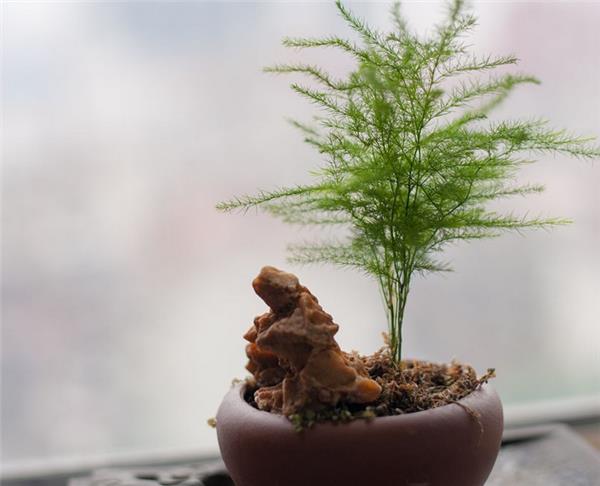
How asparagus fern gets through winter
Asparagus fern is native to southern Africa and is not cold-tolerant, so it cannot overwinter outdoors in the north. When the temperature drops, the asparagus fern should be moved indoors promptly, and the room temperature should be kept above 15°C. The pot should be placed on a sunny windowsill, and the leaves should be some distance from the glass to prevent the leaves from being partially frozen and turning dry and yellow.
Water appropriately. Asparagus fern is suited to growing in a moist environment. The dry winter air in the north is extremely unfavorable to the growth of asparagus fern, and this is the main cause of dry tips on asparagus fern. At noon every day, you can mist the leaf surface to keep the branches and leaves emerald green. Although asparagus fern likes moisture, it dislikes excessive watering. If the potting soil stays wet for a long time, the roots rot easily, the branches and leaves turn yellow, and the plant may even die; but if the potting soil is too dry, it can also cause yellow leaves or scorched tips. Therefore, by always keeping the potting soil half-dry and slightly moist, the branches and leaves of asparagus fern can stay emerald green and evergreen all year round. Water quality is best if it is fresh water free of salt, alkali and other harmful substances. Tap water should be left to stand for 1 to 2 days so that the water temperature is close to room temperature.
Fertilize reasonably. A thin liquid fertilizer can be applied once every half month, mainly nitrogen and potassium fertilizer. Using a compound flower fertilizer indoors is even more ideal. Reasonable fertilization can promote thick, green and upright branches and leaves and improve ornamental value. Moderate light: asparagus fern is suitable for growing in semi-shaded conditions. In winter, when indoor light is weak, care should be taken to place it in a sunny, wind-sheltered spot.
Guard against smoke and dust. Asparagus fern has weak resistance to smoke and dust. In winter, if a stove is used for heating indoors, besides reducing smoke and dust as much as possible, ventilation should be provided at noon on sunny days to keep the air fresh.
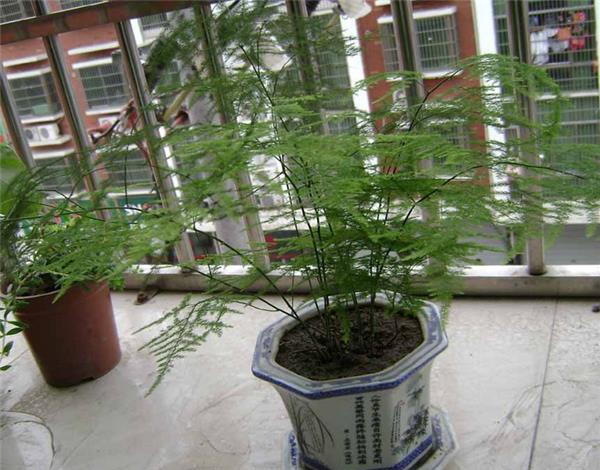
Notes on growing asparagus fern
1. Prevent overly strong sunlight; it is best placed in a semi-shaded spot. Although asparagus fern likes warmth, under strong light the leaf tips are prone to withering suddenly.
2. Prevent overwatering or underwatering. Although asparagus fern likes moisture, it dislikes excessive wetness. If the potting soil is too wet and drainage is poor, the roots will rot. If you water too little or do not water, then because asparagus fern transpires a lot and absorbs little, the leaves will scorch and the tips will drop.
3. Prevent pollution from harmful gases. Asparagus fern loves a clean environment with circulating air. If it is irritated by harmful gases such as smoke, dust, coal gas and pesticides, the leaves will turn yellow, curl up and even die.
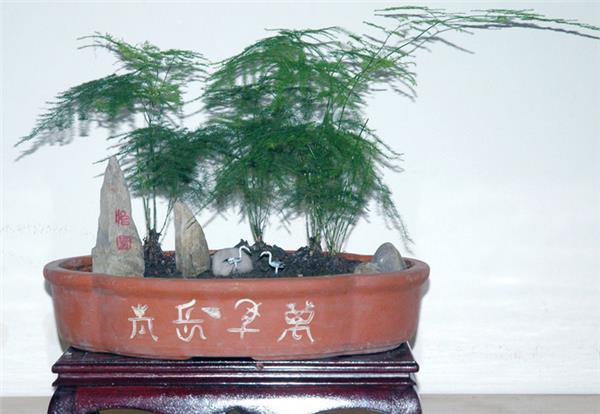
Pruning methods for asparagus fern
1. Pruning for missing cladodes
When the growth position of the small cladodes on the main branches of asparagus fern is not ideal or they are missing for some reason, you can shorten and prune the main branch at an appropriate position. When pruning, pay attention to the dormant buds on the nodes and do not prune them off, forcing the dormant buds there to sprout. Generally, the height at which you cut is the height at which the cladodes sprout, the position of the thorns on the branch is the position where the cladodes sprout, and the thicker the branch, the higher the sprouting rate of the dormant buds.
2. Renewal pruning of the whole plant
If the branches and leaves of the whole asparagus fern plant grow poorly due to strong sunlight scorching, dry potting soil, lack of fertilizer or some unknown reason, then renewal pruning of the whole plant can be carried out. During renewal pruning, all the cladodes of the asparagus fern can be cut off, but pay attention to the positions where the backward thorns on the branches grow, as they determine whether the distribution of the retained branches is even. In the growing season of asparagus fern, pruning generally makes it easy for new branches to sprout. After pruning, the amount of watering should also be appropriately reduced, and the potting soil must absolutely not be too wet, otherwise the pruning will fail.
3. Pruning of trailing branches
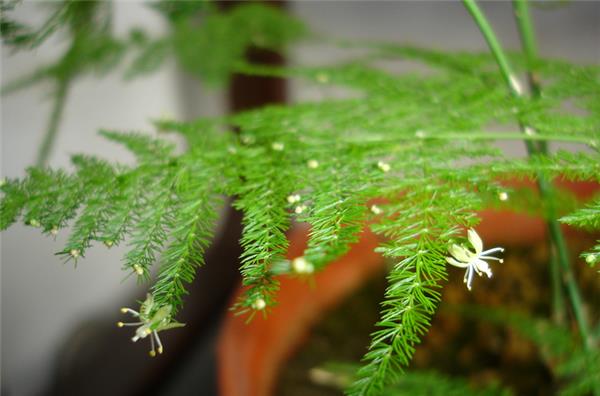
Trailing branches are generally weak and slender. If you do not want to keep seeds and want the asparagus fern plant shape to look good, you can cut them off from the base all at once. If you want to increase the number of cladodes or fill a certain gap, you can shorten them at a certain position. When pruning, pay special attention to comprehensive management such as small fertilizer applications. Asparagus fern is best when the plant shape and cladodes are dense and well-spaced, with a pleasing mix of heights. However, after 3 to 4 years of cultivation, it sends out tall trailing branches, blooms and sets fruit, and is no longer suitable for indoor viewing, so it must be pruned.
That is all for today's introduction to the related knowledge about how asparagus fern gets through winter. I hope the above content can help everyone!