What flowers are suitable for growing indoors? A variety selection guide
What flowers are suitable for growing indoors? Friends who are interested, take a look at the introduction below!
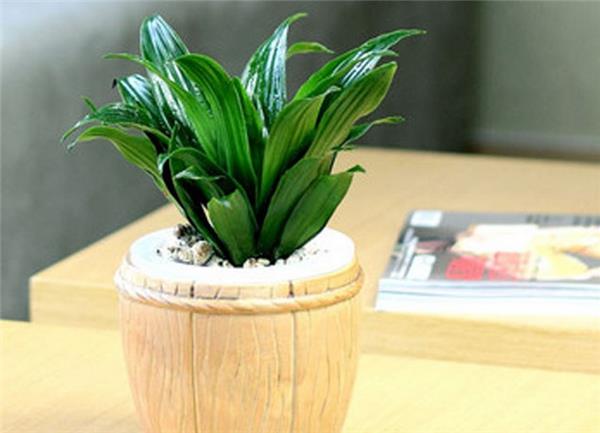
What flowers are suitable for growing indoors
1. Silver Queen, also known as: Silver Queen Chinese Evergreen, Silver Queen Aglaonema, Silver Queen Aglaonema commutatum.
Family and genus: Araceae, Aglaonema.
Morphological characteristics: A perennial herbaceous plant. The plant height is 30-40 cm, the stem is upright and unbranched, with distinct internodes. The leaves are alternate, with long petioles that enlarge at the base into a sheath-like form; the leaves are narrow and long, light green, with grayish-green stripes on the surface, and rather large in area.
2. Brazilian Iron, also known as: Brazilian Millennium Tree, Golden-Edged Dracaena, Brazilian Wood.
Family and genus: Liliaceae, Dracaena.
Morphological characteristics. An evergreen tree of the Liliaceae family, potted height 50 cm-150 cm, with branches; leaves clustered at the top of the stem, 40 cm-90 cm long, 6 cm-10 cm wide, curved in an arch shape, bright green and glossy; flowers small and inconspicuous, fragrant.
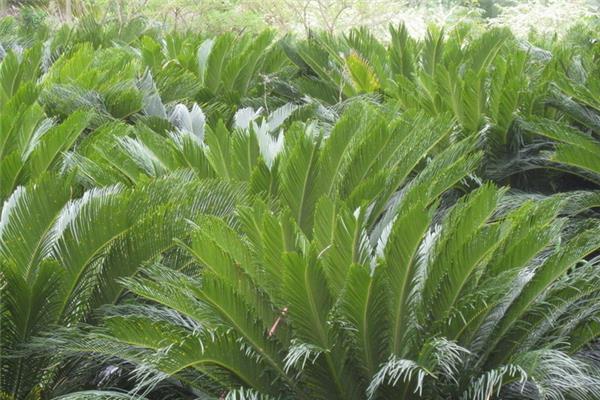
3. Sago Cycad, also known as: Iron Tree, Phoenix-Tail Banana, Phoenix-Tail Pine, Fire-Escaping Banana.
Family and genus: Cycadaceae, Cycas.
Morphological characteristics: An evergreen palm-like woody plant; the stem is cylindrical and unbranched; the stem is densely covered with persistent leaf bases and leaf scars, and appears scale-like; the leaves are spirally arranged and grow from the top of the stem. There are 2 types of leaves, foliage leaves and scale leaves; the foliage leaves are pinnate, large, and the scale leaves are short and small; the leaflets are linear, rolled inward when young, later spreading upward at an angle, slightly forming a "V" shape, with the margins noticeably recurved downward, thickly leathery, hard, and glossy.
4. Black Beauty, also known as: Spring Grass, Spreading Justicia.
Family and genus: Acanthaceae.
Morphological characteristics: A perennial herb, the plant is low-growing, only 5-10 cm tall. The leaves are opposite, heart-shaped or broadly ovate, slightly wrinkled and curled, closely resembling Black people's hair, hence the name; mature plants grow in clumps, with dense branches and leaves that do not easily become messy.
5. Parlor Palm, also known as: Dwarf Coconut, Miniature Palm, Dwarf Palm.
Family and genus: Arecaceae, Chamaedorea.
Morphological characteristics: When potted, the Parlor Palm does not exceed 1 m in height; its stem is slender, upright, unbranched, dark green, with irregular ring patterns on it. The leaves grow from the top of the stem, are pinnately compound, fully divided, with broadly lanceolate segments; the pinnate leaflets number 20-40, sickle-shaped, dark green, and glossy.
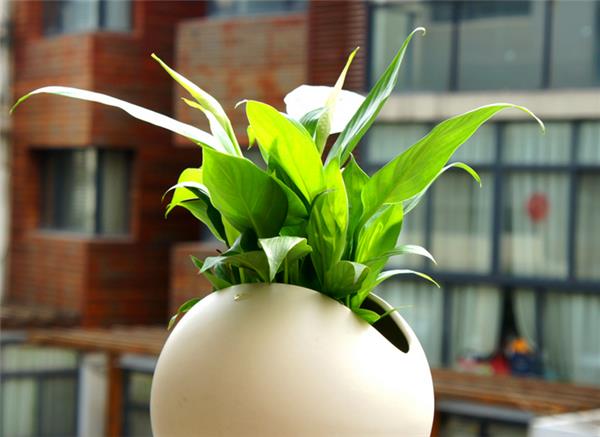
6. Peace Lily, also known as: White Crane Taro, Spathe Leaf Taro, Peace Taro.
Family and genus: Araceae, Spathiphyllum.
Morphological characteristics: A perennial evergreen herbaceous foliage plant. 40-60 cm tall, with short rhizomes, mostly growing in clumps. The leaves are oblong or nearly lanceolate, tapering at both ends, with a wedge-shaped base. The flower is a spathe, slightly fragrant, leaf-like, closely resembling a palm, hence the name Peace Lily.
7. Pothos, also known as: Devil's Ivy, Betel Leaf, Bamboo Leaf Grass.
Family and genus: Araceae, Epipremnum.
Morphological characteristics: Pothos vines grow several meters long, and in tropical regions often climb and grow on rocks and tree trunks in rainforests; there are aerial roots at the nodes, and as the plant ages, the stem thickens and the leaves also grow larger and larger, and it can become a huge vine; a few leaves may also carry slight yellow or white mottling.
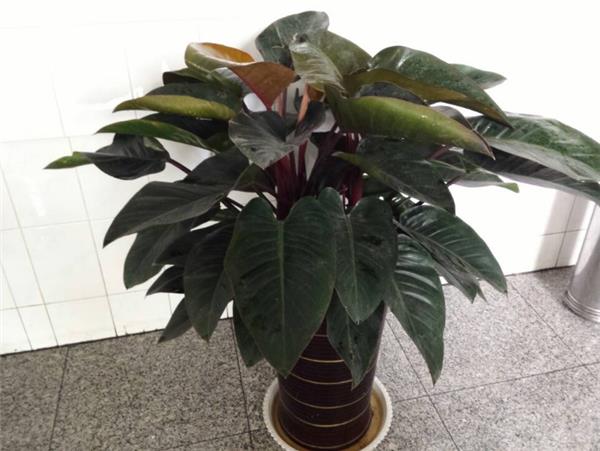
8. Green Emerald, also known as: Long Heart-Leaf Philodendron, Green Emerald Philodendron.
Family and genus: Araceae, Philodendron.
Morphological characteristics: Green Emerald Philodendron is a trailing species, with a thick stem and aerial roots at the nodes; the leaves are long heart-shaped, 25-35 cm long and 12-18 cm wide, with no terminal abrupt point, deeply heart-shaped at the base, green, entire, and glossy. The young shoots and leaf sheaths are both green.
9. Green Emperor, also known as: Green Emperor Philodendron, Emperor.
Family and genus: Araceae, Philodendron.
Morphological characteristics: The stem of Green Emperor has short internodes, with a spacing of about 1-2 cm; adventitious aerial roots often grow at the internodes; the stem can reach 2-4 cm thick, is light brown, and has poor uprightness; the leaves are large, clustered in a rosette shape, gradually changing from yellow-green to green or dark green, and glossy.
10. Lucky Bamboo, also known as: Longevity Bamboo, Spicate Longevity Bamboo, Fortune Bamboo, Fortune Tower, Bamboo Tower, Tower Bamboo.
Family and genus: Agavaceae, Dracaena.
Morphological characteristics: An evergreen subshrub-like plant; the plant height is over 1 m, the plant is slender, and the upper part of the upright stem has branches; the rhizome is horizontal, nodular; the leaves are alternate or nearly opposite, papery, the leaves are long lanceolate, with obvious 3-7 main veins, short petioles, and deep green; the umbel inflorescence has 3-10 flowers borne in the leaf axils or opposite the upper leaves, the corolla is bell-shaped and purple; the berry is black.
11. Snake Plant, also known as: Tiger Skin Plant, Brocade Orchid, Golden-Edged Snake Plant, Silver-Veined Snake Plant.
Family and genus: Agavaceae, Sansevieria.
Morphological characteristics: The underground stem is branchless, the leaves are clustered, the lower part is tubular, the middle and upper parts are flat, the sword-shaped leaves are rigid and upright, the plant height is 50 cm to 70 cm, the leaf width is 3 cm to 5 cm, the leaf margin is entire, and the surface is interspersed with milky white, pale yellow, and dark green in horizontal banded markings.
12. Sun God, also known as: Dense-Leaf Cordyline, Green Dense Dracaena, Apollo Millennium Tree, Dense-Leaf Dracaena.
Family and genus: Agavaceae, Dracaena.
Morphological characteristics: An evergreen small tree, a dwarf species. The stem is upright, unbranched, and the leaves are densely whorled; the leaves are long elliptical lanceolate, 10-15 cm long, 2-4 cm wide, and deep green.
Morphological characteristics: An evergreen small tree, a dwarf species. The stem is upright, unbranched, and the leaves are densely whorled; the leaves are long elliptical lanceolate, 10-15 cm long, 2-4 cm wide, and deep green.