The Benefits of Figs and a Detailed Guide to Eating Them
The Benefits of Figs
Many people have heard of figs. The fig is not only a very tasty food, but also a medicinal herb that can be used in medicine. If you were asked what the benefits and effects of figs are, probably not many people could give a complete answer. Below, let us learn together about what benefits and effects figs have.
The fig, also known as Tianshengzi, Wenxianguo, Miguo, Naijiangguo and so on, is a plant of the mulberry family. The fig is both a fresh fruit and a traditional Chinese medicinal herb. The Compendium of Materia Medica records: "The fig tastes sweet and neutral, is non-toxic, mainly opens the appetite, stops diarrhea and dysentery, treats five types of hemorrhoids, and soothes sore throat." The fig tastes as sweet as a persimmon but has no pit, and is rich and comprehensive in nutrition. Every 100 grams of figs contains 81.3 grams of water, 1.5 grams of protein, 0.1 grams of fat, 3 grams of crude fiber, 13 grams of carbohydrates, 1.1 grams of ash, 30 micrograms of carotene, 0.03 milligrams of thiamine, 0.02 milligrams of riboflavin, 0.1 milligrams of nicotinic acid, 2 milligrams of ascorbic acid, 1.82 milligrams of vitamin E compounds, 212 milligrams of potassium, 5.5 milligrams of sodium, 67 milligrams of calcium, 17 milligrams of magnesium, 0.1 milligrams of iron, 0.17 milligrams of manganese, 1.42 milligrams of zinc, 0.01 milligrams of copper, 18 milligrams of phosphorus, and 0.67 micrograms of selenium. In addition, it also contains citric acid, fumaric acid, succinic acid, malic acid, propionic acid, oxalic acid, quinic acid, lipase, protease, and various amino acids essential to the human body, among others. The fig is a natural health-promoting delicacy.
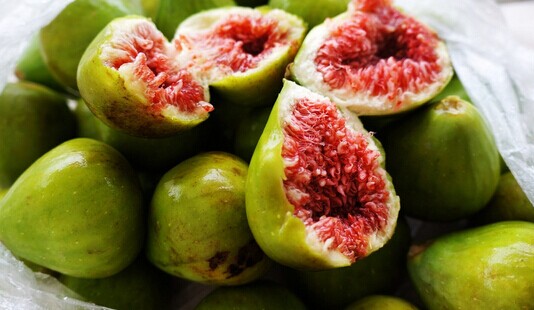
Fig, nature and flavor: sweet; cool in nature. Meridian entry: lung; stomach; large intestine meridians. Functions and indications: clears heat and promotes fluid production; strengthens the spleen and opens the appetite; resolves toxins and reduces swelling. Mainly treats sore and swollen throat; dry cough with hoarse voice; scanty milk; intestinal heat with constipation; poor appetite; indigestion, diarrhea and dysentery; carbuncles and swellings; tinea.
1. Strengthens the spleen and aids digestion, moistens the intestines and relieves constipation.Figs contain malic acid, citric acid, lipase, protease, hydrolase and so on, which can help the human body digest food and promote appetite, and because they contain various lipids, they have the effect of moistening the intestines and relieving constipation.
2. Lowers blood lipids and blood pressure.
The lipase, hydrolase and so on contained in figs have the function of lowering blood lipids and breaking down blood lipids, so they can lower blood lipids, reduce fat deposition in blood vessels, and thereby play a role in lowering blood pressure and preventing coronary heart disease.
3. Soothes the throat and reduces swelling.
Figs contain substances such as citric acid, fumaric acid, succinic acid, malic acid, propionic acid, oxalic acid and quinic acid, which have anti-inflammatory and swelling-reducing effects, and can soothe the throat and reduce swelling.
4. Supplements nutrition.
Figs contain large amounts of carbohydrates, lipids, protein, cellulose, vitamins, inorganic salts and amino acids essential to the human body, among others, and can effectively supplement the body's nutritional components and enhance the body's disease resistance.
5. Prevents and fights cancer.
The latex of unripe fruits contains active ingredients such as psoralen and bergapten, and a fragrant substance called "benzaldehyde" can be extracted from the juice of ripe fruits. Both have anti-cancer and cancer-preventing effects, can prevent the occurrence of liver cancer, lung cancer and stomach cancer, delay the development of transplanted adenocarcinoma and lymphosarcoma, and promote their regression.

Pregnant women can eat figs. Figs are not irritating to the body. They can be eaten with confidence. But then again, eating too much of this kind of thing is useless; it is best to eat more things that supplement calcium, such as calcium tablets, and soup stewed with pork bones, and eat more of what is nutritious.
Figs contain various amino acids essential to the human body, organic acids, pectin, trace elements such as magnesium, manganese, copper, zinc, calcium and boron, and vitamins, among other nutritional components. Figs can promote digestion, moisten the intestines and relieve constipation, and also have various effects such as lowering blood lipids and blood pressure. For pregnant women, they are an excellent food for supplementing calcium and preventing constipation.
The fruit of the fig is delicious whether fresh or dried. It is rich in various amino acids, organic acids, magnesium, manganese, copper, zinc, boron and vitamins, among other nutritional components. It is not only a fruit with high nutritional value, but also a good medicine. It is sweet in nature and sour in flavor, neutral, and has the effects of clearing heat and resolving toxins, stopping diarrhea and promoting lactation, with especially notable effects on hemorrhoids with bloody stool, diarrhea due to spleen deficiency, sore throat, and dry and scant milk.
Pregnant women are most prone to hemorrhoids. To prevent hemorrhoids, one must keep the bowels moving smoothly, pay attention to drinking water, and develop the habit of defecating at regular times. At the same time, pregnant women should often eat an appropriate amount of figs. This is because figs not only have rich nutritional components, but can also treat hemorrhoids and promote lactation.

1. Figs contain rich nutritional components and are eaten as food. During constipation, they can be used as a food-based mild laxative. The latex sap of the tree contains a component that inhibits transplanted sarcoma in rats (when injected).
2. The substance obtained from the water extract of dried figs after treatment with activated carbon and acetone has an effect against Ehrlich sarcoma.
3. The latex obtained from unripe fruits can inhibit transplanted sarcoma in rats and spontaneous mammary cancer in mice, causing tumor necrosis; it can also delay the development of transplanted adenocarcinoma, myeloid leukemia and lymphosarcoma, and cause them to regress.
The fig belongs to the mulberry family. Its fruit is rich in glucose, fructose, sucrose, citric acid, and a small amount of malic acid, succinic acid and so on. Its dried fruit, unripe fruit and the plant's latex all contain anti-tumor components, and the latex also contains amylase, esterase, lipase, protease and so on. The results of modern research show that figs have a certain laxative effect, and during constipation they can be used as a food-based mild laxative; the water extract of dried figs has an anti-tumor effect after treatment; animal tests show that figs also have a certain blood pressure-lowering effect.
When the fruit is ripe, pick the fresh fruit, dry it in the sun, grind it into a fine powder, and use it to blow into the throat; it can treat sore throat.
Use 5-7 figs, decoct in water, and take both the liquid and the fruit together; it can treat chronic diarrhea that does not stop.
Eat fresh figs raw, or use 10 dried figs, add a section of pig large intestine, decoct in water and hold the liquid in the mouth; it can treat hemorrhoids, rectal prolapse, and constipation with difficult bowel movements.
Use an appropriate amount of fresh or dried figs, add rock sugar, stew in water and take; it can be used to treat dry throat and hoarseness caused by lung heat.
Mash fresh figs and extract about half a cup of juice, mix with boiled water and take it, once a day, for several consecutive days; it can relieve the symptoms of asthma attacks.
Dry figs over a fire, cut them into small pieces, stir-fry until scorched yellow, add an appropriate amount of white sugar, brew with boiled water, and drink as tea; it can be used for gastrointestinal diseases, indigestion, poor appetite and so on.
Take unripe fig fruits, peel them, mince them and extract the juice, and apply it topically; it can be used for warts, twice a day, effective within a few days.
Besides the fruit of the fig, the leaves and roots of the fig can also be used medicinally. Decoct fig leaves into a soup and frequently fumigate and wash with it; it can treat the pain of hemorrhoids.
Decoct fig leaves in water for local fumigation and washing; it can treat sores, ulcers and swollen toxins.
Stew fig roots (the fruit also works) with lean pork, or boil them together with eggs, and eat the meat or eggs; it can treat rheumatism with aching, numb bones and muscles.
Remove the rough bark from fig roots, crush them, and brew them in boiled water to take; it can treat dry and itchy throat.
Use 50 grams of fig roots, decoct in water and take; it can treat cervical lymph node nodules.
Fig Recipes:
1. Stewed Pig Trotters with Figs200 grams of figs, 100 grams of daylily, 2 pig trotters. First cut the pig trotters into small pieces, add ginger, pepper, garlic and an appropriate amount of clear water, and stew together with the figs until thoroughly cooked, then add the daylily and cook for 30 minutes, add salt, monosodium glutamate and chopped scallions to season, and eat. This recipe has the effect of clearing heat and resolving toxins, and promoting menstruation and lactation. It is suitable for cases of stagnant liver qi, deficient fire rushing upward, insufficient milk, poor appetite, deficiency of qi and blood, and neurasthenia.
2. Candied FigsWash 500 grams of figs, put them in a pot, press each fruit flat with a spoon, add white [sugar] and pickle for 1 day. After the fruits are thoroughly soaked in the syrup, simmer over low heat until the liquid is slightly dry, stop the heat and let cool, then mix in 250 grams of white sugar, put on a plate and air-dry for several days, and they are ready to eat. This fruit has the effect of aiding digestion and opening the appetite, and clearing and soothing the throat. It mainly treats weakness of the spleen and stomach, poor appetite, qi stagnation and chest tightness, sore and swollen throat, hoarseness, and difficulty coughing up phlegm.
When the fruit is ripe, pick the fresh fruit, dry it in the sun, grind it into a fine powder, and use it to blow into the throat; it can treat sore throat.
Use 5-7 figs, decoct in water, and take both the liquid and the fruit together; it can treat chronic diarrhea that does not stop.
Eat fresh figs raw, or use 10 dried figs, add a section of pig large intestine, decoct in water and hold the liquid in the mouth; it can treat hemorrhoids, rectal prolapse, and constipation with difficult bowel movements.
Use an appropriate amount of fresh or dried figs, add rock sugar, stew in water and take; it can be used to treat dry throat and hoarseness caused by lung heat.
Mash fresh figs and extract about half a cup of juice, mix with boiled water and take it, once a day, for several consecutive days; it can relieve the symptoms of asthma attacks.
Dry figs over a fire, cut them into small pieces, stir-fry until scorched yellow, add an appropriate amount of white sugar, brew with boiled water, and drink as tea; it can be used for gastrointestinal diseases, indigestion, poor appetite and so on.
Take unripe fig fruits, peel them, mince them and extract the juice, and apply it topically; it can be used for warts, twice a day, effective within a few days.
Besides the fruit of the fig, the leaves and roots of the fig can also be used medicinally. Decoct fig leaves into a soup and frequently fumigate and wash with it; it can treat the pain of hemorrhoids.
Decoct fig leaves in water for local fumigation and washing; it can treat sores, ulcers and swollen toxins.
Stew fig roots (the fruit also works) with lean pork, or boil them together with eggs, and eat the meat or eggs; it can treat rheumatism with aching, numb bones and muscles.
Remove the rough bark from fig roots, crush them, and brew them in boiled water to take; it can treat dry and itchy throat.
Use 50 grams of fig roots, decoct in water and take; it can treat cervical lymph node nodules.
Fig Recipes:
1. Stewed Pig Trotters with Figs200 grams of figs, 100 grams of daylily, 2 pig trotters. First cut the pig trotters into small pieces, add ginger, pepper, garlic and an appropriate amount of clear water, and stew together with the figs until thoroughly cooked, then add the daylily and cook for 30 minutes, add salt, monosodium glutamate and chopped scallions to season, and eat. This recipe has the effect of clearing heat and resolving toxins, and promoting menstruation and lactation. It is suitable for cases of stagnant liver qi, deficient fire rushing upward, insufficient milk, poor appetite, deficiency of qi and blood, and neurasthenia.
2. Candied FigsWash 500 grams of figs, put them in a pot, press each fruit flat with a spoon, add white [sugar] and pickle for 1 day. After the fruits are thoroughly soaked in the syrup, simmer over low heat until the liquid is slightly dry, stop the heat and let cool, then mix in 250 grams of white sugar, put on a plate and air-dry for several days, and they are ready to eat. This fruit has the effect of aiding digestion and opening the appetite, and clearing and soothing the throat. It mainly treats weakness of the spleen and stomach, poor appetite, qi stagnation and chest tightness, sore and swollen throat, hoarseness, and difficulty coughing up phlegm.