What are the benefits and effects of persimmon leaves?
The benefits and effects of persimmon leaves
Everyone knows that persimmons are very tasty and rich in nutritional value, but few people pay attention to the benefits and effects of persimmon leaves, which also have very high medicinal value.Persimmon leaves contain a large amount of tannic acid. Soaking in a bath with persimmon leaves has its benefits: as these substances seep into the water, they can effectively kill various bacteria and fungi, and they have the effect of cleansing and moisturizing the skin, making this the simplest beauty method that also carries a sense of the season.
Besides containing considerable protein, amino acids and various vitamins, persimmon leaves also contain choline, rutin and tannin, and have antibacterial, anti-inflammatory, blood-activating, blood pressure-lowering, lipid-lowering and anti-cancer effects. In particular, their vitamin C content can reach 1800mg/100g, far higher than that of common fruits and vegetables. They can fight scurvy, help prevent and treat bronchitis, and prevent and fight cancer.
At present, functional foods and medicines such as persimmon leaf tea for preventing and treating arteriosclerosis, high blood pressure and coronary heart disease have already been developed. If persimmon leaves are decocted and taken, or steeped in boiling water and drunk as tea, they also help promote body metabolism, lower blood pressure, increase coronary blood flow, and relieve cough and phlegm.
Persimmon leaves contain a fairly high amount of tannin, which affects the taste and requires seasoning to handle; when seasoned well, they can be made into tasty functional foods and become a good health food for humanity in preventing "diseases of civilization." After persimmon leaves are made into persimmon tea, they specifically have the following benefits.
2. They soften blood vessels and enhance blood vessel elasticity, and physiologically regulate blood pressure, with good effects on both high blood pressure and low blood pressure.
3. They lower blood lipids and prevent cerebral arteriosclerosis, coronary heart disease and the like.
4. They promote urination and bowel movements, reduce swelling and aid weight loss.
5. They relieve summer heat and quench thirst.
6. They calm the nerves, beautify the skin and fade age spots.
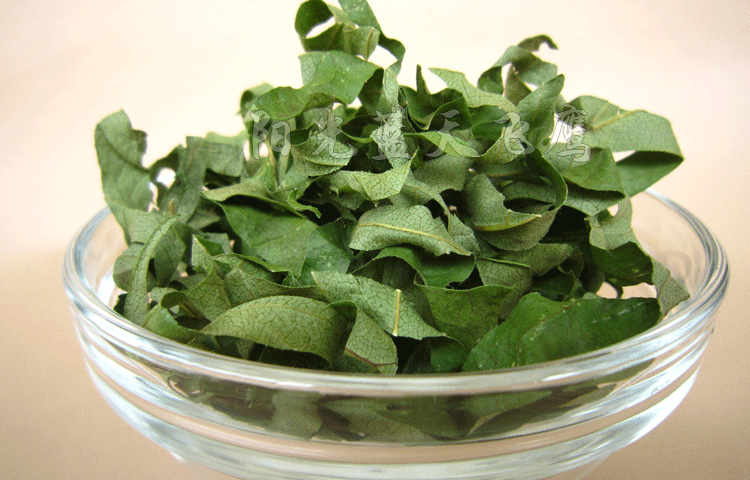
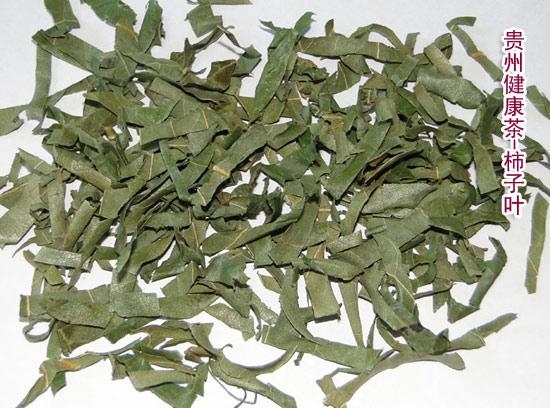
So how do you make persimmon tea?Thread the harvested persimmon leaves into bunches with string, plunge them into a pot of hot water at 85 degrees for 15 seconds, then immediately put them into a vat of cold water to chill. After taking them out, place them in a ventilated spot to air-dry. Once the persimmon leaves are thoroughly dry, crush them and put them into a sealed container, and they become persimmon leaf tea.
Note: persimmon leaf tea is weakly acidic, so please do not drink coffee or alkaline beverages such as black or green tea at the same time. The steeping time should be lengthened, about 5 minutes.
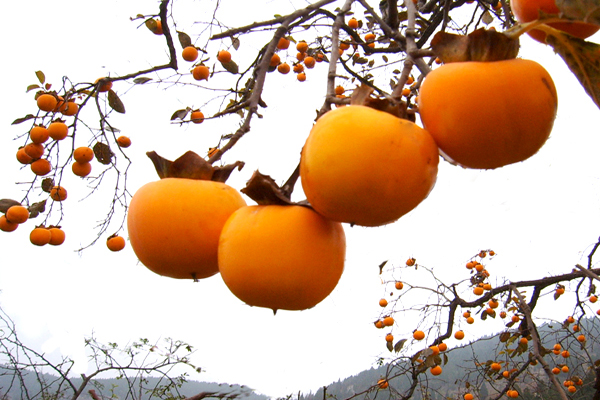
The specific benefits and effects of persimmon leaves
1. Besides containing considerable protein, amino acids and various vitamins, persimmon leaves also contain choline, rutin and tannin, and have antibacterial, anti-inflammatory, blood-activating, blood pressure-lowering, lipid-lowering and anti-cancer effects. In particular, their vitamin C content can reach 1800mg/100g, far higher than that of common fruits and vegetables.2. Persimmon leaves can fight scurvy, help prevent and treat bronchitis, and prevent and fight cancer. At present, functional foods and medicines such as persimmon leaf tea for preventing and treating arteriosclerosis, high blood pressure and coronary heart disease have already been developed.
3. If persimmon leaves are decocted and taken, or steeped in boiling water and drunk as tea, they also help promote body metabolism, lower blood pressure, increase coronary blood flow, and relieve cough and phlegm. Persimmon leaves contain a fairly high amount of tannin, which affects the taste and requires seasoning to handle; when seasoned well, they can be made into tasty functional foods and become a good health food for humanity in preventing "diseases of civilization."
4. The outstanding nutritional and health function of persimmon leaf tea lies in its natural Vc content, which is several times or even dozens of times higher than that of ordinary tea, and its content of rutin, choline, flavonoid glycosides and the 17 amino acids essential to the human body is also dozens of times higher than that of fruits, vegetables and ordinary beverages. Natural Vc promotes human metabolism and has a certain therapeutic effect on scurvy, cardiovascular disease and cancer. Rutin and choline soften blood vessels and prevent arteriosclerosis. Flavonoid glycosides can lower blood pressure and increase arterial blood flow, and have a clear inhibitory effect on Staphylococcus aureus.
5. Besides the benefits and effects of persimmon leaves and their medicinal value, persimmon leaves are a treasure in the eyes of traditional Chinese medicine, and they are needed to treat many diseases; the tea made from persimmon leaves also has certain health benefits.
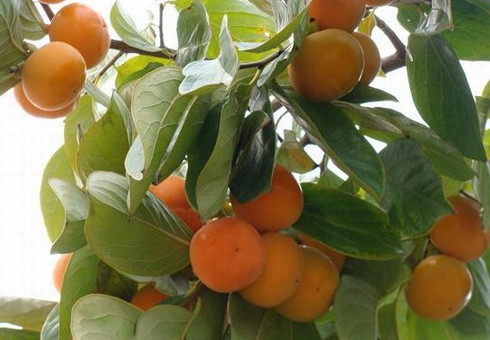
Both persimmons and persimmon leaves have very high nutritional value, and their benefits and effects are also very powerful. However, note that you should not eat persimmons on an empty stomach, because persimmons contain a fair amount of tannic acid and pectin, and on an empty stomach these will form lumps of various sizes under the action of stomach acid. If these lumps cannot pass through the pylorus to reach the small intestine, they will remain in the stomach and form gastric persimmon stones. A small gastric persimmon stone initially looks like an apricot pit, but it will grow larger and larger. If a gastric persimmon stone cannot be expelled naturally, it will cause gastrointestinal obstruction, with symptoms such as severe upper abdominal pain, vomiting and even vomiting blood; a gastric persimmon stone as big as a fist has been found during surgery. So what exactly should you pay attention to when eating persimmons?
Precautions for eating persimmons
1. Persimmons are rich in sugar, pectin and vitamins, have a good heat-clearing and bowel-moistening effect, and are a natural health food for patients with chronic bronchitis, high blood pressure and arteriosclerosis. However, the large amount of tannic acid in persimmons affects the body's absorption of iron, so they should not be eaten in large quantities2. Because persimmons contain a fair amount of tannic acid and pectin, on an empty stomach these will form lumps of various sizes under the action of stomach acid. If these lumps cannot pass through the pylorus to reach the small intestine, they will remain in the stomach and form gastric persimmon stones. A small gastric persimmon stone initially looks like an apricot pit, but it will grow larger and larger. If a gastric persimmon stone cannot be expelled naturally, it will cause gastrointestinal obstruction, with symptoms such as severe upper abdominal pain, vomiting and even vomiting blood; a gastric persimmon stone as big as a fist has been found during surgery. If the stomach "has something in it," the formation of gastric persimmon stones can be avoided. So try to eat them about 1 hour after a meal to avoid the formation of gastric persimmon stones.
4. In addition, persimmons are cold in nature, so people with a cold stomach should not eat them.
Precautions for eating persimmons
1. Persimmons are rich in sugar, pectin and vitamins, have a good heat-clearing and bowel-moistening effect, and are a natural health food for patients with chronic bronchitis, high blood pressure and arteriosclerosis. However, the large amount of tannic acid in persimmons affects the body's absorption of iron, so they should not be eaten in large quantities2. Because persimmons contain a fair amount of tannic acid and pectin, on an empty stomach these will form lumps of various sizes under the action of stomach acid. If these lumps cannot pass through the pylorus to reach the small intestine, they will remain in the stomach and form gastric persimmon stones. A small gastric persimmon stone initially looks like an apricot pit, but it will grow larger and larger. If a gastric persimmon stone cannot be expelled naturally, it will cause gastrointestinal obstruction, with symptoms such as severe upper abdominal pain, vomiting and even vomiting blood; a gastric persimmon stone as big as a fist has been found during surgery. If the stomach "has something in it," the formation of gastric persimmon stones can be avoided. So try to eat them about 1 hour after a meal to avoid the formation of gastric persimmon stones.
4. In addition, persimmons are cold in nature, so people with a cold stomach should not eat them.