A Detailed Guide to Making and Caring for Pine and Cypress Bonsai
Pine and cypress bonsai are something many friends are familiar with, because these bonsai are rugged and aged, simple and weathered, looking like a veteran soldier who has endured countless hardships and the baptism of wind and frost, so they have been highly praised since ancient times. Nowadays, people's love for pine and cypress bonsai is still very strong, so they are very interested in making and caring for pine and cypress bonsai. So let's take a look below at the tutorial for making pine and cypress bonsai and the care methods.
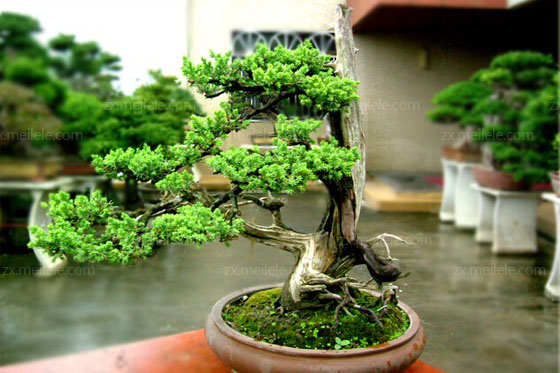
▋Tutorial for Making Pine and Cypress Bonsai
1. Material Selection and Potting
Nature is a very generous and kind mother, so in it we can see all kinds of pines and cypresses, but everyone also knows that not all pines and cypresses can be used to make bonsai, so when making pine and cypress bonsai there is a task of material selection. This task requires some experience and common sense. Generally, pines and cypresses with elegant, free postures and aged, wild charm are very good bonsai materials. After choosing the pine or cypress, you can prepare to pot it. The shape of the pot is usually determined according to the tree shape of the plant, and can be straight-trunk style, double-trunk style, or slanting-trunk style, etc. Curved-trunk style and cliff style pot shapes are also acceptable.
2. Pruning and Shaping
After the pine or cypress is potted, it does not mean the pine and cypress bonsai is finished. The shape of a bonsai is very important, so during this period there is also a very important task, which is pruning and shaping. In fact, the pine or cypress we initially choose generally already has a basic shape, so in the process of pruning and shaping, basically some modifications and pruning are made according to this basic shape, such as cutting off excess water sprouts, crossing branches, and parallel branches on the pine or cypress, and then appropriately wiring and tying the branches, so as to enhance the aged appearance of the pine or cypress trunk. In this way, the pine or cypress looks more weathered and wild, and its ornamental value is naturally higher.
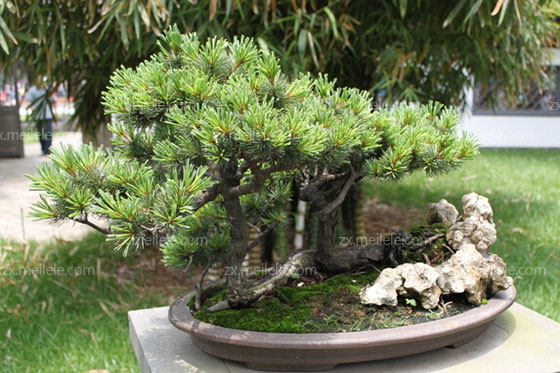
▋Care Methods for Pine and Cypress Bonsai
1. Watering and Fertilizing
In fact, different pines and cypresses have more or less slight differences in growth habits, so there are still some differences when caring for them. But overall, there are still some common points in watering and fertilizing. In terms of watering, pines and cypresses do not have a great demand, and it is better for the bonsai soil to be a bit dry. Too much water in the soil is instead not good, but too little water will also affect plant growth, so watering should be appropriate, watering when dry and stopping when wet, with slightly dry being best. In terms of fertilizing, the fertilizer requirement of pines and cypresses is not high. During the plant's growth period, some thin fertilizer water can be applied, and in autumn, applying some fermented cake crumbs is enough. Fertilizer should not be applied in excess.
2. Pruning, Pest and Disease Control
The reason plant bonsai are so loved is that their unique plant shapes have a distinctive style, so generally if the plant shape is damaged, the value of the bonsai will be greatly reduced. Therefore, when the pine or cypress grows excessively or other problems appear that damage the tree shape, pruning work must be carried out immediately, cutting off excess dead branches, damaged branches, water sprouts, and yellowed leaves, etc. And plants all have one problem, which is pests and diseases. In order to better maintain the beauty of the bonsai, pest and disease control for the plant must also be done well. Pines and cypresses do not have particularly many pests and diseases, and diseases can be prevented by spraying some Bordeaux mixture.
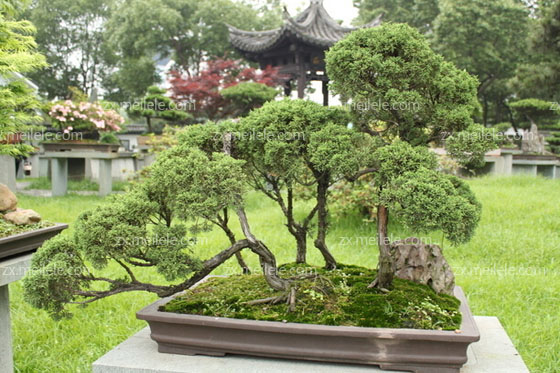
Conclusion: Pine and cypress bonsai have a simple, ancient shape and free, weathered postures, looking very unique, so their ornamental value and decorative value are both very high. Placing such a plant in a pot indoors not only adds vitality to the room, but also has a very good decorative effect.
[You May Be Interested In]
☑ How to Grow and Care for Pothos and Precautions ☑ What to Do When Lucky Bamboo Leaves Turn Yellow ☑ Wall Cloth ☑ Wallpaper ☑ Suzhou Embroidery
☑ How to Grow and Care for Anthurium and Precautions ☑ Effects and Uses of Lysimachia christinae ☑ Embroidery ☑ Sago Palm ☑ Peperomia