A Detailed Guide to Growing the Succulent Living Stones (Lithops)
If it were not for growing and flowering during the rainy season, living stones would be very hard to spot among the gravel of their native habitat. This is a self-protective instinct they developed to avoid being preyed upon by small animals, known as "mimicry." The most astonishing natural adaptation of living stones is the color of their leaves. Unlike almost all higher plants, the leaves are not green; instead they come in various shades of cream, gray and brown, along with darker window areas. The dots and red lines on the leaves of living stones form patterns, and the surface texture blends the plant harmoniously into its surroundings, making it very hard for enemies to find.
[Recommended reading] How to grow pennywort in water, How to grow jasmine, How to grow aloe
Succulent living stones, growing living stones
——————————————————————————————————————————————
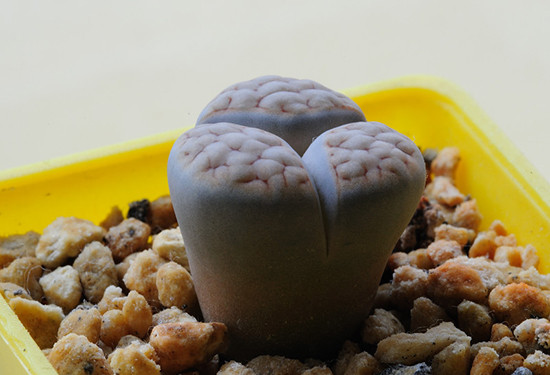
[Plant profile]
——————————————————————————————————————————————
Chinese name: Living stones (Lithops)
Scientific name: Lithops pseudotruncatella (Bgr.) N.E.Br
Other names: Stone jade, stone flower, stone grass, elephant hoof, ingot
Family: Aizoaceae
Genus: Lithops
Distribution: Mainly found in rock crevices or gravelly soil in the arid regions of South Africa and Namibia.
Morphological features: Living stones are short plants, formed mainly from two opposite fleshy leaves joined together. The top is flat with a fissure in the center, and flowers emerge from this fissure.
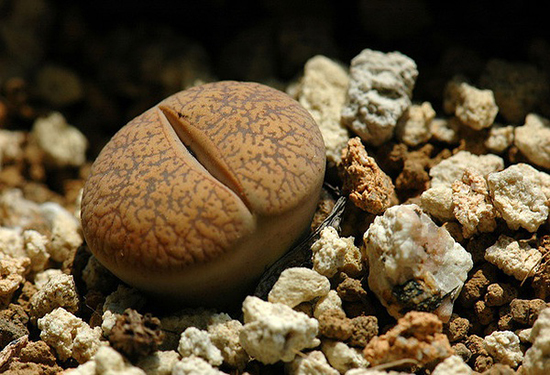
Characteristics of living stones
——————————————————————————————————————————————
Living stones are seasonal plants. Because the summer in their native habitat is quite dry, they usually go dormant in summer and grow as normal in winter. In the dry season the plant shrinks and buries itself in the gravelly, sandy soil, or only its top surface is exposed, with light entering the body only through the translucent top surface (the window). When the rainy season arrives, it quickly returns to its original shape and grows and flowers.
Common living stone varieties include: Fulai jade, pattern jade, sun-wheel jade, red-string jade, Mrs. Li, and others.
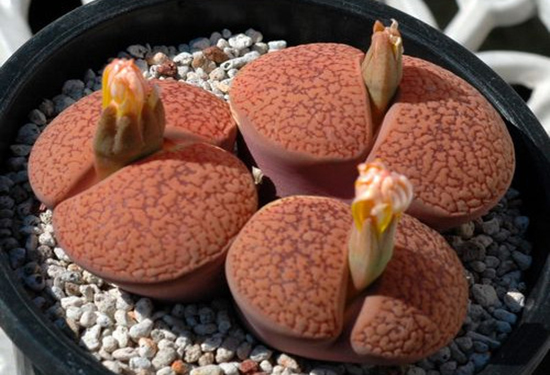
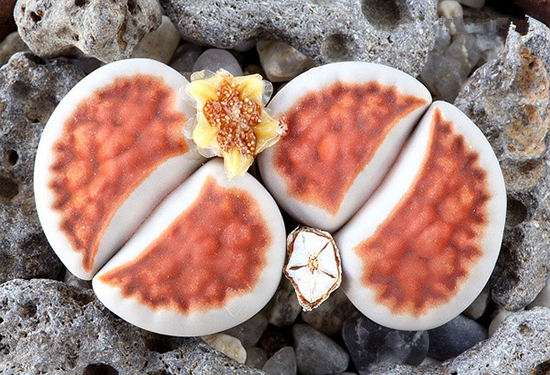
How to grow living stones
——————————————————————————————————————————————
In mild temperate climates, the usual approach is to let living stones dry out completely in winter, watering only once the old leaves have withered and been replaced by a new pair of leaves. When the plant is flowering, continue watering throughout autumn, then stop in winter.
In tropical climates, living stones are grown mainly in winter, because they have a long summer dormancy. Of all the seasons, living stones are most active in autumn and need the most water then, and each variety of living stone flowers at roughly the same time.
The best environment for living stones to thrive is a coarse, well-drained substrate. Any soil that retains too much moisture will cause the plant's skin to split, because they absorb too much water and become overly swollen. Living stones grown under strong light will strive to show intense colors to resist damage and rot. Too much heat will kill living stones, because they cannot lower their temperature through transpiration and can only rely on the part kept in the cooler soil below the surface to dissipate heat.
Living stones are propagated by seed or by cuttings. Cuttings can only be used when a single plant naturally forms multiple heads that later produce new plants, so most propagation is by seed. Living stones can easily be hand-pollinated, and if two separate species flower at the same time, the seeds mature in about 9 months. The seeds germinate easily, but the seedlings are small and fragile in their first year or two, and will not flower until at least two to three years old.
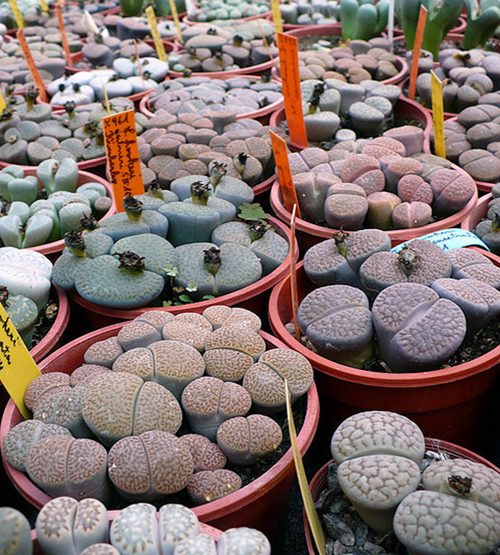
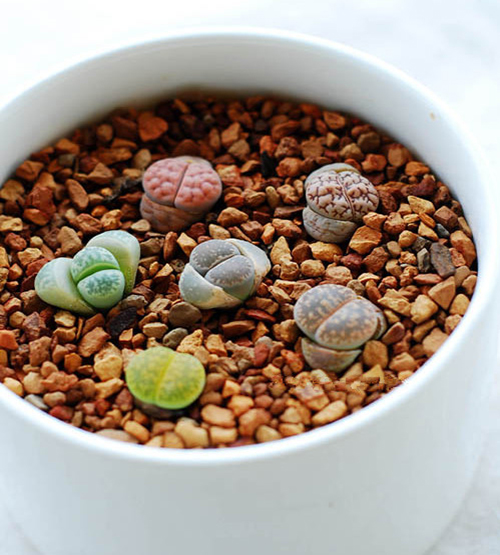
"Conclusion: The form of the living stone is like two flat-surfaced stones, and when it flowers, delicate blossoms grow from the crack in the stone, moving anyone who sees it! Apart from Sun Wukong, the living stone could also be called a life that "springs out of a crack in the stone"!
【
"Conclusion: The form of the living stone is like two flat-surfaced stones, and when it flowers, delicate blossoms grow from the crack in the stone, moving anyone who sees it! Apart from Sun Wukong, the living stone could also be called a life that "springs out of a crack in the stone"!
【