Kasama City Government Establishes Agricultural Public Corporation and Ceramic Art College, Actively Revitalizing Industry
General News0 views
Rural and Regional Revitalization 15"The Advancing Kasama City Government: Establishing an Agricultural Public Corporation and a Ceramic Art College, Actively Revitalizing Industry
Share
+1
Tweet
Email
Text by Lin Kuan-hung (Assistant Researcher, Rural Development Foundation), Chen Fen-yu (Researcher and Team Leader, Rural Development Foundation)
(Continued from previous article) Ibaraki Prefecture in Japan is one of Japan's leading agricultural prefectures, and Kasama City's area is similar to that of Zhushan Township in Nantou, while its population is not far from the population scale of Hukou Township in Hsinchu and Luodong Township in Yilan. In addition to agriculture and the famous Kasama ware, its main economic output depends on traditional manufacturing. As Japan's economy gradually declined after the 1990s, along with the impact of the 311 earthquake, the trend of population outflow became even more pronounced.
To revitalize the area, Kasama City implemented four strategies, respectively from the aspects of medical care, revitalizing street houses, agricultural revival, and promoting local ceramics, making Kasama a livable town with a sense of the future. (There are two articles in total; to read the previous article, please click here)
Strategy Three: Reviving Farmland and Regaining the Honor of "Japan's Number One" Chestnut Producing Area
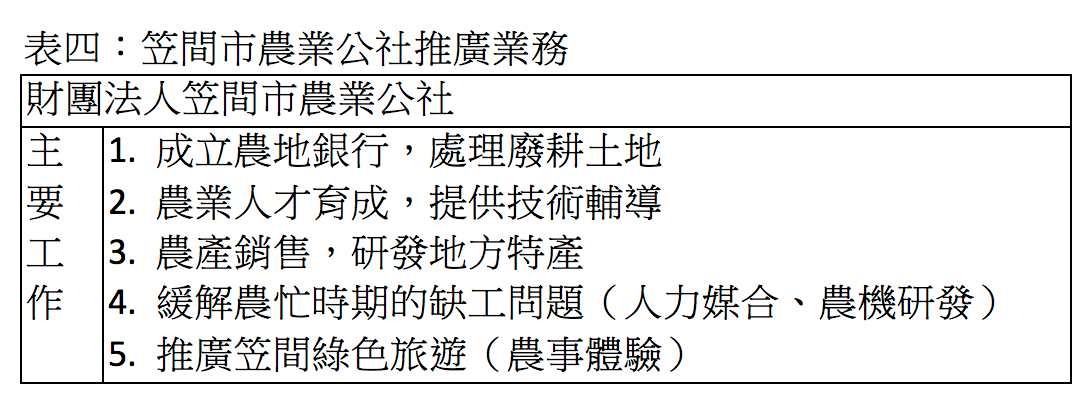
In Kasama City, in addition to the increasingly serious problem of abandoned residences and building lots, as the number of people leaving farming grows, the problem of idle land has also come to the surface. In addition to investing in subsidy programs for "urban area revitalization projects" and inviting private organizations to give new life to vacant houses, in 2014 the Kasama City Government funded the establishment of the "Kasama City Agricultural Public Corporation," attempting to alleviate the existing problem of idle farmland. It also hoped to play an intermediary role between farmers and consumers, bring in the thinking of sixth-order industrialization, and increase farmers' income.