What Is a Plant? A Detailed Explanation of the Definition and Basic Characteristics of Plants
What is a plant? When it comes to plants, I think there is no one who does not know them, but can you accurately state the definition of a plant, and exactly which organisms count as plants? Below we give a brief introduction.
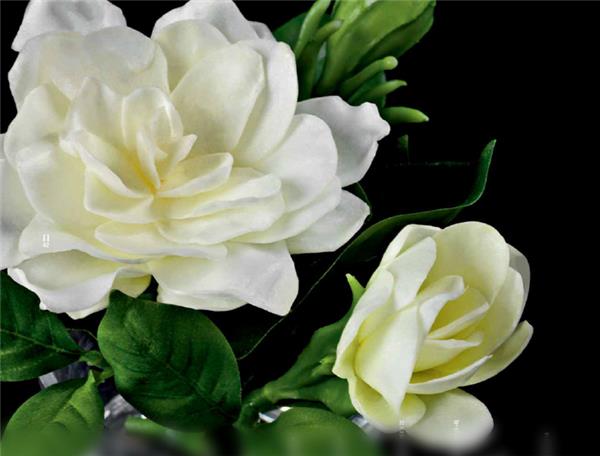
What Is a Plant
Plants are one of the main forms of life, including familiar organisms such as trees, shrubs, vines, grasses, ferns, and green algae and lichens. Among seed plants, bryophytes, ferns and fern allies, it is estimated that about 350,000 species exist today. As of 2004, 287,655 of these species had been identified, including 258,650 species of flowering plants and 15,000 species of bryophytes. Most of the energy of green plants is obtained from sunlight through photosynthesis, and temperature, humidity and light are the basic requirements for plant survival.
Plants have distinct cell walls and nuclei, and their cell walls are made of a glucose polymer - cellulose. Plants are characterized by their ability to carry out photosynthesis - that is, they can use light energy and chlorophyll, which animal cells do not possess, to produce food from water, minerals and carbon dioxide. After releasing oxygen, what remains is glucose - an energy-rich substance - which serves as a component of plant cells.
Aristotle divided living things into two kinds: plants (usually immobile) and animals (often moving). In Linnaeus's system, they were divided into the plant kingdom and the animal kingdom. Later, people gradually came to understand that the originally defined plant kingdom contained several unrelated groups, and fungi and several kinds of algae were moved to new kingdoms. However, there are still many views on plants, both professionally and in the eyes of the general public. And indeed, trying to place "plants" perfectly into a single classification poses problems, because for most people the connection between the word "plants" and the concepts of phylogenetics on which modern taxonomy and systematics are based is not very clear.
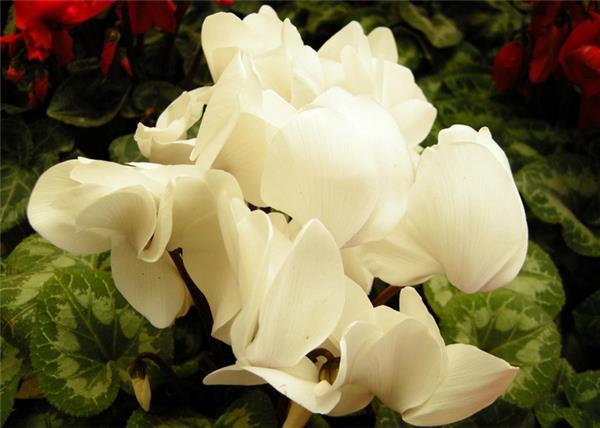
Finally, let us look at the feng shui knowledge of placing plants in the home.
Feng shui for placing plants in the home entryway:
The entryway gives visitors their first impression. In the entryway, designs such as large plants with lighting, stylish trees, and combinations of blooming orchids in pots are very suitable. Placing plants in the entryway greets and greens the indoor environment and increases vitality, making the auspicious even more auspicious and turning the inauspicious into the auspicious. However, it must be noted that plants placed in the entryway should mainly be foliage-loving evergreen plants. For example, sago palm, money tree, golden pothos and foliage figs, and so on. Prickly plants such as cacti, roses and azaleas must never be placed in the entryway, lest they damage the feng shui there, and entryway plants must be kept evergreen; if any turn yellow or wither, they should be replaced as soon as possible.
Feng shui for placing plants in the home living room:
The living room is the space in the home where indoor plants are most often placed. The most visually striking and most expensive plants should be placed in the living room. Living room plants are mainly used to decorate furniture, using plants at varying heights to harmonize the monotonous straight lines of the home. When arranging plants, one should first focus on decorative beauty, and the number should not be too large; too many is not only cluttered but also bad for their growth. When choosing plants, pay attention to matching sizes. In addition, they should be placed against the wall so as not to hinder the movement of residents.
When arranging the living room, avoid scattering messy green plants or ordinary ornamental flowers on the windowsill, fireplace, television and other such positions. Careful selection of plant types can change the look of the interior; for example, using hanging baskets and trailing plants can make an overly tall room appear lower; a lower room can use neatly shaped, upright plants to make the interior appear taller, and plants with small leaves and arched, spreading branches can make a narrow room appear more spacious.
A balanced proportion of plants is extremely important, and the use of contrast should not be ignored either. A richly decorated living room can be enhanced with plants that have large, simple leaves, while foliage plants with complex forms and varied colors can enrich a monotonous room and give the living room a feeling of spaciousness and ease.
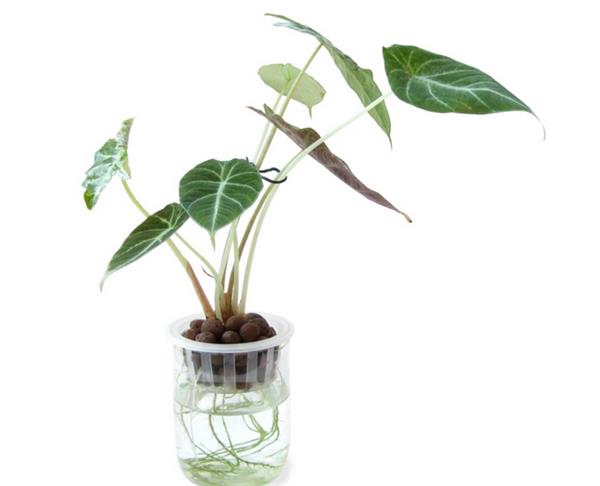
Feng shui for placing plants in the home bedroom:
The bedroom pursues an elegant, clean, quiet and comfortable atmosphere, and placing plants inside helps improve the quality of rest and sleep. Plants that give off a sweet fragrance, such as jasmine, hyacinth or night-blooming cestrum, can let people fall asleep soundly amid natural aromatic scents. Placing plants such as clivia, golden pothos and asparagus fern gives a soft feeling and can relax the nerves. It is recommended that the growing medium for bedroom plants can use sphagnum moss instead of soil to keep the room clean. In a spacious bedroom, standing large potted plants can be chosen; in a smaller bedroom, hanging potted plants can be chosen; or plants can be placed in exquisite decorative cachepots and set on the windowsill or dressing table.
Feng shui for placing plants in the home dining room:
The dining room is where the family gathers, and its location is close to the kitchen, so watering is easy. Arranging some potted plants with brilliant blooms, such as begonias and poinsettias, can add a cheerful atmosphere. Modern people pay great attention to the cleanliness of the dining area, so dining room plants are best grown in sterile potting soil.
In addition, when placing plants in the dining room, note also that: the plants should be in good growing condition and must be low in form, so as not to hinder the conversation of people sitting opposite each other. Suitable plants include: crocus, cyclamen, wax begonia, ivy and so on, but in the dining room, avoid placing plants with too strong a scent, such as hyacinth.
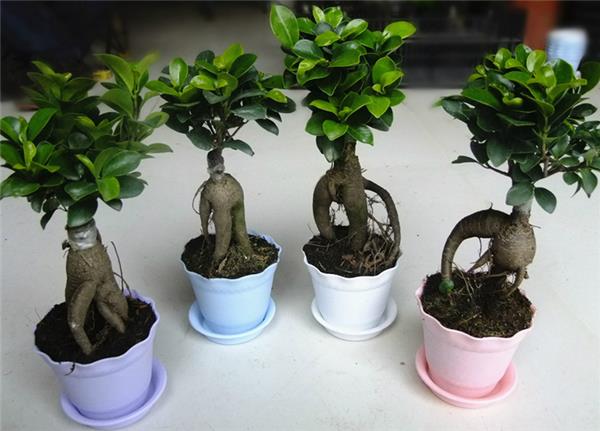
Feng shui for placing plants in the home kitchen:
The rate at which plants appear in the kitchen is second only to the living room, because some family members spend a lot of time in the kitchen every day, and the humidity there is also very suitable for most plants. In addition, ordinary family kitchens mostly use white or light-colored decor and stainless steel sinks, and colorful plants can soften the hard lines and inject a breath of vitality into the kitchen.
Feng shui for placing plants in the home bathroom:
Because the bathroom has high humidity and large temperature differences between hot and cold, growing moisture-tolerant ornamental green plants can absorb stale air, so ferns, weeping fig, golden pothos and the like are suitable. Of course, if the bathroom is both spacious and bright and has air conditioning, then more colorful plants such as foliage bromeliads, calathea and cymbidium can be grown, decorating the bathroom like a mini garden and bringing people delight.
Feng shui for placing plants on the home balcony:
Because the balcony is relatively open and receives ample sunlight, it is suitable for growing all kinds of brightly colored flowers and evergreen plants. You can also decorate the balcony with a combination of hanging baskets, flowering plants placed on the railing, and ornamental potted plants placed against the wall. Placing some flowers and plants on the balcony not only beautifies the environment but also has good feng shui effects. There are many plants suitable for growing on the balcony, and most can be divided into two major categories: those that promote prosperity and those that dissolve negative energy.
Feng shui for placing plants in the home dining room:
The dining room is where the family gathers, and its location is close to the kitchen, so watering is easy. Arranging some potted plants with brilliant blooms, such as begonias and poinsettias, can add a cheerful atmosphere. Modern people pay great attention to the cleanliness of the dining area, so dining room plants are best grown in sterile potting soil.
In addition, when placing plants in the dining room, note also that: the plants should be in good growing condition and must be low in form, so as not to hinder the conversation of people sitting opposite each other. Suitable plants include: crocus, cyclamen, wax begonia, ivy and so on, but in the dining room, avoid placing plants with too strong a scent, such as hyacinth.
Feng shui for placing plants in the home kitchen:
The rate at which plants appear in the kitchen is second only to the living room, because some family members spend a lot of time in the kitchen every day, and the humidity there is also very suitable for most plants. In addition, ordinary family kitchens mostly use white or light-colored decor and stainless steel sinks, and colorful plants can soften the hard lines and inject a breath of vitality into the kitchen.
Feng shui for placing plants in the home bathroom:
Because the bathroom has high humidity and large temperature differences between hot and cold, growing moisture-tolerant ornamental green plants can absorb stale air, so ferns, weeping fig, golden pothos and the like are suitable. Of course, if the bathroom is both spacious and bright and has air conditioning, then more colorful plants such as foliage bromeliads, calathea and cymbidium can be grown, decorating the bathroom like a mini garden and bringing people delight.
Feng shui for placing plants on the home balcony:
Because the balcony is relatively open and receives ample sunlight, it is suitable for growing all kinds of brightly colored flowers and evergreen plants. You can also decorate the balcony with a combination of hanging baskets, flowering plants placed on the railing, and ornamental potted plants placed against the wall. Placing some flowers and plants on the balcony not only beautifies the environment but also has good feng shui effects. There are many plants suitable for growing on the balcony, and most can be divided into two major categories: those that promote prosperity and those that dissolve negative energy.