What plants can be grown hydroponically? These plants are very suitable for hydroponic care
Which plants are suitable for hydroponics? Friends who are interested may as well take a look at the introduction below!
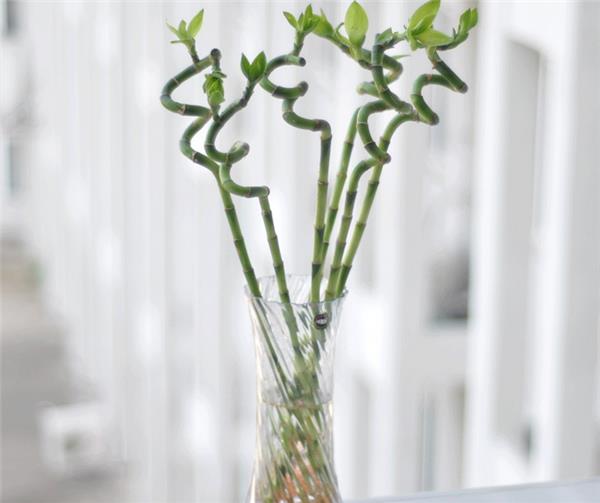
Lucky bamboo
An evergreen upright shrub of the genus Dracaena in the Asparagaceae family, very suitable for indoor hydroponic flowers. The leaves of lucky bamboo are emerald green, and the stems are straight and round like bamboo. The leaves are ovate with pointed tips, and the base of the leaf stalk clasps the stem. It is an extremely shade-tolerant plant and still grows well, upright and strong, under low-light conditions. It can be placed indoors for a long time to view its foliage, requires no special care, and as long as there is enough water, it will grow vigorously. When growing hydroponically, cut the stems of lucky bamboo into small sections of more than 20 cm to serve as cuttings and insert them into water. As long as 1/3 of the cutting can be submerged in water, it will take root and survive.
Pothos
A plant of the genus Philodendron in the Araceae family, belonging to climbing vine foliage flowers. It likes warm and humid environments, and its vines can reach several meters long. There are aerial roots at the nodes, and the leaves grow larger and larger, alternate, and evergreen. The pothos stems are slender and soft, and the leaves are delicate and elegant. Hydroponic care is very simple: make sure to change the water once every 2 to 3 days, along with simple nutrients. Pothos has very high ornamental value. Its trailing stems naturally hang down, and it can not only purify the air but also make full use of space, adding lively lines and bright colors to dull cabinet surfaces.
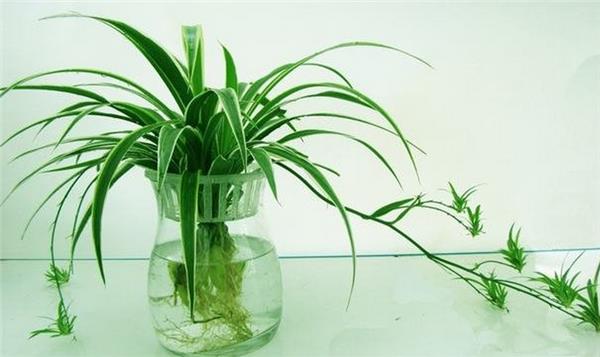
Spider plant
A perennial evergreen rosette herbaceous flower of the Asparagaceae family, with clustered, linear leaves and longitudinal yellow-white stripes along the edges or in the middle. In summer and autumn, slender, flexible, drooping stolons emerge from between the leaves, and tender leaves and aerial roots sprout at the tips or nodes, bearing white flowers. Spider plant can be grown hydroponically indoors. It can not only purify the air but also has a beautiful appearance and is easy to manage. Dig out a potted spider plant, remove the soil from the roots, cut off old roots and rotten roots, keep the fibrous roots, place it in a container bottle, add clean water and flower nutrient solution to the bottle, and let the spider plant roots grow submerged in water.
Ivy
In the Araliaceae family, genus Hedera, it is the most ideal variety for indoor and outdoor vertical greening. It is an evergreen vine with slender, soft branches and aerial roots that can climb onto other objects. The leaves are alternate and triangular-ovate, and the demand for potted plants is increasing day by day. It is a typical shade plant that can grow in full-light environments and grows well under warm and humid climate conditions, but is not cold-tolerant. Hydroponic care is simple and its vitality is strong
Asparagus fern
In the Asparagaceae family, genus Asparagus, it is a perennial evergreen herbaceous flower. The stems are slender, and the branches are fine and leaf-like, spreading horizontally. The flowers are small and white. The berries are spherical and black. After the fruit ripens, it presents a scene of dots of red amid dense green, elegant and lovely. The plant has strong shade tolerance. Placed at the bedside or on a desk, it is elegant and refined, and is a very good indoor flower. Asparagus fern is also an ideal material for accompanying cut flowers. In recent years, hydroponic asparagus fern has been successfully developed, and placing it indoors is even more elegant.
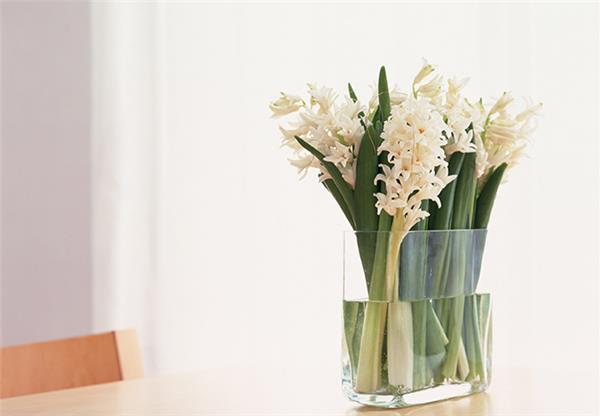
Hyacinth
Also known as Dutch hyacinth, it belongs to the genus Hyacinthus in the Asparagaceae family. It is a perennial herb, with a spherical or flattened spherical bulb covered outside with a tunic that is purplish blue or white, etc. The leaves are basal, thick, and strap-shaped lanceolate. The flower stem emerges from the center of the leaf stem, with a raceme inflorescence. The flowers are delicate and beautiful, colorful, dazzling, and pleasantly fragrant. It likes a sunny, cool and humid environment, and is suitable for both potted culture and hydroponics. When growing hydroponically, place its bulb in hydroponic nutrient solution; its appearance is clean and its ornamental value is high!
Dieffenbachia
A plant of the Asparagaceae family, with basal leaves that are thick and leathery, oblanceolate, broadly lanceolate, or broadly band-shaped, 10-40 cm long and 2.5-5.5 cm wide, with acute tips, narrow and long bases, and fibrous roots at the nodes. The flower stem is short and thick, 4-8 cm long including the inflorescence; the terminal spadix is oblong, with densely arranged sessile pale yellow flowers, hemispherical. There are rich varieties, including many types such as green-leaved and variegated. It likes shady and humid environments, and in summer it should be placed in shade to avoid strong light. It is an ornamental flower variety with strong adaptability, usually grown as a potted ornamental. In recent years, there have been more and more hydroponic varieties, which are not only highly ornamental but can also effectively clean indoor air pollution.
Dragon tree
An evergreen shrub of the Asparagaceae family. The stem is round and straight, the leaves are slender, new leaves extend upward, and old leaves hang down. The middle of the leaf is green, and the edges have purplish-red stripes. It likes high temperature and high humidity, and is also drought-tolerant and shade-tolerant. Hydroponic care is simple, and its appearance is stylish.
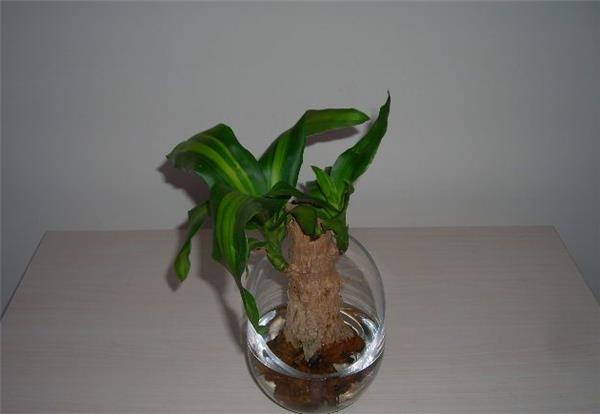
Brazil wood
Scientific name Dracaena fragrans, also known as Brazilian ironwood, it is a plant of the genus Dracaena in the Asparagaceae family. It is an evergreen tree with a neat plant shape and an upright stem. The leaves are clustered at the top of the stem, 40-90 cm long and 6-10 cm wide, with slightly blunt tips, curved into a bow shape, and have bright yellow or milky white stripes; the leaf margins are bright green and have wavy undulations and a glossy sheen. The flowers are small. Yellow-green, fragrant. It likes environments with sufficient light, high temperature, and high humidity, and is also tolerant of shade and dryness. It also grows well in bright scattered light and in the relatively dry environment of northern homes. Brazil wood is mostly propagated by cuttings. As long as conditions such as temperature are suitable, Brazil wood can grow all year round. It is a world-famous new-generation indoor foliage plant with a beautiful and neat plant shape. In recent years, its hydroponic varieties have developed rapidly. As long as sufficient slow-release fertilizer is provided, it can grow normally. Rotate it and place it in the living room, study, or sitting room; it has an elegant and simple style and is highly ornamental.
Gerbera
A perennial herb of the Asteraceae family, with relatively large flower diameter, rich flower colors, and blooming all year round. It likes warm, sunny, and well-ventilated environments, is a semi-cold-tolerant flower, and likes fertile and loose soil. Gerbera is a very good cut flower variety, lasts a long time in water, has high ornamental value, and is also good at absorbing formaldehyde.
Rotate it and place it in the living room, study, or sitting room; it has an elegant and simple style and is highly ornamental.
Gerbera
A perennial herb of the Asteraceae family, with relatively large flower diameter, rich flower colors, and blooming all year round. It likes warm, sunny, and well-ventilated environments, is a semi-cold-tolerant flower, and likes fertile and loose soil. Gerbera is a very good cut flower variety, lasts a long time in water, has high ornamental value, and is also good at absorbing formaldehyde.