How to grow flowers in water? Learn the correct cultivation methods
How do you grow flowers in water? In fact, the daily care of water-grown flowers is quite simple, more effortless and labor-saving than soil-grown flowers and plants. However, since many people are still new to this interesting planting method of water-grown flowers, they inevitably feel a bit uncertain and find hydroponic plant care somewhat mysterious. Now let us talk about the care and management methods for hydroponic plants.
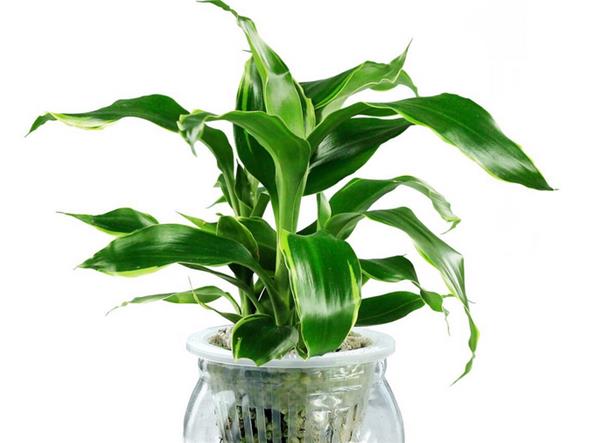
How to grow flowers in water
1. Temperature
The suitable growing temperature for hydroponic plants is above 5 degrees and below 30 degrees. In other words, as long as the temperature feels fairly comfortable to people, the plants will feel comfortable too, and they can grow normally. Even in winter, they can still have lush branches and leaves, adding vibrant life for us.
2. Light
Mainly indirect light. What is indirect light? It is natural light coming in through windows and other places, scattering naturally indoors. Generally, plants only need appropriate light to grow; they do not necessarily have to be exposed to direct sunlight. In summer, direct sunlight should also be avoided as much as possible.
3. Nutrient solution
Generally, you can just use the special hydroponic nutrient solution sold on the market, and mix it to the appropriate concentration according to the instructions, for example diluting it 400 times or 1000 times. Do not get the ratio wrong. When preparing it, let tap water sit for two hours to half a day until its temperature approaches room temperature and the chlorine and other substances in the water have evaporated completely, then add the concentrated nutrient solution according to the ratio, and it becomes a nutrient solution suitable for growing hydroponic plants.
4. Changing the water
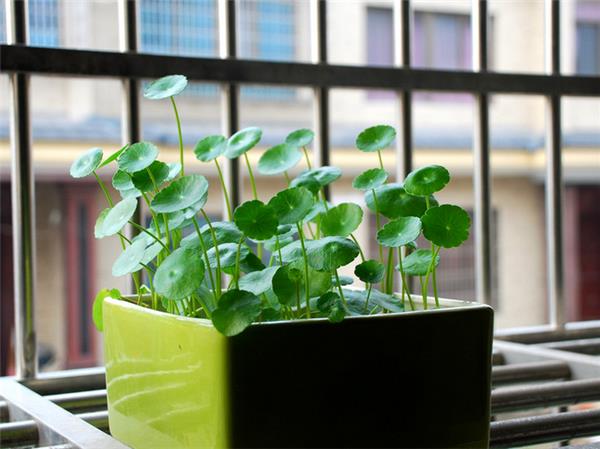
Changing the water means replacing the water in the bottle that has nutrient solution added. Generally, in spring and autumn, change the water once every 5-10 days; in summer, change it about once every 5 days; in winter, change it once every 10-15 days (after letting tap water sit for half a day, add the concentrated nutrient solution according to the ratio).
Changing the water is to ensure the oxygen supply in the water. Fresh water contains more oxygen, and plants will grow more healthily. If the water is not changed for a long time, the plants can still hold on for a period. For example, sometimes when everyone goes on a business trip or vacation and is away from home for ten days to half a month or even a month, soil-grown plants can no longer take it and die, while hydroponic plants can still survive as long as you add more water. But if the time is too long and the water in the bottle becomes very stale or deteriorates, it will affect the growth of hydroponic plants, and in serious cases, it will also cause their death.
Note: When changing the water, please expose half or one third of the plant's roots.
5. Cleaning
Each time you change the water, rinse the plant's roots and container with clean water, and prune dead branches, withered leaves and rotten roots. Under normal growth conditions, hydroponic plants will regularly have some roots rot and then grow new roots. So when you find rotten roots, do not panic first. Just use sterilized scissors (disinfected with alcohol cotton) to trim off the rotten roots. Sometimes some old roots can also be trimmed off to promote the growth of new roots (note: this should be done under the guidance of professionals). But be sure not to damage the water roots, otherwise it will affect the plant's growth.
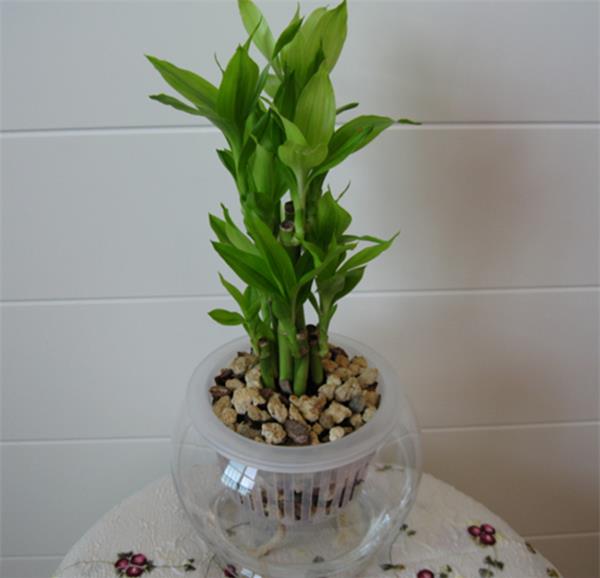
The roots of hydroponic plants: those white, tender roots above are water roots. Some grow directly from the base of the stem, and some grow from the main root. They are all responsible for the plant's absorption function, so be sure not to damage them.
6. Moisture retention
In winter, there is very little moisture in the air, especially in the north, where indoor air is very dry, which is unfavorable for plant growth. So in daily care, please spray the leaf surfaces with clean water to maintain humidity. You can spray clean water twice a day.
Sterilization methods
When exposed to light, nutrient solution will breed green algae, which not only affects the beauty of the arrangement but also hinders plant growth. Algae growth occurs in containers made into hydroponic arrangements or in water-culture induction seedbeds. How to effectively solve this problem is also a relatively important technical issue in hydroponic production. For algae and bacteria growth during the induction process, a combined electric field and ultraviolet method can be used to solve it. However, growth in the container is more troublesome, and only maintenance control methods can be used, that is, changing the water frequently, and it is best to replace it with purified water or boiled cool water for household drinking. This kind of water has fewer algae and bacteria to begin with, which is also helpful for control. A transparent photocatalyst coating can also be sprayed on the inner wall of the glass container, which also has a certain algae-removing and bacteria-inhibiting effect. Its photocatalytic action can decompose root exudates and play a certain role in preventing root rot. Acetic acid, ethanol, acetaldehyde, ethylene and others produced by root secretion can be catalytically decomposed by the photocatalyst into carbon dioxide and water. It can also be inhibited by placing strong magnets or tourmaline at the bottom of the container. In addition, in production, besides the above-mentioned combined electric field and ultraviolet treatment, ultraviolet-excited sterilization and algae-killing technology using photocatalyst filter screens can also be used. This method has also been widely used in hydroponic production abroad and has achieved good results.
Precautions for growing flowers in water
(1) When preparing hydroponic nutrient solution, do not use metal containers, and even more so do not use them to store nutrient solution. It is best to use glass, enamel or ceramic vessels.
(2) If tap water is used when preparing hydroponic nutrient solution, the tap water must be treated, because tap water mostly contains chlorides and sulfides, which are harmful to plants, and some bicarbonates will also hinder the roots' absorption of iron. Therefore, when using tap water to prepare nutrient solution, a small amount of sodium edetate or humate compounds should be added to treat the chlorides and sulfides in the water. If peat is used as the substrate in water-grown flower techniques, the above shortcomings can be eliminated. If the quality of groundwater is poor, unpolluted river water or lake water can be used for preparation.
(3) Generally, the cultivation water in the pot should be replaced once every one or two months. Tap water is fine, but note that the tap water should be left to sit for a period before use to keep the root temperature stable.
(4) Water-grown flowers are mostly shade-loving and neutral flowers suitable for indoor cultivation, and they have their own requirements for light. Shade-loving flowers such as ferns, Orchidaceae and Araceae plants should be moderately shaded; medium flowers such as Monstera deliciosa, Schefflera arboricola and poinsettia are not strict about light intensity and generally prefer sufficient sunlight, but can also grow normally under shade. It is important to ensure the temperature for normal flower growth. Flower roots grow well within the range of 15-30 degrees.
(5) Attention should be paid to identifying the root color of flowers to judge whether they are growing well. When light, temperature and nutrient solution concentration are appropriate, the whole root or the root tip is white. Please note that excessive nutrient solution is strictly prohibited, and shortening the time interval for adding nutrient solution is strictly prohibited.
(6) During the growth of water-grown flowers, if water droplets are found seeping from the leaf tips, the water level should be appropriately lowered so that more roots are exposed to the air and the proportion soaked in water is reduced.
This method has also been widely used in hydroponic production abroad and has achieved good results.
Precautions for growing flowers in water
(1) When preparing hydroponic nutrient solution, do not use metal containers, and even more so do not use them to store nutrient solution. It is best to use glass, enamel or ceramic vessels.
(2) If tap water is used when preparing hydroponic nutrient solution, the tap water must be treated, because tap water mostly contains chlorides and sulfides, which are harmful to plants, and some bicarbonates will also hinder the roots' absorption of iron. Therefore, when using tap water to prepare nutrient solution, a small amount of sodium edetate or humate compounds should be added to treat the chlorides and sulfides in the water. If peat is used as the substrate in water-grown flower techniques, the above shortcomings can be eliminated. If the quality of groundwater is poor, unpolluted river water or lake water can be used for preparation.
(3) Generally, the cultivation water in the pot should be replaced once every one or two months. Tap water is fine, but note that the tap water should be left to sit for a period before use to keep the root temperature stable.
(4) Water-grown flowers are mostly shade-loving and neutral flowers suitable for indoor cultivation, and they have their own requirements for light. Shade-loving flowers such as ferns, Orchidaceae and Araceae plants should be moderately shaded; medium flowers such as Monstera deliciosa, Schefflera arboricola and poinsettia are not strict about light intensity and generally prefer sufficient sunlight, but can also grow normally under shade. It is important to ensure the temperature for normal flower growth. Flower roots grow well within the range of 15-30 degrees.
(5) Attention should be paid to identifying the root color of flowers to judge whether they are growing well. When light, temperature and nutrient solution concentration are appropriate, the whole root or the root tip is white. Please note that excessive nutrient solution is strictly prohibited, and shortening the time interval for adding nutrient solution is strictly prohibited.
(6) During the growth of water-grown flowers, if water droplets are found seeping from the leaf tips, the water level should be appropriately lowered so that more roots are exposed to the air and the proportion soaked in water is reduced.