Does Asparagus Fern Need Pruning? Learn the Correct Pruning Method
Does asparagus fern need pruning? And if so, how should we do it? Today we will answer these questions for you.
Does Asparagus Fern Need Pruning
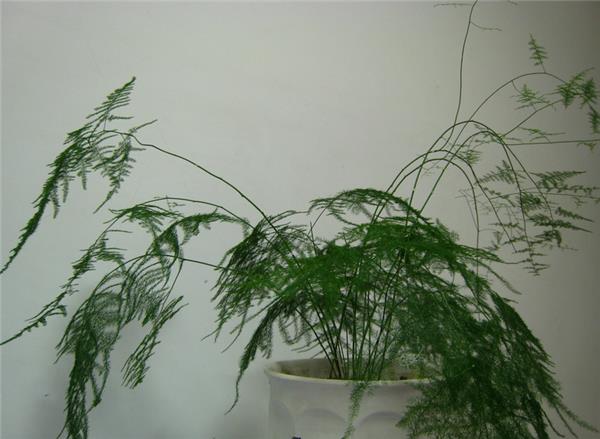
The answer is yes. Asparagus fern is a climbing plant and grows rapidly; after a few years of cultivation, the branches will grow taller and taller. For potted asparagus ferns kept indoors, the shape has long been set, and when the plant grows tall it ruins the original form, so the best solution is to prune it. Asparagus fern can be pruned in any season, but it is best done during the slow growing period in winter, thinning out the overly dense inner branches and the poorly shaped branches (the trailing, vine-like ones), to maintain the cloud-like bonsai form of the asparagus fern.
Pruning Methods for Asparagus Fern
1. Pruning When Cladodes Are Missing
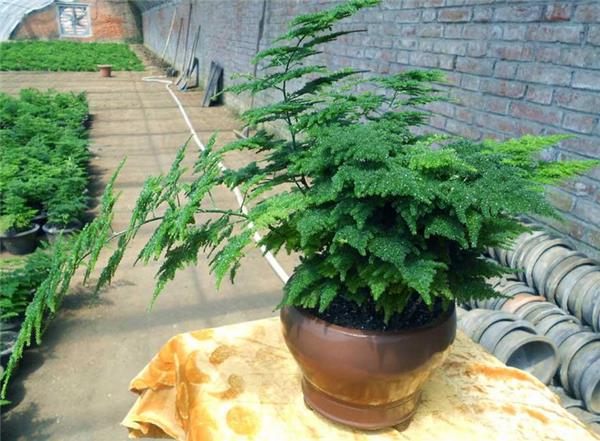
When the small cladodes on the main branches of the asparagus fern grow in an undesirable position or are missing for some reason, you can shorten the main branch at an appropriate spot. When pruning, pay attention to the latent buds at the nodes and do not cut them off; this forces the latent buds at that spot to sprout. Generally, the height at which you cut is the height at which cladodes will sprout, and the position of the thorns on the branch is the position where cladodes will sprout, and the thicker the branch, the higher the germination rate of the latent buds.
2. Renewal Pruning of the Whole Plant
If the branches and leaves of the whole asparagus fern grow poorly due to strong sunlight scorching, dry potting soil, lack of fertilizer, or some unknown reason, you can carry out renewal pruning of the whole plant. During renewal pruning, you can cut off all the cladodes of the asparagus fern, but pay attention to the positions of the backward-pointing thorns on the branches, as they determine whether the distribution of the remaining branches is even. Pruning during the growing season of asparagus fern generally makes it easy to sprout new branches; after pruning you should also appropriately reduce watering, and absolutely must not let the potting soil become too wet, otherwise the pruning will fail.
3. Pruning of Trailing Branches
Trailing branches are generally weak and slender; if you do not want to keep them for seed, and want the asparagus fern to look good, you can cut them off at the base in one go. If you want to increase the number of cladodes or fill in a gap, you can shorten them at a certain point; when pruning, pay special attention to comprehensive management such as light fertilizing. For asparagus fern, the best look is when the plant form and cladodes are well spaced, dense and sparse in turn, and staggered in height. However, after 3 to 4 years of cultivation, it sends up tall trailing branches, flowers and fruits, and is no longer suitable for indoor viewing, so it must be pruned.
Labor-Saving Pruning Methods for Asparagus Fern
1. Pot Control Method
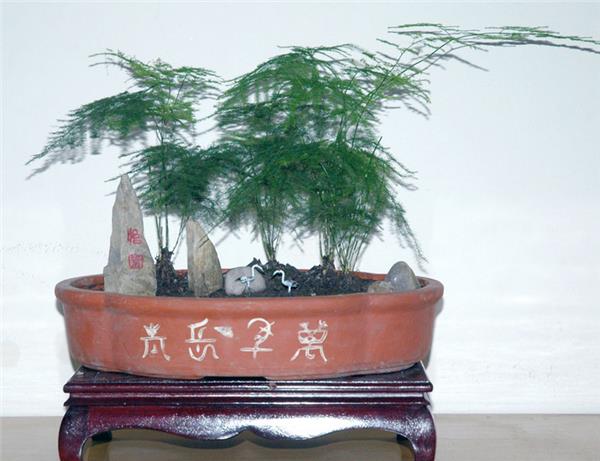
You can prune according to the size of the pot, controlling the ratio of pot to plant at 1:3; this limits root growth and keeps the plant size unchanged.
2. Promptly Remove Growing Points
Actually, asparagus fern does not have to grow to 20-30 cm before it can be pruned; you just need to control the growth of the buds.
When new buds grow to 2-3 cm, remove the growing points to promote new branches and leaves on the stems, and to control it from growing trailing stems, so the branches and leaves spread out flat and the plant form keeps filling out.
3. Make Full Use of the Asparagus Fern's Phototropism
Many flower lovers prune because the asparagus fern grows unevenly and the branches are ragged. Actually there is no need; simply turning the pot's direction at the right time can correct the growth shape of the branches and leaves and keep the plant form full and graceful.
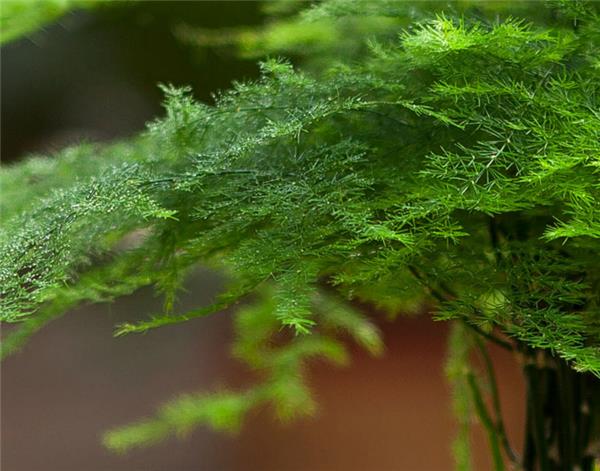
The stems of asparagus fern are climbing in nature; if allowed to grow freely, they can reach several meters tall, losing their light and airy quality. The measures to dwarf asparagus fern are:
1. For young plants, do not fertilize heavily in the vigorous growing seasons of spring and summer; generally fertilizing once a month is enough. The amount of fertilizer should not be too large either; follow the principle of keeping it light. For old plants, it is best to fertilize little or not at all; just take the opportunity when repotting to fill the bottom of the pot with fresh soil, or apply a small amount of fertilizer. In this way, whether young or old, the plant can maintain a stable growth vigor.
2. Pay attention to frequent pruning. Asparagus fern grows quickly, so you should at any time thin out old branches and dead stems to keep it low and short. At the same time, promptly cut off trailing branches to keep it upright and elegant, well spaced, dense and sparse in turn, and verdant.
3. Choose dwarf varieties of asparagus fern. The stems of dwarf asparagus fern are not trailing, so they can keep a small and delicate form.