Can String of Pearls Be Grown in Water? Detailed Guide to Care Methods and Precautions
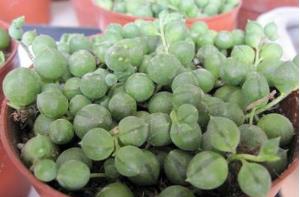
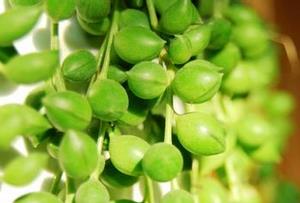
String of Pearls, with round, plump, heart-shaped leaves, sways in the wind like strings of wind chimes - these are its leaves. Because the leaves are alternate, fairly sparse, heart-shaped, dark green, thick and juicy, and closely resemble beads, it has the lovely names of Buddhist Prayer Beads, Buddha Beads, Green Grapes, and Green Bells. Some also call it String of Pearls and Lover's Tears. So do you know how to grow String of Pearls? Below is a detailed introduction to the relevant knowledge about String of Pearls.
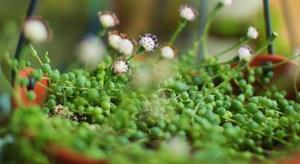 First, String of Pearls
String of Pearls is also known as Jade Beads, Lover's Tears, String of Pearls, Jade Beads, Green Bells, and Green Bell, because it is made up of strings of plump, full, emerald-green oval leaves. String of Pearls is not only an excellent hanging foliage plant for indoors, but also a good indoor air-purifying flowering plant.
Morphological characteristics: String of Pearls, with round, plump, heart-shaped leaves, sways in the wind like strings of wind chimes - these are its leaves. Because the leaves are alternate, fairly sparse, heart-shaped, dark green, thick and juicy, and closely resemble beads, it has the lovely names of Buddhist Prayer Beads, Buddha Beads, Green Grapes, and Green Bells. Some also call it String of Pearls and Lover's Tears. The scientific name of String of Pearls is Senecio rowleyanus, a perennial evergreen creeping succulent herb in the genus Senecio of the Asteraceae family. The stems are slender, and the whole plant is covered with white powdery bloom. The flower heads are terminal, 3-4 cm long, curved-hook shaped, with white to light brown flowers. Flowering period: December to January of the following year.
Biological habits: When watering during cultivation, it is better to keep it dry than wet - this is one of the keys to success. When the weather is dry, spray more water on the leaves and vines to make up for the lack of moisture and keep the beads green and plump. It prefers partial shade; exposure to strong sun may scorch the beads, while too weak light will result in poor growth.
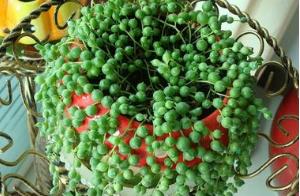 Second, How to Grow String of Pearls and Precautions
String of Pearls prefers a partial-shade environment. If the light at the placement site is too strong or insufficient, the leaves will easily turn pale green or yellow-green, lose their vitality, lose their ornamental value, and may even dry up and die. If exposed to direct sunlight and dry air, it is most prone to scorching. Therefore, it should be placed in a cool, ventilated place, and attention should be paid to maintaining environmental humidity.
Because the leaves are fleshy and juicy, it is drought-tolerant. When watering during cultivation, it is better to keep it dry than wet - this is one of the keys to success. When the weather is dry, spray more water on the leaves and vines to make up for the lack of moisture and keep the beads green and plump. It prefers partial shade; exposure to strong sun may scorch the beads, while too weak light will result in poor growth.
The plant's root system is very shallow, so it can be planted in a shallow pot. Generally, a tile is used to cover the bottom hole, and a layer of cinder or coarse sand is spread on top to increase aeration and drainage. The soil is best leaf mold, mixed with a certain amount of sand, with a soil-to-sand ratio of about 1:3.
String of Pearls is mainly harmed by: snails, aphids, cottony cushion scale, sooty mold, and stem rot.
 I. Growing Methods
1. Because the leaves are fleshy and juicy, it is drought-tolerant. When watering during cultivation, it is better to keep it dry than wet - this is one of the keys to success. When the weather is dry, spray more water on the leaves and vines to make up for the lack of moisture and keep the beads green and plump. It prefers partial shade; exposure to strong sun may scorch the beads, while too weak light will result in poor growth.
2. The plant's root system is very shallow, so it can be planted in a shallow pot. Generally, a tile is used to cover the bottom hole, and a layer of cinder or coarse sand is spread on top to increase aeration and drainage (especially when using the commonly used plastic pots nowadays). The soil is best leaf mold (fallen leaves of trees in autumn and winter mixed with a certain amount of broken soil and exposed to... can be mixed with a certain amount of sand (soil-to-sand ratio of about 1:3).
3. It likes warmth and humidity, is fairly cold-tolerant (when grown in the Jianghuai region it can tolerate low temperatures of 0°C), and is heat-tolerant. The optimum temperature is about 20°C-28°C. Growth is slow at both high and low temperatures; especially in high-temperature environments above 30°C it almost goes dormant, and watering and fertilizing should be reduced, otherwise root rot easily occurs - this is also one of the keys to successful cultivation.
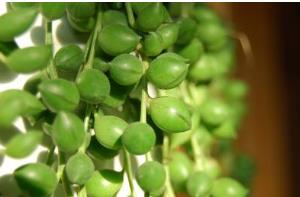 4. In spring and autumn, when growth is vigorous, apply light fertilizer frequently. Spraying 1-3% nitrogen fertilizer and potassium dihydrogen phosphate on the leaf surface is beneficial for making the beads greener and plumper and improving ornamental value.
5. There are rarely pests or diseases. Aphids in spring are one; remove them promptly or spray with 1500-times omethoate to kill them. Mites in summer and autumn are another; use 1000-times dicofol to kill them. Pay attention to ventilation and increase leaf surface humidity to reduce mite infestation.
6. String of Pearls can be propagated by cuttings. The vines very easily produce aerial roots; cut a few sections in spring or autumn, bury half in sand or loose soil, keep moist but not waterlogged, and they will soon take root for planting.
II. Horticultural Uses
String of Pearls grown in a small pot as a hanging plant is full of charm. Its round, plump leaves sway in the wind like strings of wind chimes, making it an ideal flower for home hanging cultivation.
 III. Pests and Diseases: Spider plant has few pests and diseases, mainly physiological disorders, with leaf tips turning yellow, so fertilizer and water management should be strengthened. Check frequently and promptly remove scale insects, whiteflies, etc. on the leaves. Spider plant is not prone to pests and diseases, but if the potting soil is waterlogged and ventilation is poor, in addition to causing root rot, root rot disease may also occur, so attention should be paid to spraying for prevention and control.
IV. Precautions
Precautions for Growing String of Pearls
1. Temperature control.
Spider plant likes a warm, humid climate and is not cold-tolerant. It grows fastest at 20-24°C, stops growing above 30°C, and the leaves easily turn yellow with dry tips. Therefore, in summer, prevent heat and lower the temperature and pay attention to ventilation; in winter, it should be grown in a greenhouse, with an overwintering temperature of 10°C being suitable, and not lower than 5°C.
 2. Light regulation.
When grown outdoors in summer, pay attention to shading so that the light is not too strong, otherwise sunscald easily occurs. When overwintering in a greenhouse in winter, pay attention to lighting to prevent the leaf color from fading due to insufficient light.
3. Water and fertilizer regulation.
In the peak growing seasons of spring and autumn, watering should be sufficient, and the potting soil should be kept moist regularly. Also regularly spray the branches and leaves with clean water at a temperature close to room temperature to prevent dry tips, but do not let water accumulate. In the peak growing season, apply a diluted liquid fertilizer once every half month; in winter, water less and stop topdressing.
Third, can String of Pearls be grown in water: the answer is no. Spider plants that can be grown in water are generally water-cultured spider plants. String of Pearls is mainly grown in soil. Because it likes warm, humid, and partial-shade environments, one very unique characteristic of String of Pearls is that it is fairly drought-tolerant and cold-tolerant. It also likes loose, fertile soil rich in organic matter.
bury half in sand or loose soil, keep moist but not waterlogged, and they will soon take root for planting
II. Horticultural Uses
String of Pearls grown in a small pot as a hanging plant is full of charm. Its round, plump leaves sway in the wind like strings of wind chimes, making it an ideal flower for home hanging cultivation.
III. Pests and Diseases: Spider plant has few pests and diseases, mainly physiological disorders, with leaf tips turning yellow, so fertilizer and water management should be strengthened. Check frequently and promptly remove scale insects, whiteflies, etc. on the leaves. Spider plant is not prone to pests and diseases, but if the potting soil is waterlogged and ventilation is poor, in addition to causing root rot, root rot disease may also occur, so attention should be paid to spraying for prevention and control.
IV. Precautions
Precautions for Growing String of Pearls
1. Temperature control.
Spider plant likes a warm, humid climate and is not cold-tolerant. It grows fastest at 20-24°C, stops growing above 30°C, and the leaves easily turn yellow with dry tips. Therefore, in summer, prevent heat and lower the temperature and pay attention to ventilation; in winter, it should be grown in a greenhouse, with an overwintering temperature of 10°C being suitable, and not lower than 5°C.
2. Light regulation.
When grown outdoors in summer, pay attention to shading so that the light is not too strong, otherwise sunscald easily occurs. When overwintering in a greenhouse in winter, pay attention to lighting to prevent the leaf color from fading due to insufficient light.
3. Water and fertilizer regulation.
In the peak growing seasons of spring and autumn, watering should be sufficient, and the potting soil should be kept moist regularly. Also regularly spray the branches and leaves with clean water at a temperature close to room temperature to prevent dry tips, but do not let water accumulate. In the peak growing season, apply a diluted liquid fertilizer once every half month; in winter, water less and stop topdressing.
Third, can String of Pearls be grown in water: the answer is no. Spider plants that can be grown in water are generally water-cultured spider plants. String of Pearls is mainly grown in soil. Because it likes warm, humid, and partial-shade environments, one very unique characteristic of String of Pearls is that it is fairly drought-tolerant and cold-tolerant. It also likes loose, fertile soil rich in organic matter.