What Is Rosemary? Find Out Whether Rosemary Is Edible in One Article
What kind of plant is rosemary? It is quite simple - you can find it in the countryside and fields. Rosemary leaves carry a tea-like fragrance, with a pungent, slightly bitter taste. They are often used in cooking and can also be brewed as an herbal tea. In ancient times, rosemary was believed to enhance memory, and it has now been confirmed to be a plant with antioxidant properties.
What is rosemary? Some readers may not be very familiar with rosemary. Today, the editor will give a detailed answer to the question "What is rosemary?"
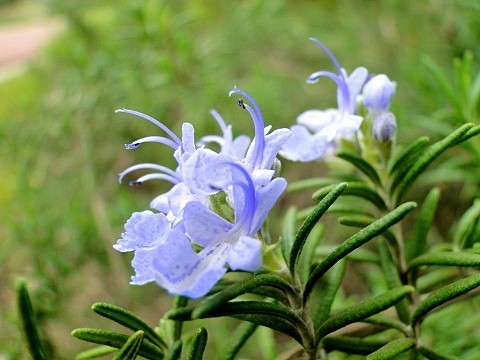
Rosemary has been an herb closely connected with humans since ancient times. The ancient Romans used it to worship Venus, the goddess of love and beauty. In 2000, rosemary was selected by the Association Herbs International as the "Millennium Herb." Rosemary - whether in its Latin, English or Chinese name - is endowed with romantic and mysterious color. Among herbs, the Chinese name of rosemary is the most consistently translated, taking its meaning of captivating and aromatic.
What is rosemary? Rosemary is a well-known plant with astringent properties that can help us cleanse hair follicles and deep layers of the skin, and can make pores smaller, thus making the skin look finer and smoother. For people with excess fat on the face, it also has the effect of eliminating fat and firming the skin. In addition, the antioxidant properties of rosemary also play a certain role in slowing down aging.
Origin: Native to the dry scrublands, rocky areas and open woodlands of the Mediterranean region. It can now be found in Turkey, Yugoslavia, France, Spain and Tunisia. Most of the essential oil is produced in France, Tunisia and Yugoslavia.
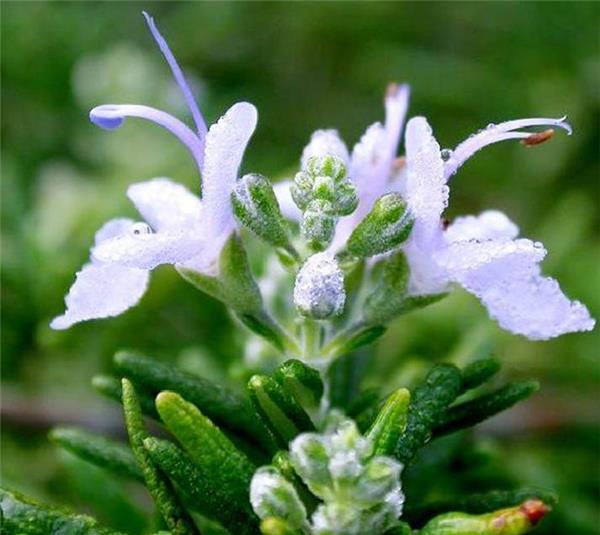
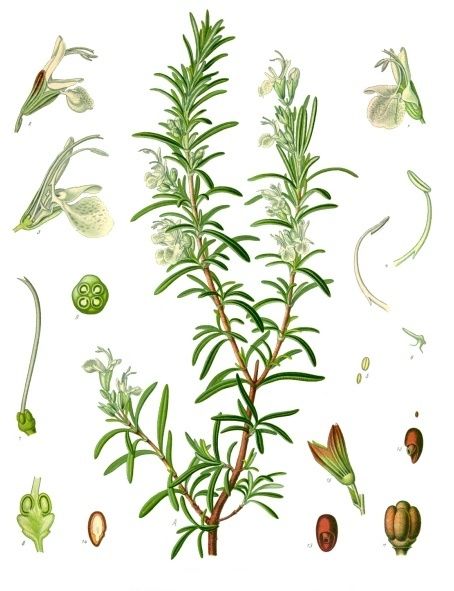
Morphological characteristics: It is a subshrub or perennial herbaceous plant, with a plant height of 40-60 cm. The leaves are opposite, sessile, leathery, linear and silver-green. It blooms in June-July, with small pale blue or nearly white flowers on the upper and top parts of the branchlets, in racemes.
Efficacy and effects: Rosemary has the effects of preventing aging and strengthening the heart and brain. Its flowers and seeds have the effects of activating brain cells, reducing headache and dizziness, relieving gastrointestinal bloating, helping sleep, and preventing and treating hair loss.
Functional value
Relieves gas and bloating, enhances memory, refreshes the mind, reduces headache symptoms, and is also very effective for colds, abdominal bloating, obesity and other conditions.
It has a relatively strong astringent effect, regulates oily and unclean skin, promotes blood circulation, and stimulates hair regrowth. It improves hair loss (pregnant women should not consume it).
Rosemary tea has a fragrance that can make people clear-headed and can enhance brain function. It can improve headaches, so students who need to memorize a lot may want to drink more rosemary tea.

It improves disorders in language, vision and hearing, enhances concentration, treats rheumatic pain, strengthens liver function, lowers blood sugar, helps in the treatment of arteriosclerosis, and helps paralyzed limbs recover their vitality.
In Western cuisine, rosemary is a frequently used spice, especially in dishes such as steak and potatoes as well as baked goods. It has a particularly fresh, sweet aroma and flavor with a pine-like scent. The fragrance is rich, with a bitter note within the sweetness.
Rosemary powder is usually added in small amounts after a dish is cooked to enhance flavor, mainly used for lamb, seafood, chicken and duck. When marinating meat for roasting, adding some will make the roasted meat especially fragrant; when making salad dressing, adding a little can also make an herbed salad oil dressing; dried rosemary powder is often used when cooking dishes (if the dish needs to be heated for a long time, you can use dried rosemary with a relatively rich aroma); after soaking dried rosemary in grape vinegar, it can be used as a dip for baguettes or garlic bread.
Rosemary has calming and mind-refreshing effects, and has a certain therapeutic effect on indigestion and stomach pain. In folk practice, it is often crushed and soaked in boiling water for drinking, 2-3 times a day, which can have a calming and diuretic effect. It can also be used to treat insomnia, palpitations, headaches, indigestion and many other conditions. External use can treat trauma and arthritis. It also has effects such as strengthening the heart, promoting metabolism, and promoting blood circulation in peripheral blood vessels.
Because rosemary has a unique aromatic oil, after large-scale cultivation and processing it is mostly used to make perfume or shampoo, soap, cosmetics, toothpaste, detergents, deodorants and so on.

The antioxidant components in rosemary are mainly carnosic acid, carnosol, rosmanol, ursolic acid, rosmarinic acid and other components. Rosemary is also often placed indoors to purify the air. So besides steeping it in water, can rosemary be eaten? The answer is of course yes. Its edible methods are introduced below.
Can rosemary be eaten? Edible methods of rosemary:
1. Brewing herbal tea: rosemary (appropriate amount), hot boiling water (about 400cc), honey or granulated sugar (used as needed). Put the rosemary into a pot, add hot boiling water, steep for 3-5 minutes, add honey or granulated sugar and it is ready to drink.
2. Rosemary is widely used in cooking. The fresh tender branches and leaves have a strong fragrance and can eliminate the gamy smell of meat. Just a few tender stems and leaves (no need to use too much, so as not to ruin the original flavor of the food) are enough for fragrant roasted ribs (pork ribs, lamb chops and beef short ribs). Rosemary roast chicken has an especially good flavor.
3. For lettuce used in salads, if a few rosemary leaves can be added when blanching, the special aroma is very easy to incorporate into the dish. For dishes that need long heating, dried rosemary can be used, or a little rosemary powder can be added after cooking. Fresh rosemary flowers can also be used in cold salads, to garnish dishes, and to add fragrance and flavor.
4. Rosemary herbal tea is beneficial to the heart, relieves pain and helps with sleep (Gao, 2000). Usually, 5-10 cm tender sprigs are picked, washed and placed in a teapot, steeped for 2-3 minutes, and then ready to drink. The longer the time, the stronger the fragrance. Adding the tender sprigs to lemon soda water gives an especially good flavor.
5. Drinking a small cup of wine infused with rosemary every day can reduce heart attack episodes. It can also be made into herbal vinegar. Also, rosemary leaves, mint leaves and fennel leaves placed in boiled water and soaked for 20 minutes, then filtered, can be used as a mouthwash to care for the oral cavity.
Rosemary is also often placed indoors to purify the air. So besides steeping it in water, can rosemary be eaten? The answer is of course yes. Its edible methods are introduced below.
Can rosemary be eaten? Edible methods of rosemary:
1. Brewing herbal tea: rosemary (appropriate amount), hot boiling water (about 400cc), honey or granulated sugar (used as needed). Put the rosemary into a pot, add hot boiling water, steep for 3-5 minutes, add honey or granulated sugar and it is ready to drink.
2. Rosemary is widely used in cooking. The fresh tender branches and leaves have a strong fragrance and can eliminate the gamy smell of meat. Just a few tender stems and leaves (no need to use too much, so as not to ruin the original flavor of the food) are enough for fragrant roasted ribs (pork ribs, lamb chops and beef short ribs). Rosemary roast chicken has an especially good flavor.
3. For lettuce used in salads, if a few rosemary leaves can be added when blanching, the special aroma is very easy to incorporate into the dish. For dishes that need long heating, dried rosemary can be used, or a little rosemary powder can be added after cooking. Fresh rosemary flowers can also be used in cold salads, to garnish dishes, and to add fragrance and flavor.
4. Rosemary herbal tea is beneficial to the heart, relieves pain and helps with sleep (Gao, 2000). Usually, 5-10 cm tender sprigs are picked, washed and placed in a teapot, steeped for 2-3 minutes, and then ready to drink. The longer the time, the stronger the fragrance. Adding the tender sprigs to lemon soda water gives an especially good flavor.
5. Drinking a small cup of wine infused with rosemary every day can reduce heart attack episodes. It can also be made into herbal vinegar. Also, rosemary leaves, mint leaves and fennel leaves placed in boiled water and soaked for 20 minutes, then filtered, can be used as a mouthwash to care for the oral cavity.