How much does a mahogany walnut sapling cost? Market price reference
When planting walnut trees, there are many techniques we need to master in order to bear fruit earlier and improve yield and quality. In recent years the price of walnuts has been climbing steadily, and because the survival rate of saplings is very low, the price of mahogany walnut saplings has also kept rising. So how much do mahogany walnut saplings cost? Let's find out below!
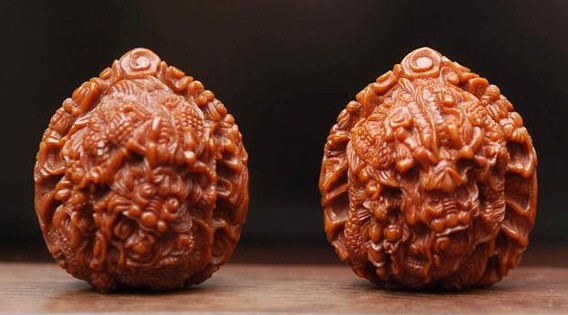
Planting time for mahogany walnut saplings
Spring and autumn are both good seasons for planting mahogany walnut saplings. Spring planting is mostly done after the soil thaws and before bud break, because at this time the sapling that has been dormant all winter has just awakened and is full of energy; after being briefly separated from the soil of the nursery or other sapling base, it takes root very easily when transplanted elsewhere. Autumn planting is mostly done after the Start of Autumn and before the ground freezes; at this time the mahogany walnut sapling has already stopped growing new shoots and has basically entered dormancy. After transplanting at this time, before the freeze sets in, the mahogany walnut sapling is just sprouting new roots, which is very beneficial to its growth the following year.
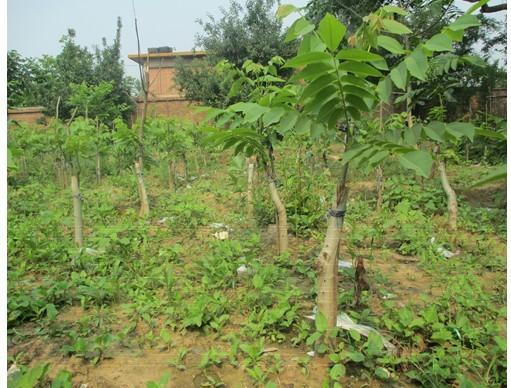
Planting and management of mahogany walnut saplings
Planting and management of mahogany walnut saplings is very simple, requiring no great input of manpower or materials. Mahogany walnut saplings have strong adaptability, are cold-resistant and drought-resistant, and have low soil requirements; as long as a place can grow weeds and miscellaneous trees, mahogany walnut saplings can be planted there. Choosing to plant mahogany walnut has the following advantages:
1. Because we use high-quality mahogany walnut scions, the finished mahogany walnuts grown have the characteristic of selling quickly. Our main mahogany walnut seedling varieties are: Sizuolou Lion's Head, Baihuashan Lion's Head, Old-style Lion's Head, Apple Orchard Lion's Head, Thin-ridged Official Hat, etc.
2. Mahogany walnut sapling management is simple; you only need to manage the water and fertilizer supply for the mahogany walnut seedlings well and pay attention to the trees' pests and diseases.
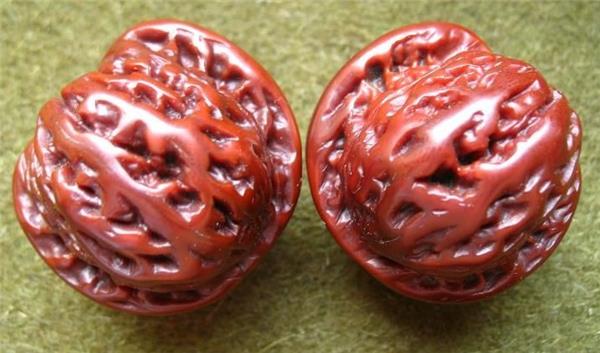
Key points for planting mahogany walnut saplings
1. Before planting the walnut tree, soak it in clean water or water with "plant rooting agent" added for 3-4 hours to replenish water for the dehydrated sapling.
2. Before planting the walnut tree, use a small knife to cut open the grafting film at the grafted part of the sapling. If it is not cut open, growth will be affected and the sapling will easily break at this point!
3. Do not put in fertilizer when planting the walnut tree. To prevent improper use from causing root burn to the sapling and affecting survival, you can wait until the sapling sprouts and then apply fertilizer separately.
4. After planting the walnut tree, the settling water must be thoroughly watered; generally water 1-2 kg per tree. The soil moisture should be such that it forms a ball when held in the hand and crumbles apart when lightly pressed with the palm.
5. Take a 60 cm square piece of black film and slip it down from the top of the sapling, then press the surrounding edges down with soil. This can effectively prevent weeds from growing and has heat-preservation and moisture-preservation effects.
6. If it cannot be planted in time, it should be properly heeled in. Specific method: dig a hole and place the sapling inside, cover the sapling's roots with soil, pour in a certain amount of water, and ensure humidity. If the midday sun is too strong, find an object to provide shade to prevent the sapling from being exposed to the sun!
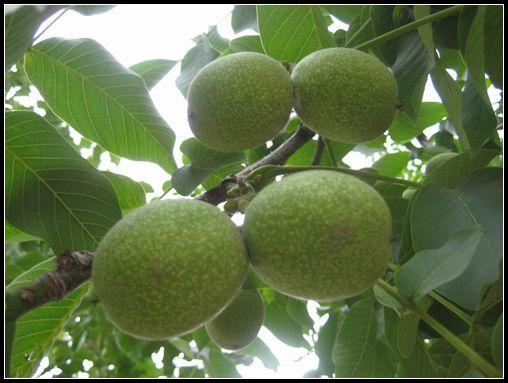
Control methods for mahogany walnut pests and diseases
Mahogany walnut rot is a disease caused by a fungus, and in walnut tree management it mainly harms branches and trunks. When branches are infected, one type is loss of green color, the branch dries up, and black dots (pycnidia) form on it; the other type produces obvious disease spots from pruning or saw cuts, spreads downward, and after circling the branch once forms a dead tip.
The control method is: strengthen walnut orchard management, apply more organic fertilizer, prune reasonably, enhance tree vigor, whitewash the trunk, and promptly scrape and treat disease spots in early summer and during the growing season; after scraping, apply crystal lime sulfur, Baume lime sulfur, or carbendazim wettable powder for control.
1. Mahogany walnut black spot disease
Mahogany walnut black spot disease is a bacterial disease. It mainly harms fruits, leaves and branches. After the fruit is infected, small slightly raised dark brown spots appear on the fruit surface, later expanding into round or irregular black spots that sink in, with no obvious edge and a water-soaked appearance around them, and the fruit rots from the outside inward. After leaves are infected, small black spots first appear along the leaf veins, later expanding into nearly round or polygonal black spots; in severe cases the spots join together, causing perforation and early leaf drop. This causes the fruit to turn black and drop early, and both the kernel yield and oil content decrease.
The control method is: strengthen cultivation management of walnut seedlings, and spray 1-3 times Bordeaux mixture, or thiophanate-methyl or thiram wettable powder during the growing period.
2. Control of mahogany walnut root rot
You can use carbendazim or triadimefon solution to water the roots; in winter use copper sulfate to water the roots, once every 10 to 15 days for 3 consecutive times, and the solution must penetrate to the root area.
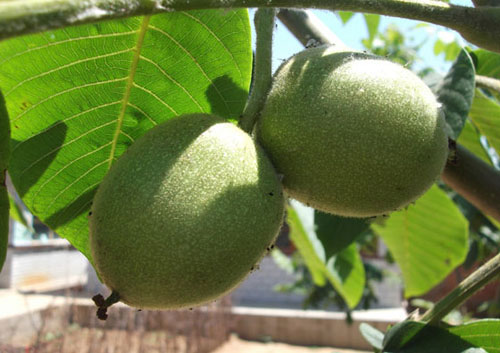
How much do mahogany walnut saplings cost
Two-year grafted finished mahogany walnut small sapling Size: 3 cm Price: 150 yuan/tree
Mahogany walnut collectible walnut small finished tree one-year grafted seedling Size: 2 cm Price: 100 yuan/tree
Mahogany walnut finished sapling fruit-bearing small sapling Size: 6 cm Price: 600 yuan/tree
3 cm one-year grafted seedling Size: 3 cm Price: 150 yuan/tree
3-5 cm finished tree, one-year grafted finished tree Size: 3-5 cm Price: 200 yuan/tree
Mahogany walnut finished tree Sizuolou Wangyong Official Hat Size: 4-6 cm Price: 250 yuan
How much does a small walnut sapling cost
Seedling trees cost 1-3 yuan, grafted seedlings cost 3-8 yuan. Specifically, the price of 1-year-old seed-grown walnut seedlings with a height of 0.2-0.5 m is 1 yuan, 0.5-0.8 m is 1.5 yuan, and 1-2 m is 2-5 yuan. For grafted thin-shell walnut seedlings, those under 30 cm are 3 yuan, those under 50 cm are 4 yuan, those under 1 m are 5 yuan, and those 1-2 m are 5-8 yuan.Once every 10 to 15 days for 3 consecutive times, and the solution must penetrate to the root area.
How much do mahogany walnut saplings cost
Two-year grafted finished mahogany walnut small sapling Size: 3 cm Price: 150 yuan/tree
Mahogany walnut collectible walnut small finished tree one-year grafted seedling Size: 2 cm Price: 100 yuan/tree
Mahogany walnut finished sapling fruit-bearing small sapling Size: 6 cm Price: 600 yuan/tree
3 cm one-year grafted seedling Size: 3 cm Price: 150 yuan/tree
3-5 cm finished tree, one-year grafted finished tree Size: 3-5 cm Price: 200 yuan/tree
Mahogany walnut finished tree Sizuolou Wangyong Official Hat Size: 4-6 cm Price: 250 yuan
How much does a small walnut sapling cost
Seedling trees cost 1-3 yuan, grafted seedlings cost 3-8 yuan. Specifically, the price of 1-year-old seed-grown walnut seedlings with a height of 0.2-0.5 m is 1 yuan, 0.5-0.8 m is 1.5 yuan, and 1-2 m is 2-5 yuan. For grafted thin-shell walnut seedlings, those under 30 cm are 3 yuan, those under 50 cm are 4 yuan, those under 1 m are 5 yuan, and those 1-2 m are 5-8 yuan.