What are the cultivation methods for magnolia?
Magnolia, also known as Xinyi flower, purple magnolia, and wooden pen, has been loved by many people since ancient times. Let's take a look at the cultivation methods for magnolia below.
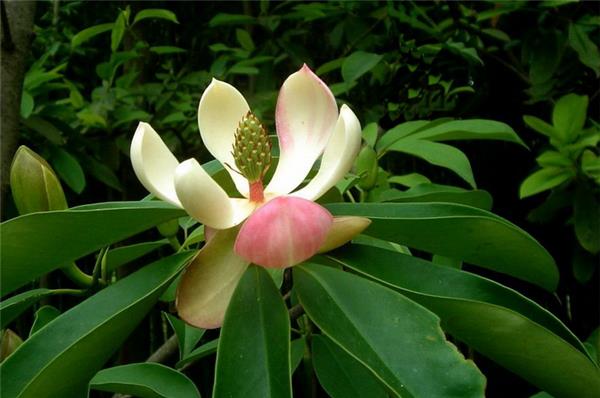
Magnolia cultivation methods
1. Soil: Magnolia prefers fertile, moist, and well-drained sandy soil. It is not drought-tolerant and dislikes alkaline conditions. It grows poorly in dry, alkaline, or clay soil.
2. Watering: Magnolia dislikes both drought and waterlogging. Ensure a regular water supply, and frequently spray water on the leaves to increase air humidity, so as to prevent yellowing and leaf drop.
3. Sunlight: Magnolia loves light and is slightly shade-tolerant, so pay attention to lighting conditions and let the magnolia receive full sunlight.
4. Temperature: Magnolia prefers a warm and humid climate and can also tolerate cold, but when winter temperatures are relatively low, it should still be moved indoors for warmth.
5. Fertilizing: Magnolia loves fertilizer and should be fertilized in a timely manner. Apply fertilizer once before and once after the flowering period, mainly phosphorus and potassium fertilizer. From October to November each year, apply decomposed compost or barnyard manure as a base fertilizer. After flowering, during the period of budding and branch growth, apply 2 to 3 topdressings of quick-acting nitrogen fertilizer.
6. Pests and diseases: The main pests and diseases of magnolia are Pittosporum cottony cushion scale, sooty mold, and others, which reduce its ornamental value. You can spray 1-3 degrees Baumé lime sulfur mixture; during the nymph hatching period, use 40% omethoate emulsifiable concentrate at 1000 times plus 10% pyridine wettable powder at 1500 times solution; when adults appear, use Kuangshajie 800-1000 times solution or 40% Supusha emulsifiable concentrate at 1500 times solution for uniform spraying. Adding an appropriate amount of diesel oil when spraying can increase its permeability. At the same time, the spray liquid must be applied thoroughly and evenly.
7. Pruning: To make magnolia grow into a tree form, it is necessary to remove tillering shoots and buds and to train the branches, which facilitates the growth of the magnolia's tree shape.
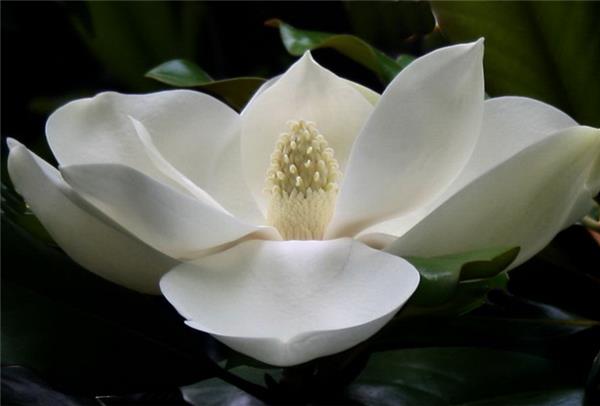
Next, let's get to know magnolia more deeply!
Introduction to magnolia
A deciduous small tree, up to 5 m tall. The wood is fragrant; branchlets are purplish brown; buds have fine hairs. Leaves are simple, alternate, obovate-elliptic; with stipular scars. Flowers are bisexual, solitary, terminal; sepals 3, yellow-green, lanceolate, about 1/3 the length of the petals; petals 6, purplish red on the outside and nearly white on the inside; stamens and pistils numerous; the gynoecium is sessile. The fruit is oblong. The roots are fleshy.
During the Tang Dynasty it was introduced to Japan, and in the 17th century it was introduced to Europe (brought to England in 1790). Because of its large and beautiful flowers, it spread widely in Europe and America. The United States established a dedicated magnolia society and has already cultivated a rich variety of horticultural cultivars.
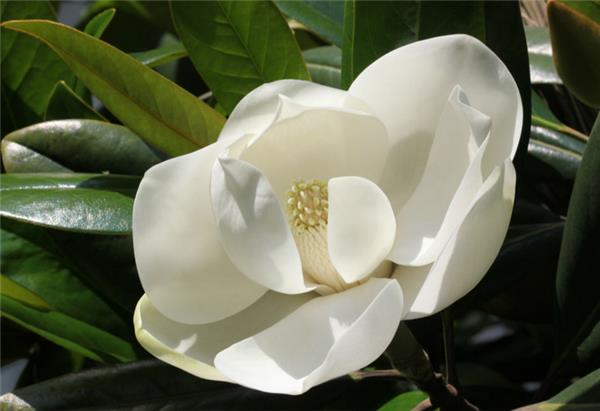
Morphological characteristics of magnolia
A deciduous small tree or shrub, 1.5-3 m tall or taller. Bark is light grayish brown; branchlets are slender, sparsely covered with fine long hairs; young branches are densely covered with short soft hairs. Winter buds are elliptic or oblong, covered with glossy brown short hairs. Leaves are simple and alternate; petioles 1-4 cm long; stipular scars are 1/2 the length of the petiole; leaf blades are lanceolate-elliptic or obovate-elliptic, 6-14 cm long and 4-10 cm wide, apex acute or shortly acuminate, base cuneate, dark green above and hairless, grayish green beneath, hairless except for sparse pubescence along the veins. Flowers open at the same time as the leaves, solitary at the branch tips, fragrant, cup-shaped, about 6 cm in diameter; tepals 9, fleshy, milky white or light pink to pink, oblanceolate or nearly spatulate; stamens numerous, about 1 cm long, filaments about 4 mm long, purplish red, connective apex of the anther pointed and yellow; gynoecium elliptic. Gynophore about 5 mm long. Style slender and curved. The pistils mature earlier than the stamens, natural seed set rate is low, and tillering ability is strong. Morphological characteristics of magnolia.
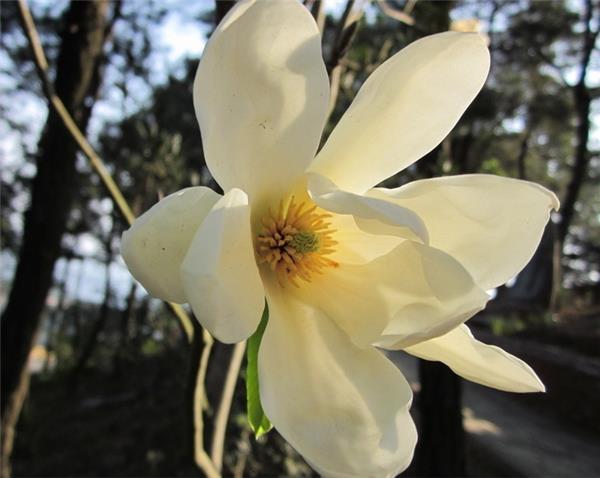
The flower language of magnolia
The magnolia tree can reach up to 5 m tall. When the flowers bloom, they stand proudly on the branches, pure white and holy. Because magnolia blooms first and only grows leaves after the flowers fade, when magnolia blooms the whole tree is pure white without any mixed colors, inspiring a feeling of reverence. Therefore, the flower language of magnolia is a noble soul.
Every year on Teachers' Day, children nowadays all like to give their teachers gifts. Sending a greeting card is not eco-friendly and is somewhat outdated, while giving expensive gifts does not suit a child's status. It would be better to give a blooming magnolia flower to express respect and praise for the teacher's noble soul.