How to Care for the Succulent Plant Gasteria armstrongii? A Detailed Guide to Its Care
I wonder whether the vast community of flower enthusiasts is familiar with the succulent plant Gasteria armstrongii. If you are interested in this plant, come and take a look at the introduction below!
A Brief Introduction to the Succulent Plant Gasteria armstrongii
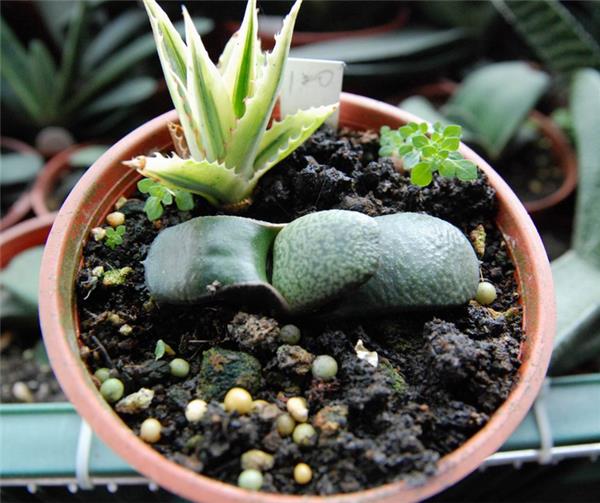
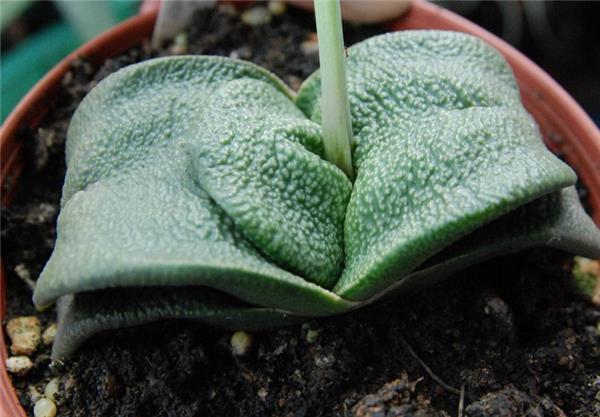
Gasteria armstrongii f. variegata is a variegated cultivar of Gasteria armstrongii, a perennial succulent herbaceous plant in the family Liliaceae (Asphodelaceae) and the genus Gasteria. The original species, Gasteria armstrongii, has no stem or only a short stem and stout fleshy roots; the young plant's leaves are stacked in two rows, and as the plant matures and the leaves increase in number, the leaves gradually arrange themselves into a rosette 6-10 cm across. The fleshy leaves are thick and hard in texture, tongue-shaped, with a small pointed tip at the apex and a distinct keel at the tip of the leaf underside; the leaves are 3-7 cm long, 3-4.5 cm wide and about 1 cm thick. The leaf surface is green or dark green, slightly glossy, and densely covered with small wart-like bumps that make the leaves look rather rough. The inflorescence is a raceme; the flower scape is 20-30 cm tall, and the small flowers hang downward, orange-red in the lower part and green in the upper part; because they grow hanging down, they appear red on top and green below.
The leaves of Gasteria armstrongii f. variegata are thick and rough, with a striking contrast of yellow and green, and they are glossy. Because it grows slowly and its form changes little, it is like a living antique, giving a sense of old-world charm; moreover, because its traits are unstable and the variation among seedlings is relatively great, it is a rare and precious variety among succulents, suitable for enthusiasts to collect and cultivate as a variety. Ordinary households can also grow it in small decorative pots to adorn a desk, windowsill or similar spot; fresh and elegant, like a living work of art, it is quite distinctive.
Because Gasteria armstrongii f. variegata is a variegated cultivar, its green leaf surface bears prominent longitudinal yellow stripes, making it more vivid and beautiful than the original species. Its other characteristics are the same as those of the original species, Gasteria armstrongii.
Growth Habits
Gasteria armstrongii originates from Cape Province in South Africa, and Gasteria armstrongii f. variegata is a horticultural variety, famous for its slow growth.
Gasteria armstrongii f. variegata prefers a warm, dry environment and is suited to growing in ample but soft sunlight. It is not cold-hardy, fears waterlogging, and tolerates drought and partial shade; neither scorching sun nor excessive shade is good for its normal growth.
How to Care for the Succulent Plant Gasteria armstrongii
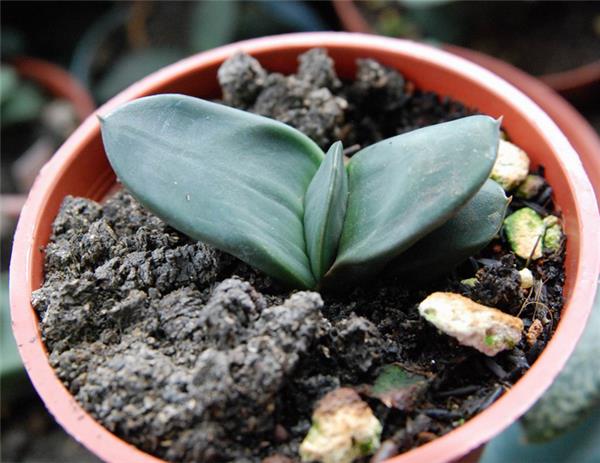
Gasteria armstrongii is a succulent in the family Liliaceae and the genus Gasteria. As for how to care for the succulent Gasteria armstrongii, it is actually very simple. Gasteria armstrongii likes a ventilated, cool environment with ample diffused sunlight and moist air; it is not cold-hardy, tolerates drought and partial shade, and fears wet conditions and strong light. Its optimum growth temperature is 13-21°C, and the winter temperature should not fall below 10°C. A fertile, loose, well-drained sandy loam soil is suitable.
Spring and autumn are the periods of vigorous growth for Gasteria armstrongii, and it should be given ample light. If the light is insufficient, the plant will grow leggy, the leaf color will become dull and lusterless, and the leaves will become thinner, affecting its ornamental value. Do not let the potting soil become too wet, lest the plant's roots rot (otherwise the plant will easily suffer root rot and eventually die).
In summer, when temperatures are high, the plant stops growing. Potted plants can be placed in a well-ventilated, partially shaded spot to avoid the leaf color turning red or even the leaves being scorched by strong sunlight, leaving ugly scars. Watering should also be moderated, and fertilizing stopped.
In winter, place the potted plant indoors in a spot with ample sunlight, and it is good to have a certain temperature difference between day and night.
There are quite a number of Gasteria armstrongii varieties, numbering more than a dozen when collected together, such as: White Snow, White Cloud Gasteria armstrongii, Daruma Gasteria armstrongii, Green Glass Gasteria armstrongii, Large Wart Gasteria armstrongii, Dinosaur Gasteria armstrongii, Gasteria armstrongii Dragon Variegata, Gasteria armstrongii Variegata, Silver Hair Gasteria armstrongii, Bilansi Gasteria armstrongii, Vertex Gasteria armstrongii, Broad-leaf Gasteria armstrongii, Green Star Gasteria armstrongii, Jade Stripe Gasteria armstrongii, Yida Gasteria armstrongii, Gunpai Gasteria armstrongii, Eight-direction Ox, Hemp Ox, Extra White-fleshed Gasteria armstrongii Variegata, and so on. Depending on the variety, the "value" of individual plants differs considerably; according to rarity, prices can range from an ordinary several dozen yuan to a "luxury" level of thousands or even tens of thousands of yuan. Yellow-variegated varieties are relatively rare, and white-variegated ones can be called precious.
Propagation Methods
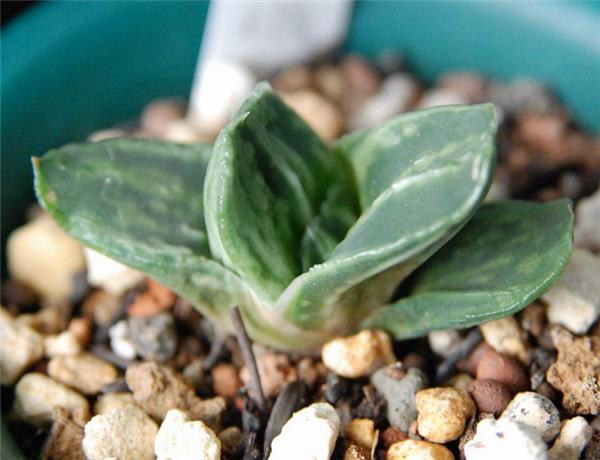
Gasteria armstrongii f. variegata can be propagated by division in conjunction with repotting in spring; simply remove the young plants sprouting beside the mother plant and plant them separately. Sometimes the leaves of these young plants will not carry yellow variegation; after planting, pay attention to cultivating them, and yellow variegation may appear on the new leaves, but they may also grow into ordinary green-leaved Gasteria armstrongii.
It can also be propagated by sowing, carried out in April-May, with an optimum germination temperature of 18-20°C. Seedlings emerge within two weeks after sowing; among the seedlings there will be both Gasteria armstrongii and Gasteria armstrongii f. variegata, so careful observation is needed. If variegated young plants are found, they can be taken out and planted separately for cultivation.