How to Propagate Sedum rubrotinctum: Several Practical Propagation Methods
Sedum rubrotinctum is a very charming succulent plant, deeply loved by everyone for its appearance. Below we will look at the propagation methods for Sedum rubrotinctum.
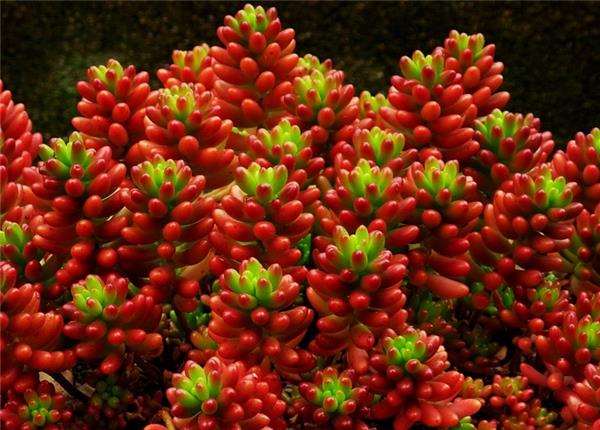
Propagation Methods for Sedum rubrotinctum
Propagation can be done by stem cuttings or leaf cuttings, both of which can be carried out in spring or early autumn.
1. Sedum rubrotinctum stem cuttings: Leave the lower few pairs of leaves and cut off a section of the upper plant. Place it in a shady spot to dry. You can insert it into moist soil (it must not become waterlogged, otherwise it will rot) and wait for it to develop roots. During this process, the lower leaves may shrivel and die to provide nutrients for root development. Stem cuttings can also be left in the air to develop aerial roots before being inserted into the soil.
2. Sedum rubrotinctum leaf cuttings: Leaf cuttings involve removing some small leaves and laying them flat on dry soil. Before long, small fleshy growths and some red whisker-like aerial roots will appear. At this point, simply bury the roots into the soil. They will gradually grow larger.
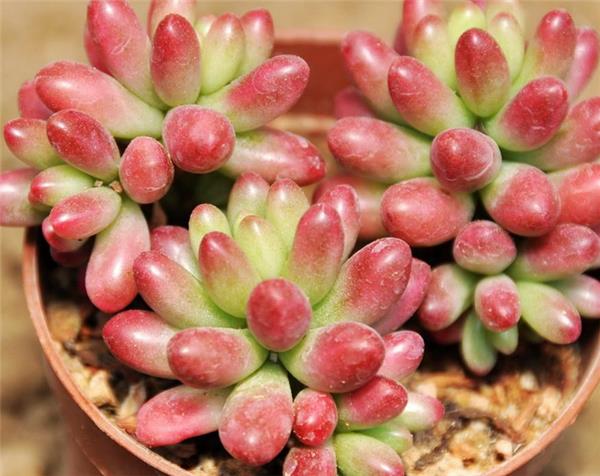
How to Take Stem Cuttings of Sedum rubrotinctum
1. Choosing the Substrate
For how to take stem cuttings of Sedum rubrotinctum, the first step is to choose a good substrate. It can be said that with the right substrate, Sedum rubrotinctum stem cutting success is half achieved.
Common stem cutting substrates for Sedum rubrotinctum include peat + perlite. If conditions allow, a small amount of slow-release fertilizer can be added, or a standalone nutrient soil can be used, as long as the soil has sufficient nutrients. The substrate choice for Sedum rubrotinctum is relatively flexible.
2. Cuttings
For stem cuttings, select its branches as cuttings; for leaf cuttings, simply choose healthy leaves. The specific handling method is the same as for cuttings of other succulents.
3. Taking Cuttings
When taking cuttings, as with other succulent cuttings, you can insert the cutting vertically or at an angle into the substrate, or you can let the cutting lie flat directly on the substrate.
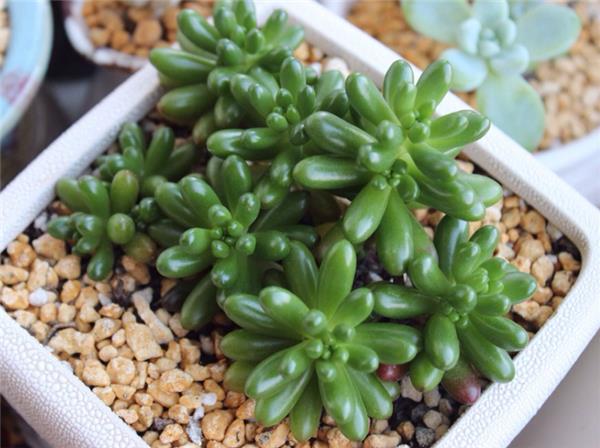
Key Points for Growing Sedum rubrotinctum
Temperature: Sedum rubrotinctum has a very strong adaptability to temperature. It prefers environments with large day-night temperature differences. A growing temperature of around 10°C-28°C allows Sedum rubrotinctum to survive well. In autumn, artificial cooling can be used to maintain the emerald green color of Sedum rubrotinctum leaves, effectively enhancing its ornamental value. In winter, the temperature can be kept above 5°C.
Light: Sedum rubrotinctum loves sunlight. In winter, Sedum rubrotinctum can be placed on a balcony to absorb sunlight. In summer, Sedum rubrotinctum can be given half-day sun or partial shade. At noon in summer, direct sunlight must be avoided to prevent sunburn damage to the leaves. During the growing season, ensure Sedum rubrotinctum receives sufficient sunlight.
Ventilation: Sedum rubrotinctum needs a certain amount of ventilation to ensure good growth.
Soil: Sedum rubrotinctum does not have high soil requirements. Generally, as long as the soil is loose and has good drainage, it is fine.
Watering: Sedum rubrotinctum has a certain drought tolerance, but during its growing season, a certain amount of water must be ensured so that Sedum rubrotinctum can grow better. Generally, if Sedum rubrotinctum grows slowly or its leaves show a sunny red color, it indicates a lack of water. At this time, follow the plant watering principle of "don't water until dry, water thoroughly when you do."
Fertilizing: Sedum rubrotinctum has no great demands for fertilizer. Applying a light fertilizer once or twice during the growing season is sufficient.
Pruning: Sedum rubrotinctum generally becomes messy after being grown for more than three years, so pruning should be done in advance to maintain the shape of Sedum rubrotinctum.
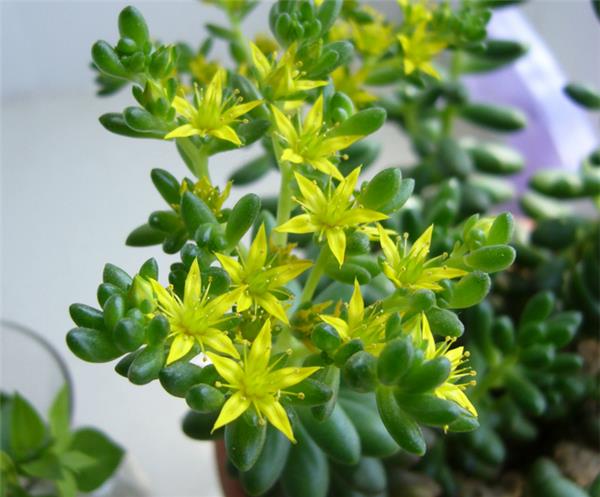
That's all for today's introduction on propagation methods for Sedum rubrotinctum. Sedum rubrotinctum generally blooms in late winter to early spring, with pale yellow flowers. Succulent plants do not have harsh growing conditions; as long as the climate is suitable during the growing season, they may bloom. When they bloom does not necessarily follow a strict pattern.