Is Lithops toxic? One article clears up its toxicity question
Lithops is a type of succulent plant, mainly formed by two opposite fleshy leaves joined together, with a flat top and a fissure in the center, and flowers bloom from the fissure, so do you know whether Lithops is toxic?
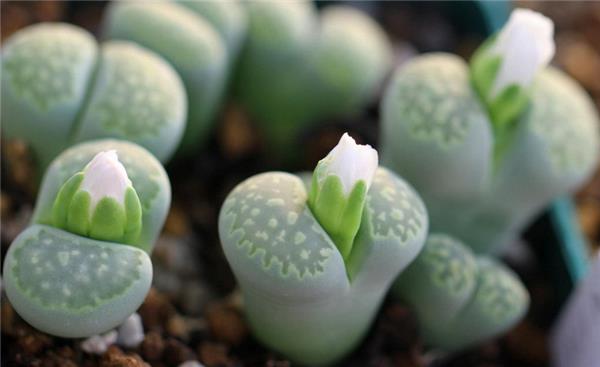
Is Lithops toxic
We can tell you for certain that Lithops is not toxic. According to friends who have tried eating it, it is not only non-toxic but also has no taste at all, it merely contains a lot of water. As long as the planting medium has an appropriate moisture level, relatively fresh Lithops seeds will germinate within a week after being planted, while overly old seeds have a quite low germination rate. As for how long it takes to grow up and how long until it blooms, that depends on your level of care; skilled growers have had Lithops bloom within two years.
How to grow Lithops
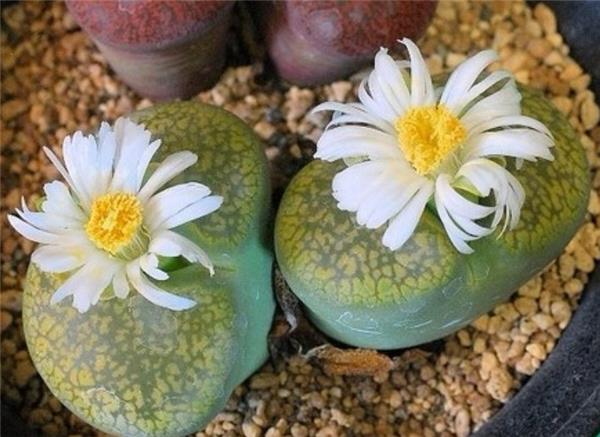
It likes sunlight, and the suitable growth temperature is 20°C-24°C. In spring and autumn it is best placed on a south-facing balcony or windowsill for cultivation, as this is its vigorous growth period, and it should be watered once every 3-5 days to promote growth and flowering. The growth pattern of Lithops is that it begins to grow between March and April, pauses growth in the high-temperature season and enters a summer dormancy period, then continues to grow and bloom after autumn turns cool, and after the flowers fade it enters the overwintering period. It likes sunlight by nature and tolerates high temperatures, but requires good ventilation, otherwise the roots easily rot. It dislikes waterlogging. In winter the temperature must be kept at 8-10°C.
It is native to the extremely arid, rain-scarce desert gravel areas of Cape Province, South Africa, with annual rainfall below 250mm, an average winter temperature of 10°C, and summer temperatures of 20-25°C. It goes dormant in the dry season, and the body gradually shrinks and buries itself in the soil, leaving only the top surface exposed above ground, resembling gravel. This kind of "mimicry" serves to prevent birds and animals from eating it. In order to adapt to the environment, it evolved from a dicotyledonous plant into a typical succulent bulbous-leaf plant, surviving on the rare bit of moisture stored in the water-storage tissue within its cortex. Its top surface is called the "window." Inside the window there is chlorophyll for photosynthesis. The top is slightly flat, with a fissure in the middle, and in autumn plants 3-4 years old produce yellow, white or pink flowers from this fissure.
Notes on growing Lithops
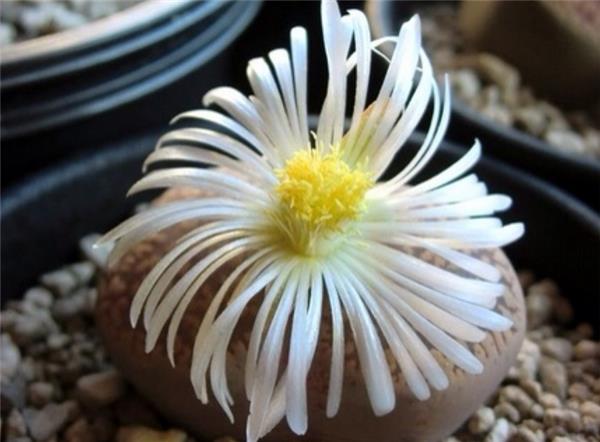
Because Lithops has adapted to the intense sunlight of its native habitat over a long evolutionary process, when it is grown as an indoor plant it needs to be given sufficient direct light. If Lithops absorbs only a few hours of direct light in a day, it will begin to become slender and elongated, and will also lean toward a certain direction to obtain the sunlight it needs.
Some friends who grow Lithops often start shading the plants from April to prevent sunburn, and ordinary glass is enough to meet this requirement. In winter it is best to remove this shading so the plants can get sufficient sunlight; in winter there is no need to worry that Lithops will be sunburned in spring.
Watering Lithops is something that must be given attention. Every year, Lithops grows according to the same growth cycle. Although Lithops must be watered at certain growth stages, in other growing seasons it is also very necessary to keep the potting soil dry.
During growth, Lithops has a process of shedding its skin and splitting. This usually happens in late winter and early spring, when the central fissure of the plant gradually cracks open, and at the crack one or two or three new plants gradually grow larger, while the original plant gradually withers and is replaced by the new plants.
Lithops has a well-developed root system, so it is best to use a deep pot for cultivation. The potting soil can be prepared by mixing 4 parts leaf mold, 3 parts calcareous material (shell powder, eggshell powder, old lime wall scraps, etc.) and 3 parts river sand. When planting, it must not be buried too deep, otherwise it easily causes the plant to rot.
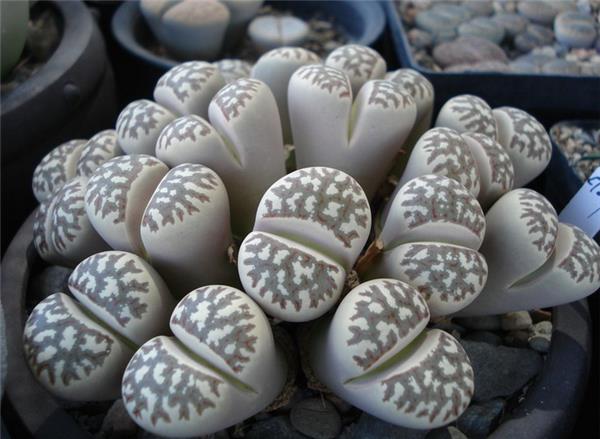
Lithops is an ornamental plant, and its price is set according to the season and the number of years it has been grown. Generally, Lithops grown for 3-5 years is relatively more expensive, while ordinary Lithops seedlings, depending on the variety, cost between a few yuan and several dozen yuan. For the specific price, consumers can go to their local flower and plant market for detailed inquiries.