Is Crown of Thorns (Euphorbia milii) Poisonous? Learn About Its Toxicity Before Deciding to Grow It
Crown of Thorns (Euphorbia milii) is a plant with beautiful flowers and eye-catching colors. Placing it in the home can beautify the living space and purify the air, so is Crown of Thorns poisonous?
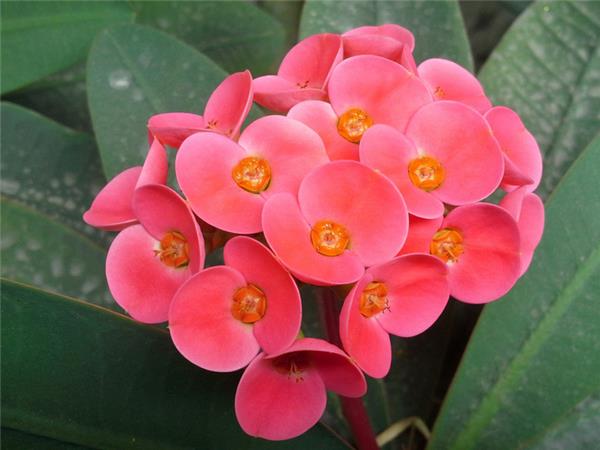
Is Crown of Thorns Poisonous?
Crown of Thorns is covered in thorns all over, and when injured it exudes a white milky sap. This sap is toxic and has an irritating effect on human skin and mucous membranes. If ingested, it can cause diarrhea, vomiting, dizziness, and other problems. Therefore, Crown of Thorns kept in the home should be stored properly to prevent children from accidentally ingesting it.
In fact, although the milky sap of Crown of Thorns is toxic, its flower branches and stems can be used as medicine. It is cool in nature and bitter in taste. It has mild toxicity. It has the effects of drawing out toxins and reducing fire, and cooling the blood to stop bleeding.
In addition, according to confirmation by relevant experts, Crown of Thorns is one of 52 cancer-promoting plants, and it is recommended not to plant it. Research has found that Crown of Thorns carries "toxins" all over its body. Crown of Thorns releases an irritating and unpleasant odor, and the soil in which such plants have been grown has been detected to contain cancer-causing viruses and initiators of chemical carcinogens. According to experts, cancer-promoting plants such as Crown of Thorns contain "Epstein-Barr virus early antigen inducers," which can induce the transformation of lymphocytes by EB virus and can promote tumor growth caused by tumor viruses or chemical carcinogens.

Below, let us take another look at some related information about Crown of Thorns.
Introduction to Crown of Thorns
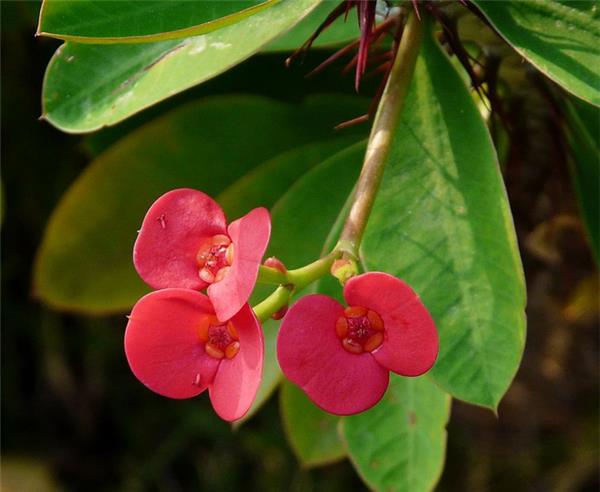
Crown of Thorns, also known as Qilin Ci or Iron Begonia, is a vine-like plant with many thorns along its edges. Although Crown of Thorns has thorns along its edges, this does not affect people's affection for it at all. On the contrary, the thorns on its exterior have increased many people's fondness for it. As long as the temperature is suitable, Crown of Thorns can basically bloom all year round, making it one of the most popular ornamental plants.
The flowers of Crown of Thorns are generally dark red or yellow. The flowers are relatively small and usually grow in pairs or in small clusters, carrying a unique and gorgeous beauty that dazzles the heart.
Effects and Functions of Crown of Thorns
1. Crown of Thorns is a distinctive plant with high ornamental value. Its flowering period is very long, and after blooming it has red bracts that are beautiful and alluring in color. The stems of Crown of Thorns are relatively soft and can be tied into many beautiful and moving shapes, making it a favorite decorative plant placed in some hotels and shopping malls.
2. Crown of Thorns has the effect of preventing and controlling aphids and red spider mites. Its stems, flowers, and branches and leaves can all be used as medicine. It is a traditional Chinese medicine that is cold in nature and bitter in taste. When used by people, it has the important effects of cooling the blood, stopping bleeding, drawing out toxins, and reducing fire.
3. Crown of Thorns is a toxic plant. Toxins are present throughout the entire plant. After breaking its stems, a white sap flows out. This sap is a highly toxic substance. Contact with human skin can cause severe irritation. If accidentally ingested, it can cause adverse symptoms such as nausea, vomiting, and diarrhea. Therefore, when growing Crown of Thorns, it should be kept away from children.
4. In recent years, scientists have conducted further research on Crown of Thorns and found that the toxins in this plant have a strong cancer-inducing effect on humans, and indoor planting should be avoided as much as possible. When normally growing Crown of Thorns, contact between this plant and the human body should also be minimized; otherwise, once the toxins enter the human body, they are especially harmful to health.
After reading the introduction above, do you now know how to answer the question of whether Crown of Thorns is poisonous?