What are the uses and benefits of Sansevieria trifasciata 'Hahnii'
Sansevieria trifasciata 'Hahnii' is a cultivar of snake plant (Sansevieria trifasciata). The plant is low-growing, with a height not exceeding 20 cm. Let's take a look at the uses of Sansevieria trifasciata 'Hahnii' below.
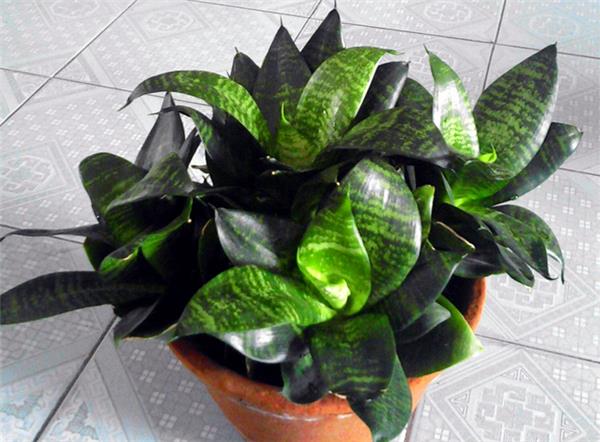
The uses of Sansevieria trifasciata 'Hahnii'
1. Beautifying the home environment
Snake plants have the effect of beautifying and accenting the home environment. Sansevieria trifasciata 'Hahnii' has a short, small leaf cluster, with short and wide leaves that swirl and overlap. The patterns on the leaf surface are fresh and elegant, and its distinctive markings make it a rather special one among the many plants. It is an ideal green material for decorating windowsills, balconies or desks. It has a quite good effect when used as an accent; a pot of vigorous snake plant placed in a corner of the home adds much color.
2. Purifying formaldehyde
Sansevieria trifasciata 'Hahnii' is a perennial herbaceous foliage plant, with creeping rhizomes and linear-lanceolate [leaves]. It has strong adaptability and is not strict about its living environment, making it very suitable for decorating places such as living rooms and studies. Besides providing ornament, its greatest feature is that it can purify the air. According to experts, Sansevieria trifasciata 'Hahnii' can absorb more than 80% of harmful gases indoors, and its ability regarding formaldehyde in particular is extremely strong. The effect is especially obvious in newly renovated houses or after newly purchased furniture. Moreover, Sansevieria trifasciata 'Hahnii' can also protect against radiation, reducing the harm to family members from toxic gases, radiation and so on.
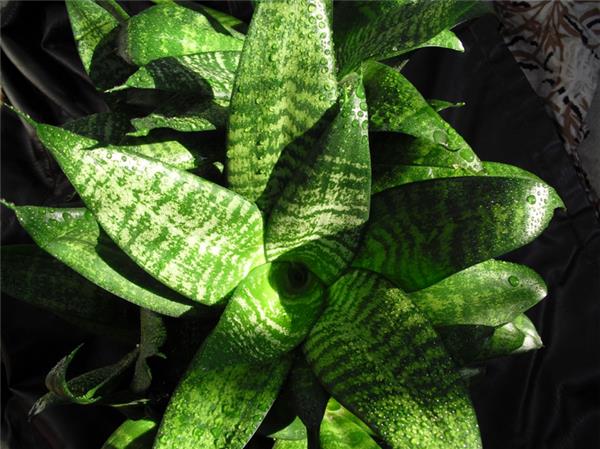
How to grow Sansevieria trifasciata 'Hahnii'
Sansevieria trifasciata 'Hahnii' is a perennial evergreen herbaceous plant. It has a fat, short rhizome, on which grow flat or semi-cylindrical leaves. The leaves are hard and thick, leathery, glossy, dark green, with light green or silvery-white horizontal stripes.
Sansevieria trifasciata 'Hahnii' likes sufficient sunlight, is slightly tolerant of shade, and is not tolerant of cold. It is robust in habit and not choosy about soil. Ordinarily it can be placed in a bright spot indoors for cultivation, and in summer strong direct sunlight should be prevented.
During the growth period of Sansevieria trifasciata 'Hahnii', watering should be done so as to keep the potting soil slightly moist. It grows vigorously in summer and needs watering once a day. Applying a dilute cake fertilizer solution once a month will make it grow luxuriantly. In winter, the room temperature should be maintained above 8°C. Because of its strong sprouting ability, it is advisable to repot once every early spring, and sandy loam is suitable for the potting soil.
Sansevieria trifasciata 'Hahnii' is commonly propagated by division and cuttings. Division can be carried out when repotting in spring. Cut apart the overly dense clumps, and the base should carry rhizomes. If there are many fibrous roots, they can be directly potted; if there are very few fibrous roots, they can temporarily be planted in a sand pot, and potted after new roots grow. For cuttings, May to June is best: select robust, thick leaves, cut them into 5-6 cm sections, insert them into a sand bed with 1/2 exposed, and they will take root about 4 weeks after insertion, with a high survival rate.
Sansevieria trifasciata 'Hahnii' is harmed by leaf spot disease and anthracnose, and can be sprayed with a 50% thiophanate wettable powder 500-fold solution. Among insect pests, it is harmed by weevils, which can be killed by spraying with a 20% fenvalerate 2500-fold solution.
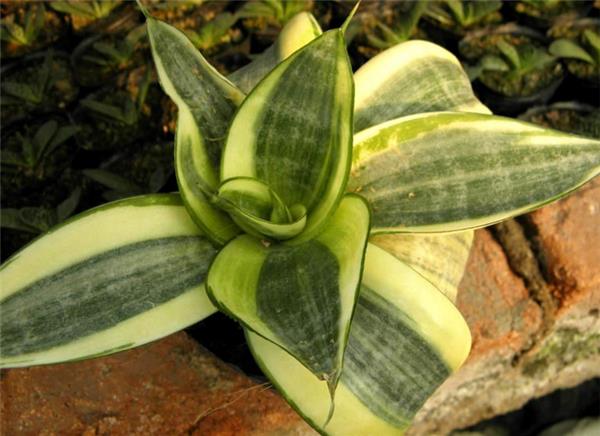
There are two common propagation methods for Sansevieria trifasciata 'Hahnii': one is cuttings, and one is division.
First, cuttings
Snake plant cuttings are generally taken in May-June. The main method is: cut the leaves into small 5-6 cm sections, then insert them directly into sandy soil, and they will take root in about one month. However, for some particularly special varieties of snake plant this method is not suitable, for example the golden-edged snake plant (Sansevieria trifasciata 'Laurentii'), in which case the division method must be used.
Second, division
The division method is also very simple, and is also the most commonly used method. It is generally carried out when repotting in spring. The main step is to cut the overly dense leaf clusters into several clumps. Each cut clump, besides carrying leaves, must also have a section of rhizome and a sucker, and then they can be potted and planted separately.
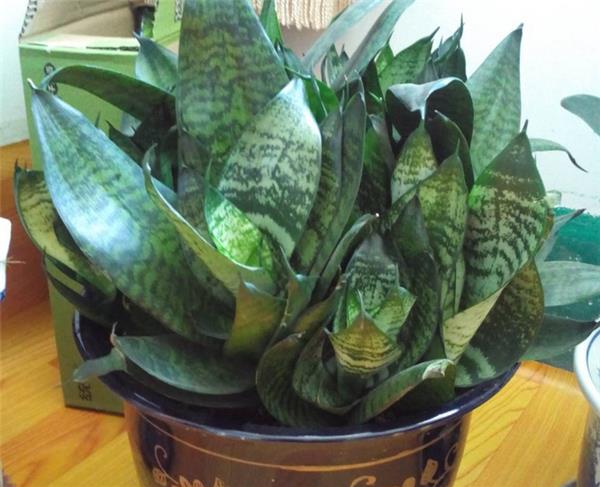
That is all for today's introduction to the uses of Sansevieria trifasciata 'Hahnii'. I hope the above content can be helpful to everyone!