How to Grow Snake Plants? A Detailed Guide to Planting Methods
Snake plant, also known as mother-in-law's tongue or bowstring hemp, is a plant of the Agavaceae family and the Sansevieria genus. Do you know how to grow snake plants? Below we give a brief introduction for everyone.
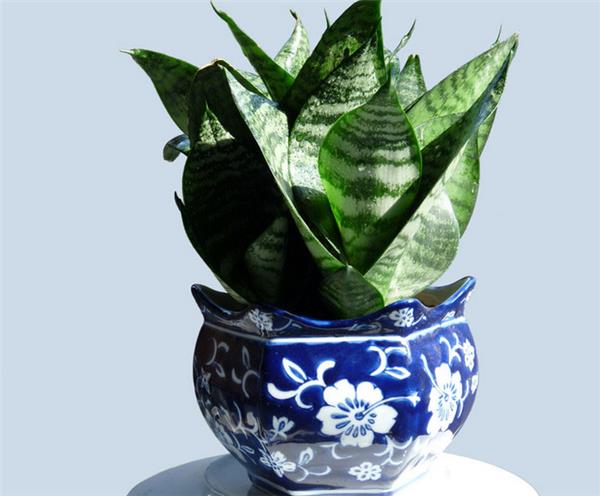
How to Grow Snake Plants
1. Soil requirements: Like household plants such as Guzmania, cyclamen, epiphyllum and dumb cane, the snake plant requires loose soil, and its air permeability also has certain requirements. A common potting soil works as ordinary culture soil, and after the plant matures, a dedicated fertilizer soil can be chosen for cultivation.
2. Temperature requirements: The snake plant's other requirements are actually not strict, but temperature is a rather tricky point, because its environment for growth and development is around 25°C; lower than that inhibits growth, and higher than that stops growth. In winter, the temperature must be kept above 10°C, otherwise it will suffer frost damage.
3. Water requirements: Water is the same as for other plants; as long as the soil is kept moist it is fine, but it must not be too wet, especially not waterlogged. In winter, water less; generally 1-2 times over the whole winter is enough.
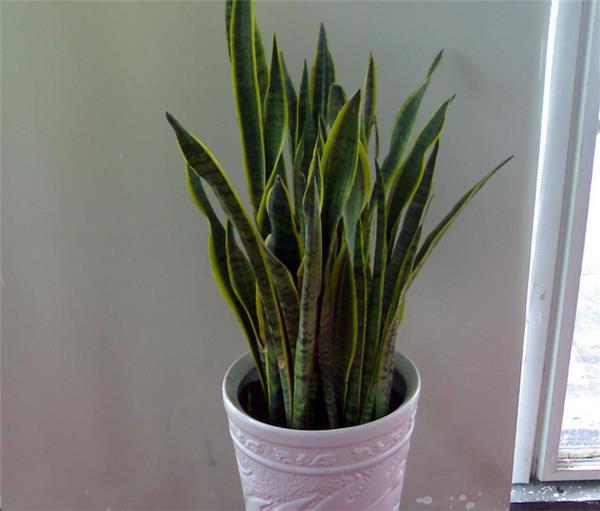
4. Light requirements: The snake plant quite likes sunlight; even direct sunlight will not cause death through overly rapid transpiration. On the contrary, if kept in a shady place for a long time, the leaves will turn yellow. So provide as much light as possible.
5. Pruning requirements: Generally the snake plant can mature in a few months, so at this time, to ensure aesthetics and growth needs, mainly prune the places that grow more luxuriantly. Ensure the extent of sunlight exposure.
6. Repotting requirements: When it grows to the second or third year, the snake plant needs a soil change to ensure normal intake of nutrients.
7. Pest damage requirements: The diseases snake plants generally suffer are leaf spot disease caused by pests, or weevils and the like. An appropriate amount of pesticide can be applied.
8. Fertilizer requirements: The snake plant only needs sufficient soil nutrients; generally no fertilizing of the soil is needed, but when repotting, a large amount of nutrients must be added.
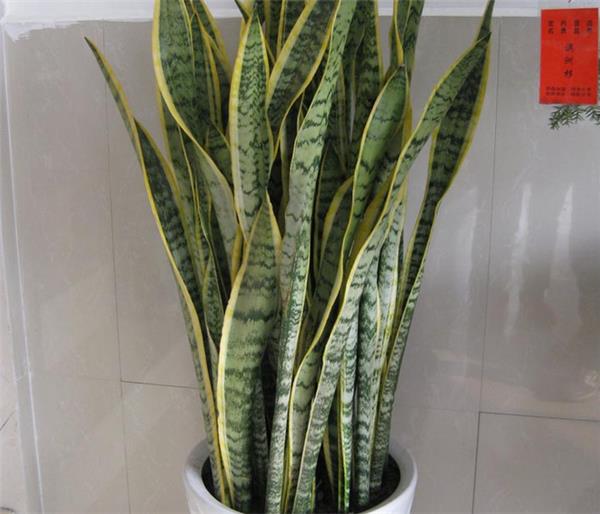
Notes on Growing Snake Plants
Generally, the care notes for snake plants just follow daily cultivation habits, but note that the soil should be changed about every 2 years, which is the so-called repotting. Pay special attention to treating the soil around the root system.
Snake plant, also called mother-in-law's tongue, can be grown indoors all year round, though in spring and autumn it is recommended to keep it outdoors, which is good for growth. In winter and summer, it is recommended to place it in the bedroom or living room, taking care to keep it warm and protect it from heat.
When watering, note that you must not water at low temperatures; if too much water is given in winter, root rot and leaf rot will appear in summer.
Generally, the snake plant is quite suitable for placing in the living room and rooms, because it can absorb ammonia, formaldehyde and other harmful substances from renovation.
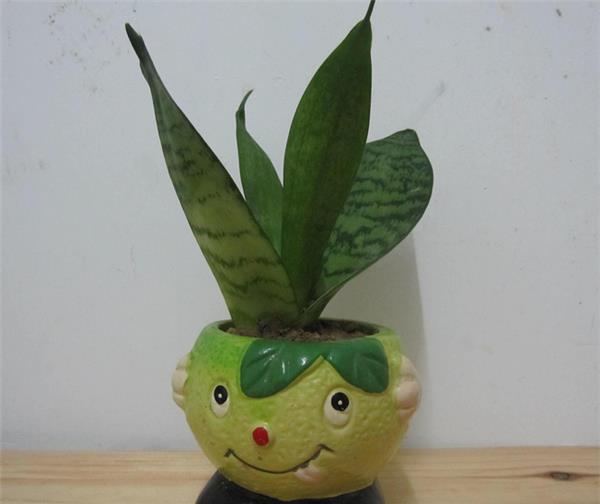
Finally, let us look at an introduction to the types of snake plants.
1. Golden-edged snake plant: The leaf margins have yellow band-like fine stripes, the center is light green, with dark green transverse stripes. It has higher ornamental value than the common snake plant.
2. Short-leaf snake plant: The plant is low, with a height not exceeding 20 cm. The leaves grow curling outward from the center, overlapping each other to form a bird's-nest shape. The leaves are short and wide, long ovate, with tapering tips and an obvious short tail point; the leaves are 10-15 cm long and 12-20 cm wide, dark green in color, with fairly wide yellow bands on both sides of the leaf margins, and irregular silvery-gray streaks on the leaf surface. The leaves are clustered and luxuriant.
3. Silver short-leaf snake plant: Both plant shape and leaf shape are similar to the short-leaf snake plant. The leaves are short, silvery-white, with inconspicuous transverse markings.
4. Golden-edged short-leaf snake plant: Apart from the yellow band on the leaf margin being wider, accounting for about half of the leaf, its other features are similar to the short-leaf snake plant. The leaves are short, broadly oblong, arranged in a rosette. Its ornamental value is higher.
5. Stone-pencil snake plant: The leaves are cylindrical, roughly the same thickness top to bottom, with slender pointed tips, and the leaf surface has longitudinal shallow groove lines. The leaves are 1-1.5 m long, with a leaf diameter of about 3 cm. The leaf bases overlap left and right, and the leaves lie in the same plane, extending in a fan-rib shape. Its form is special and its ornamental value is fairly high.
Look, so many snake plants, with different varieties having different forms. Using them as plants to beautify the home environment brings a different kind of surprise.